


‘Brand world’ is one of the most overused phrases in branding. It gets attached to anything and everything until it stops meaning much at all. But underneath the buzzword there’s a simple, useful idea. Instead of just crafting a recognisable but static brand, you build an ecosystem where different elements interact and interplay. Identity, packaging, retail space, content, campaigns, digital, collectibles, product design, brand rituals, activations, community, etc. These are the raw materials of a brand world. A brand becomes a brand world when it stops being a single thing you can point to and turns into a network of cohesive but distinct parts.
Doing it well comes down to three pillars: Story, Signal and System. We’ve broken down the theory before, so this week we’re showing you what it looks like when a brand puts all three to work and builds a world that millions want to live in.
Story
The North Star that makes your decisions for you.
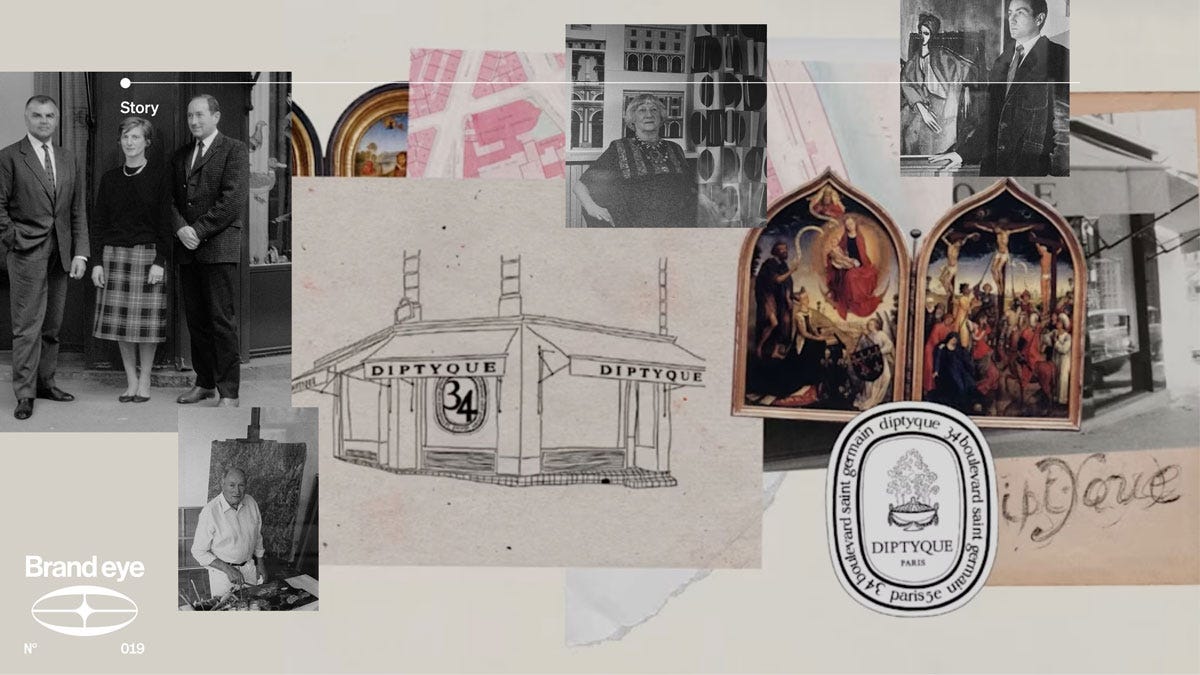
The brand, as you may have guessed from the headline, is Diptyque. And the one-line version of their story is this: three artists who set out to turn everyday objects into art. Every decision since runs through that single lens.
Paris, 1961. Three friends open a shop at 34 boulevard Saint-Germain. A painter, an interior designer and a theatre director. The fact that they were all artists is fundamental to what Diptyque the brand would become and is probably a better way of explaining what Diptyque is than just calling it a home wares company. They treat an object the way you’d treat a canvas, because it was just how they saw the world.
Their origin is impossible to copy. It was born from a specific blend of bohemian adventurism, counter-cultural energy and old-world craftsmanship that only really existed in 1960s Paris, so Diptyque carries experimentation and respect for tradition in the same breath. For most brands, values that pull in opposite directions create tension. For one that comes from that exact time, place and group of people, they make perfect sense. That is the whole value of a story. It anchors an identity that would otherwise feel ungrounded or contradictory, and no one else can claim it. Once it’s clear, you stop having to decide what comes next. The story decides for you.
Signal
A single asset that makes your story visible. So rooted in your brand story it couldn’t belong to anyone else.
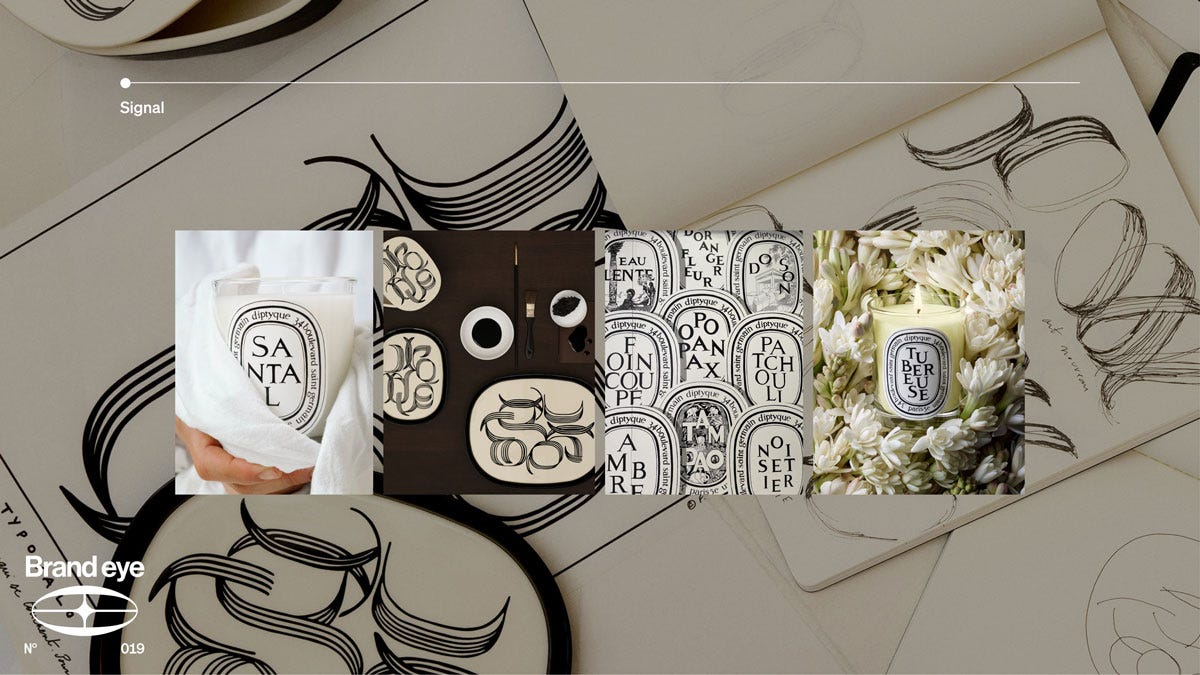
Bohemian. Multidisciplinary. Curious. Festive. That’s how Diptyque describe themselves, and it’s all about playfulness, blending cultures and mediums while holding onto elegance and craft. But how do you make all of that visible in one move, with no words at all? For Diptyque, the answer is the oval.
The whole achievement is that something so simple carries so much. Diptyque describes the oval as a meeting point of influences, from the cartouches of ancient Egypt to the ellipses of Baroque architecture to the medallions of the eighteenth century. It sits halfway between a circle and a rectangle, between softness and rigour. A basic shape, chosen with enormous deliberation.
What makes it a single asset rather than a logo is its range. The oval isn’t fixed. It stretches, frames, repeats and recombines across everything they make, and still reads, instantly, as Diptyque.
System
The difference between a slogan and a strategy.
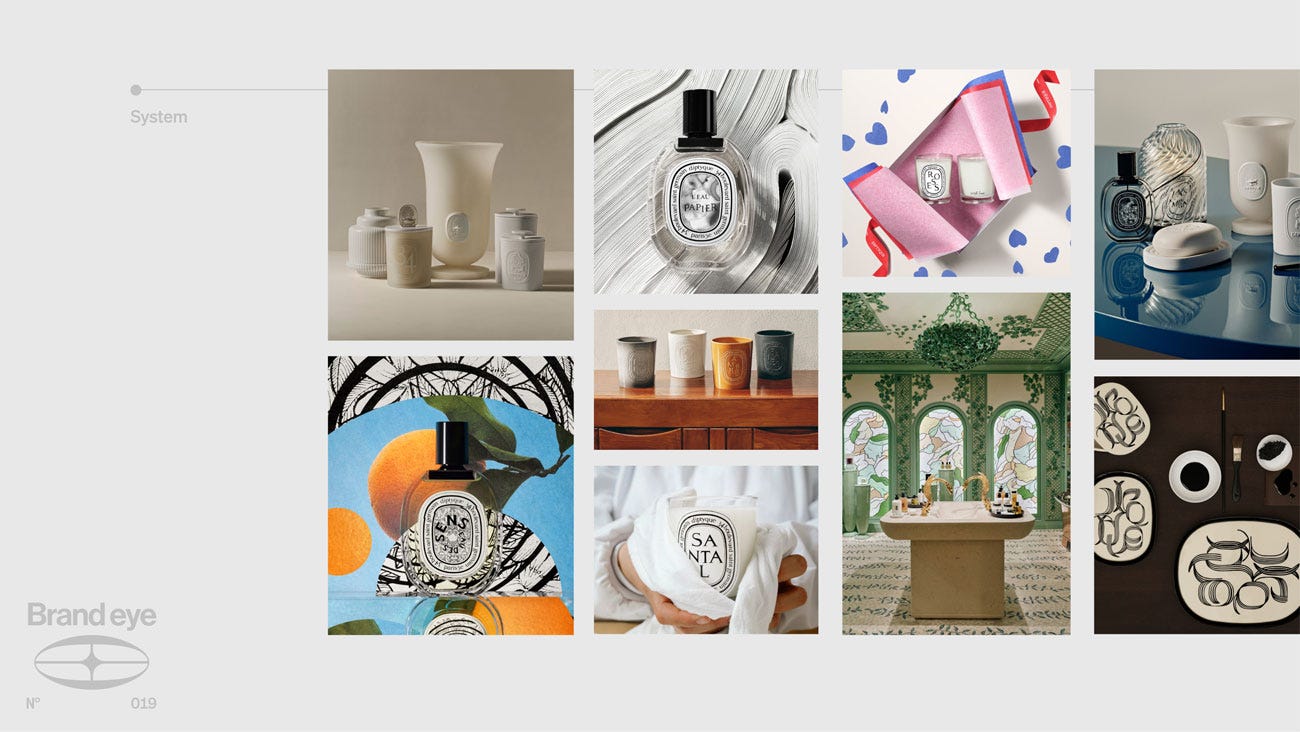
A story can only be true if it shows up everywhere, the same way, every time. Diptyque’s does.
Their sense of place is the clearest example. They site boutiques in historic buildings and let the interiors reflect the architectural heritage of wherever they are, so the brand feels rooted and purposeful rather than like another link in a chain, elevating culture over pure optimized commerce.
Then there’s their aesthetic language, drawn from heritage crafts. Woodwork, pottery, stitching. It lets their designs range widely while always pointing back to the same truth: craft sits at the heart of the brand.
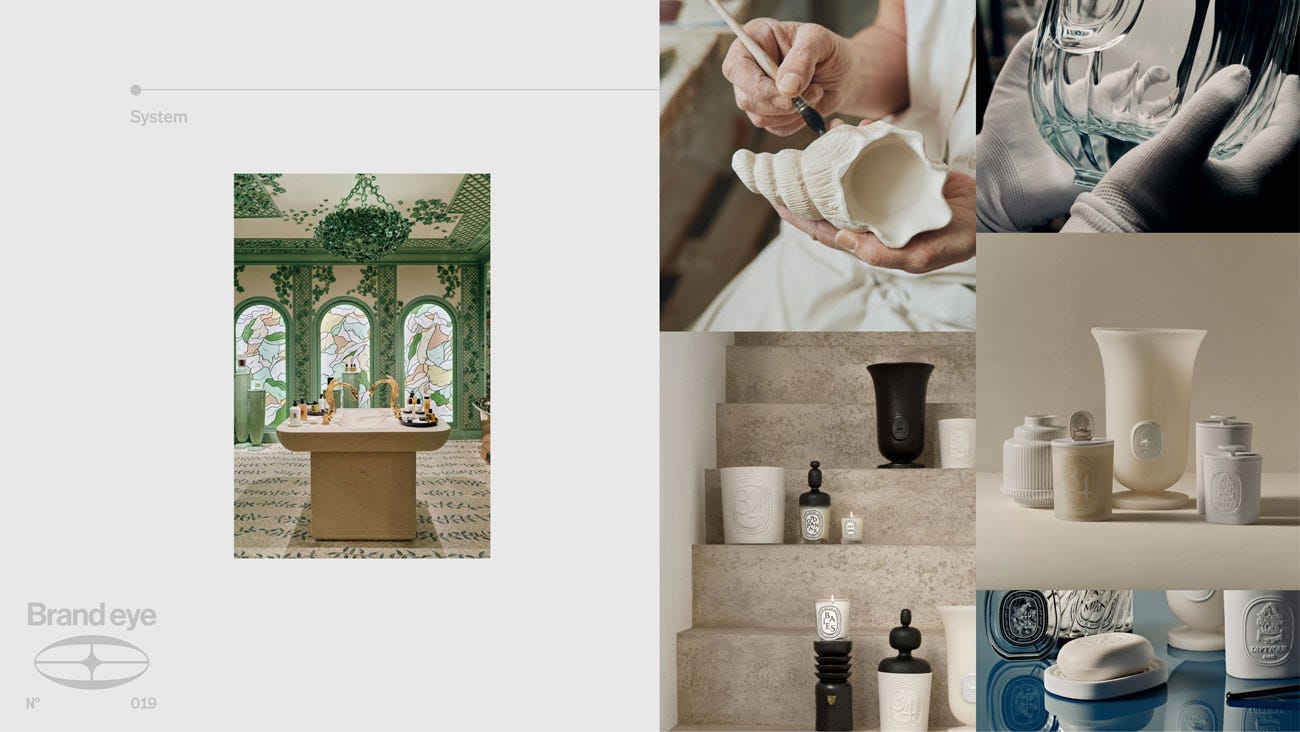
And of course the packaging, where story and signal work together. Dancing letters arranged into shapes and positions that read as physical wordplay, codes to crack, puns to untangle. Diptyque is a playful brand, so it invites you to play.
Bonus: The Brand Trojan Horse
A secondary object, so embedded in your customer’s life it keeps selling for you long after the purchase.
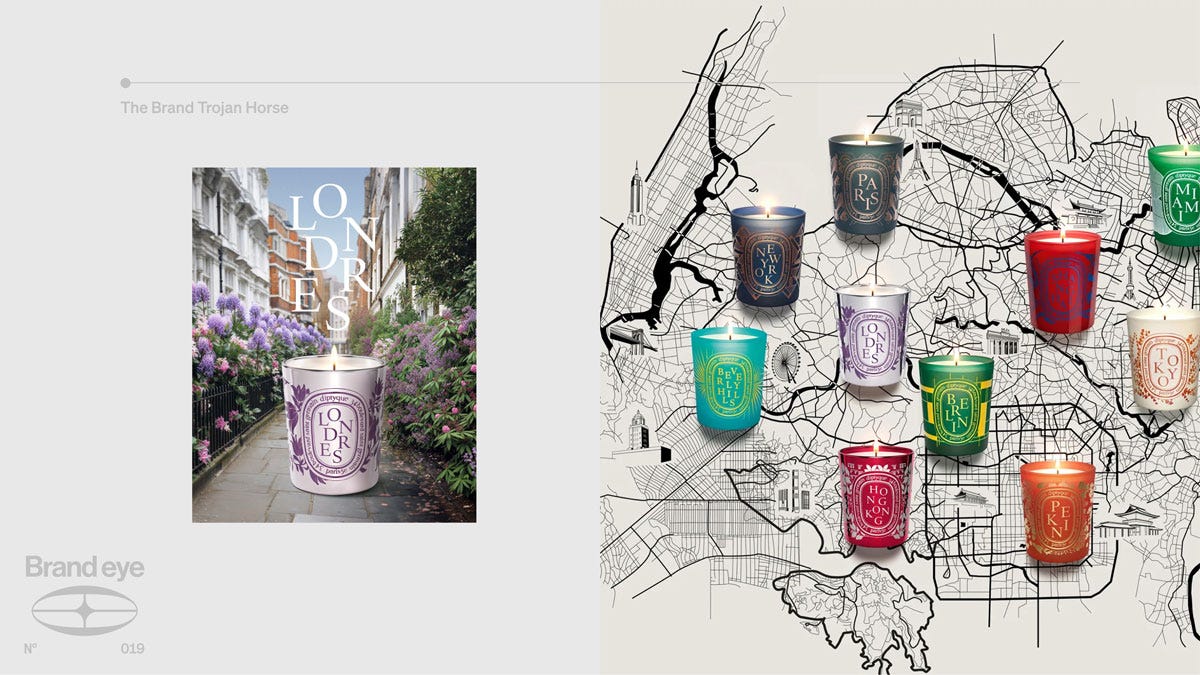
Diptyque could have stopped at the three pillars. Most brands that get this far do. But there’s one more move worth studying, and it’s one of the oldest in the book.
Diptyque’s version is the city candle, and it’s location-exclusive. You can only buy the Paris candle in Paris, the Tokyo candle in Tokyo. The scent becomes a souvenir you can’t order from your sofa. You have to be there*.
That one rule changes the maths. A candle stops being a candle and becomes a reason to visit the store in every city you travel to. The collection turns into something you build, one trip at a time. Every new city becomes another door into the Diptyque world, pulling you further in wherever you land.
*For one week a year, all 12 destination-exclusive candles are made available to everyone via the Diptyque City Candles Collection portal.
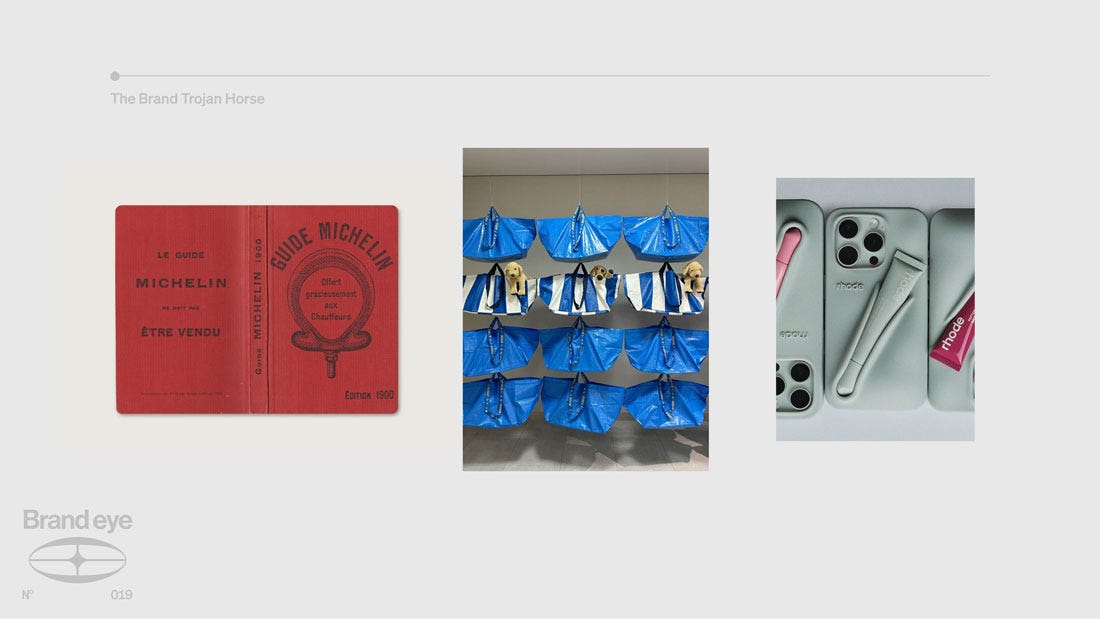
The same play is everywhere once you see it: the IKEA Blue Bag, The Red Bulletin, the Michelin Guide, the rhode lip case.
Know Exactly What You Are
Diptyque might be a masterclass, but the principles underneath it aren’t exclusive to them. By knowing exactly who they are, where they come from, which assets only they can own, and how to repeat all of it across everything they touch, they’ve built something enticing. Addictive, even.
Brand world gets thrown around as a buzzword. Story, Signal, System is what makes it real. We’ll keep banging the drum, because brands like Diptyque keep proving the framework works. Get all three right and you don’t just build a brand people recognise. You build a world they want to live in.