


How good was Paul Rand at design? So good that Steve Jobs paid him $100,000 for one logo without options or revisions, that’s how good. Jobs later called him the greatest living graphic designer, and Jobs didn’t hand out compliments.
You could make a very honest case for the fact that Rand, more than any other designer of his age, helped bridge the gap between commerce and art in graphic design. That’s the reason his work sits in the Smithsonian’s Cooper Hewitt design museum. A man who was hired as art director for Esquire at only the age of twenty-three, Rand was ahead of his time from the outset, and though he was open about his own influences, notably the European modernists, he also helped push the boundaries of their styles and theories and bring their ideas to the American mass market.
From IBM and ABC to UPS, these companies that are foundational to 20th century America’s self-conception owe their graphic identity to Rand, who designed their logos. At 71, he added NeXT, the company Jobs founded after Apple.
But unlike many of the creative geniuses of history, his myth isn’t cloaked in a veneer of madness or individual inspiration. Rand’s work was guided by strong principles, and they weren’t only for designers, either. Jobs followed every one of them, and they apply to founders, builders and ops people as much as creatives.
Here are five lessons distilled from his principled approach over a six-decade career.
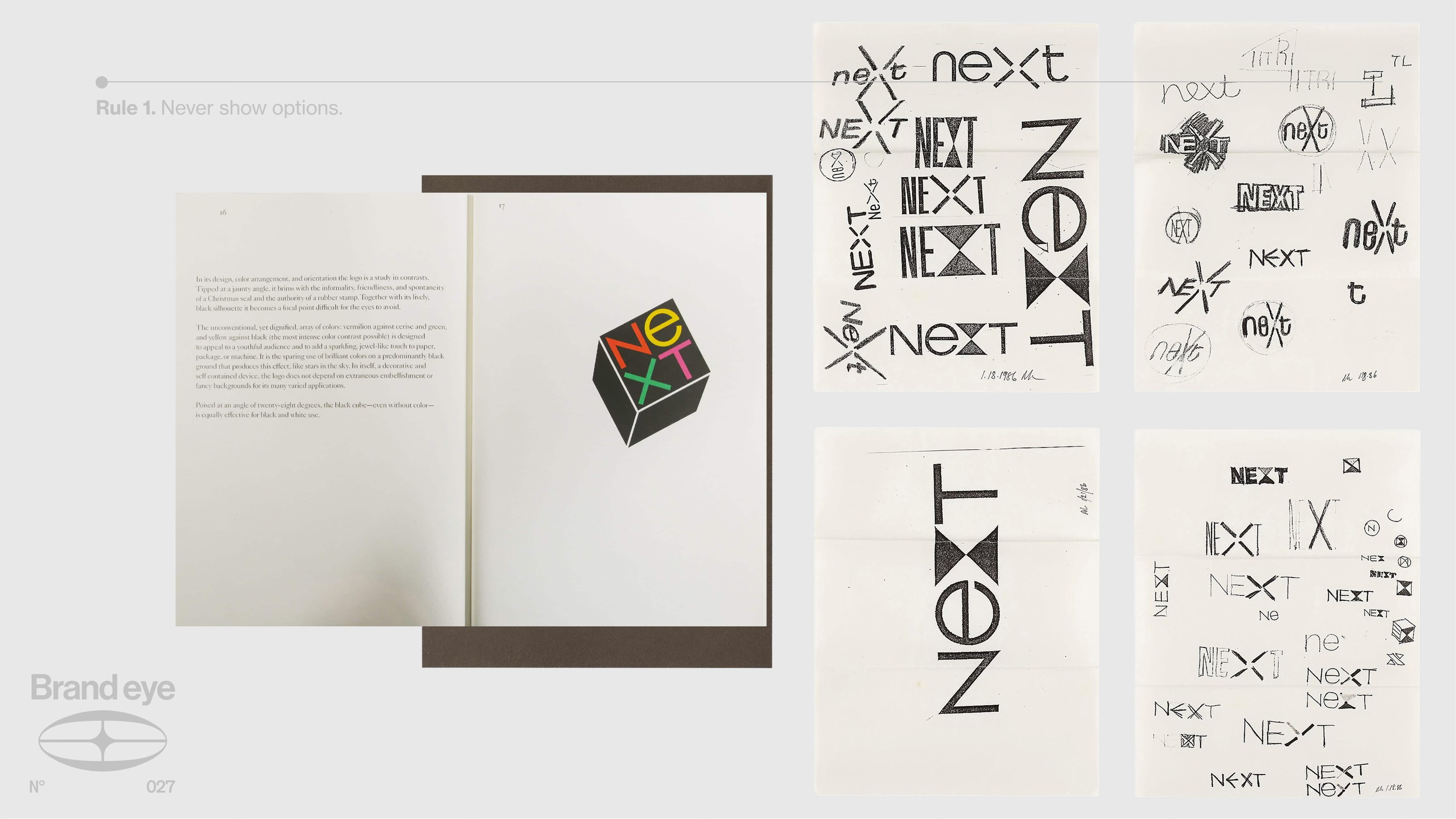
Rule 1, never show options.
When Jobs asked for a few routes to choose from, Rand refused. “I will solve your problem for you. And you will pay me.” If Jobs didn’t like the answer, Rand said he just didn’t have to use it.
Showing 10 different routes forward shows a lack of conviction in your ability to solve the actual problem. Rand insisted on focusing his work along a single concept, refining it until it was the best it could be. He believed in radically committing to one because people buy certainty. If you’re asking a room full of decision makers to trust your ability to represent their product, their brand or their company, then you need to show that you trust yourself, and part of doing that is not hedging your bets. Don’t spread your creativity thinner or dilute your ideas by trying to create offshoots that pander. You know what the strongest version of your pitch is, that’s what you show to your client.
Founders, the same goes for you. If you walk into an investor meeting with three possible directions for the business, you’re telling the room you don’t know which one works.
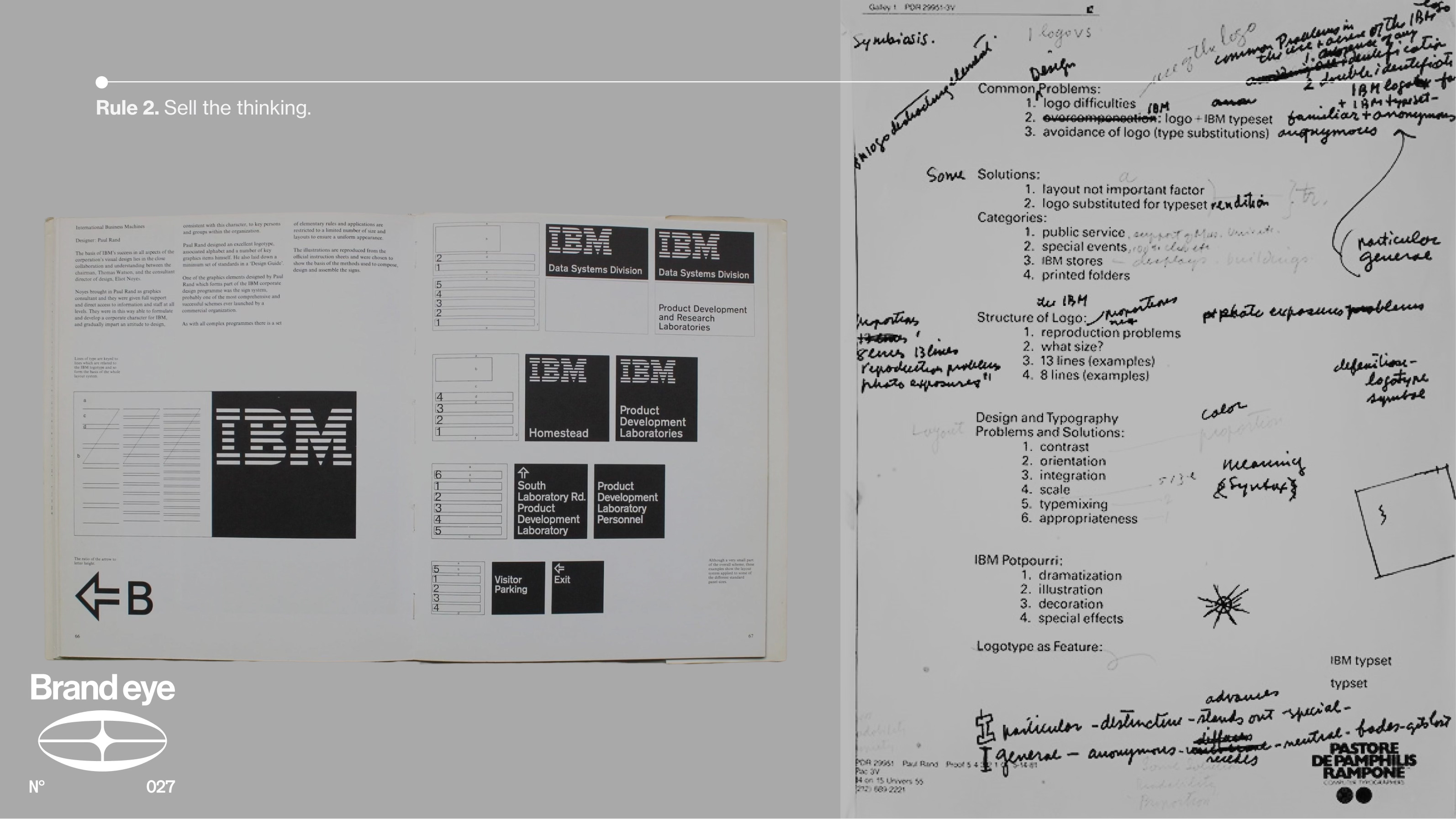
Rule 2, sell the thinking.
Picture Don Draper, the classic scene from a Mad Men arc. He’s standing in front of the conference table, suited mid-century execs with their arms crossed, staring at him. The actual ad copy and design are always covered at first. Why? It’s not just for dramatic effect, it’s a sound business principle for this type of work and one which Rand adhered to.
Rand didn’t open with a logo, without giving it a firm platform to stand on in the form of an idea. When he pitched NeXT, he handed Jobs a booklet that walked him through the reasoning first, so that by the time the design appeared, it felt inevitable. For Rand, the execution was the last 10%. If you can convince your audience that your design matters through words before they even see it, you’re setting it up for success.
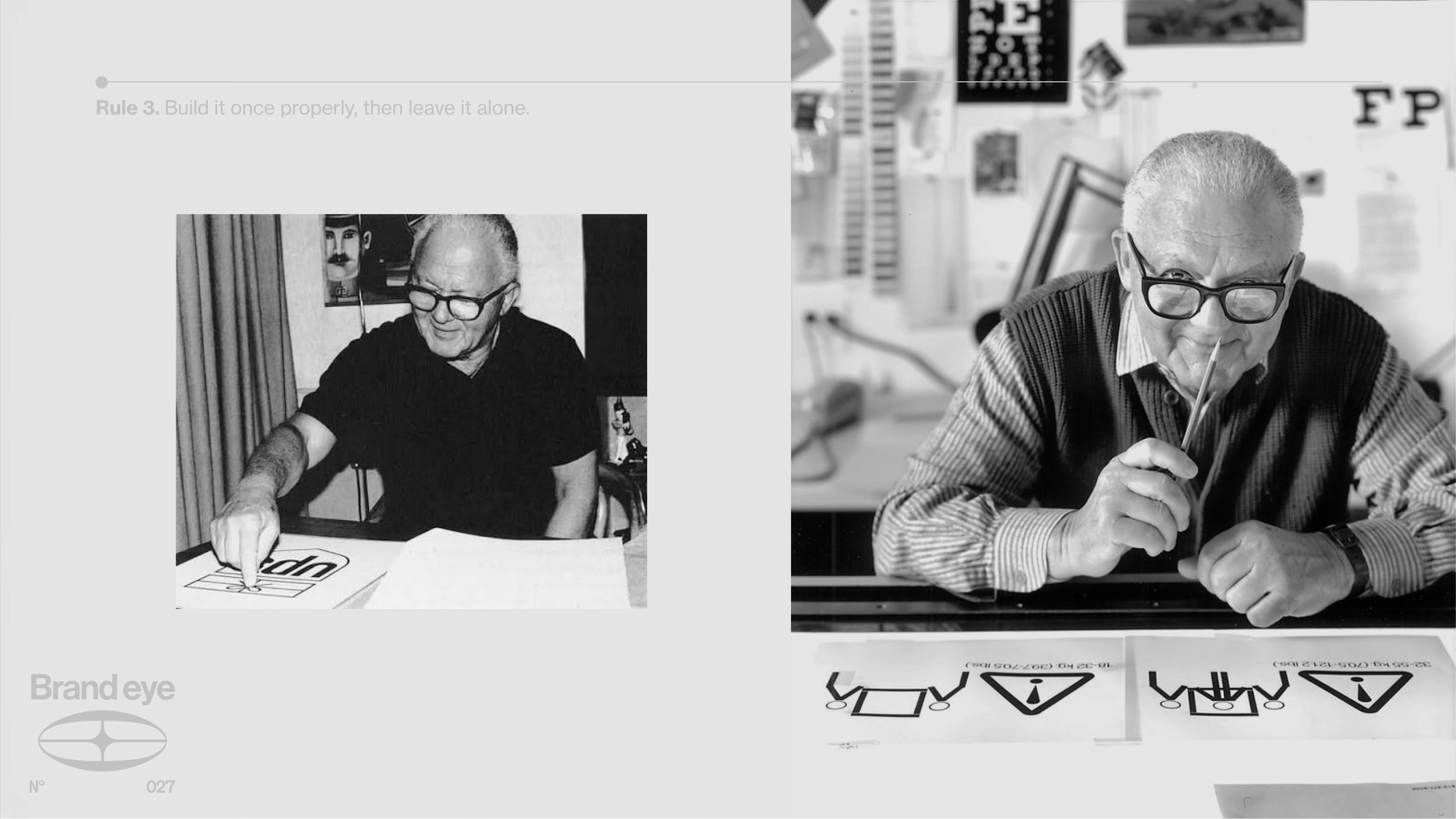
Rule 3, build it once properly and then leave it alone.
His UPS shield ran for 42 years. His ABC circle went on air in 1962 and became an image beamed into every American household, defining their identity. Rand designed for the future, not for the now, which meant that his work never needed rescuing five years later. Chasing a trend forces you to constantly reiterate and erodes recognition. Much like with rule one, the inconsistency also signals a certain lack of trust in your own work. There’s a saying in architecture, ‘The greenest building is the one that already exists.’ This is as true if you substitute green for trustworthy and building for logo. You cannot fake the test of time, so build something that lasts and then leave it.
For founders this is a budget question as much as a creative one, since each refresh costs your brand recognition you’ve already paid for. So invest in getting it right the first time.
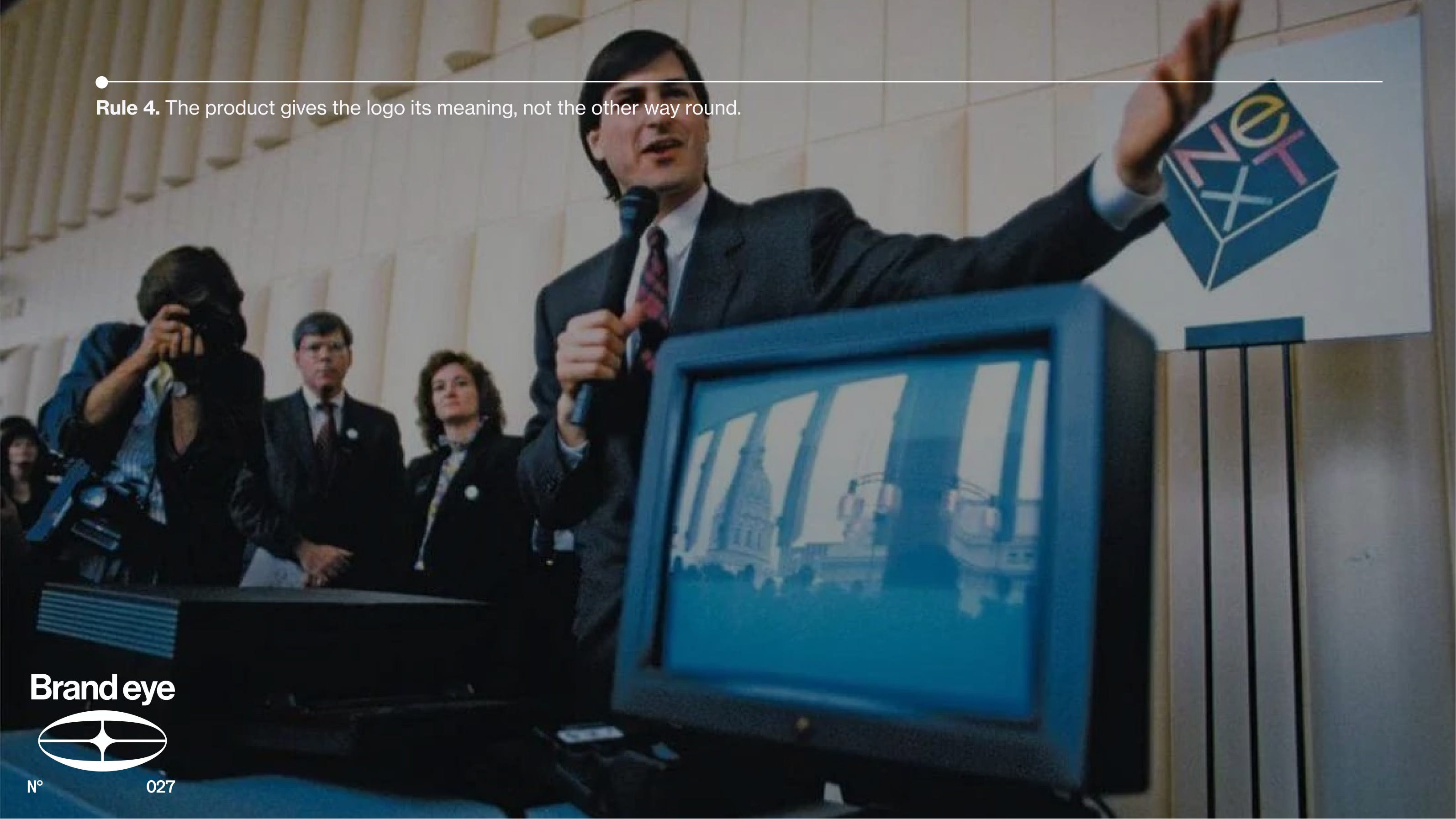
Rule 4, the product gives its logo the meaning, not the other way around.
A logo takes its meaning from the quality of the thing it stands for. If the company is a bit shit, the logo will die by association. Fix the real issue with strategy and positioning before you try to address it with design. Design is essential, but it can ultimately only communicate about your product, it doesn’t change its fundamentals. If you want to avoid spending lavishly on brand consultants and designers prettying up a business that still won’t connect with audiences, you need to make sure the product underneath is rock solid first.
It’s the same principle behind the old adage about putting lipstick on a pig. Or the 80/20 principle, structural investment matters because you face diminishing returns from spending on cosmetic factors if they have to compensate for flawed underlying product.
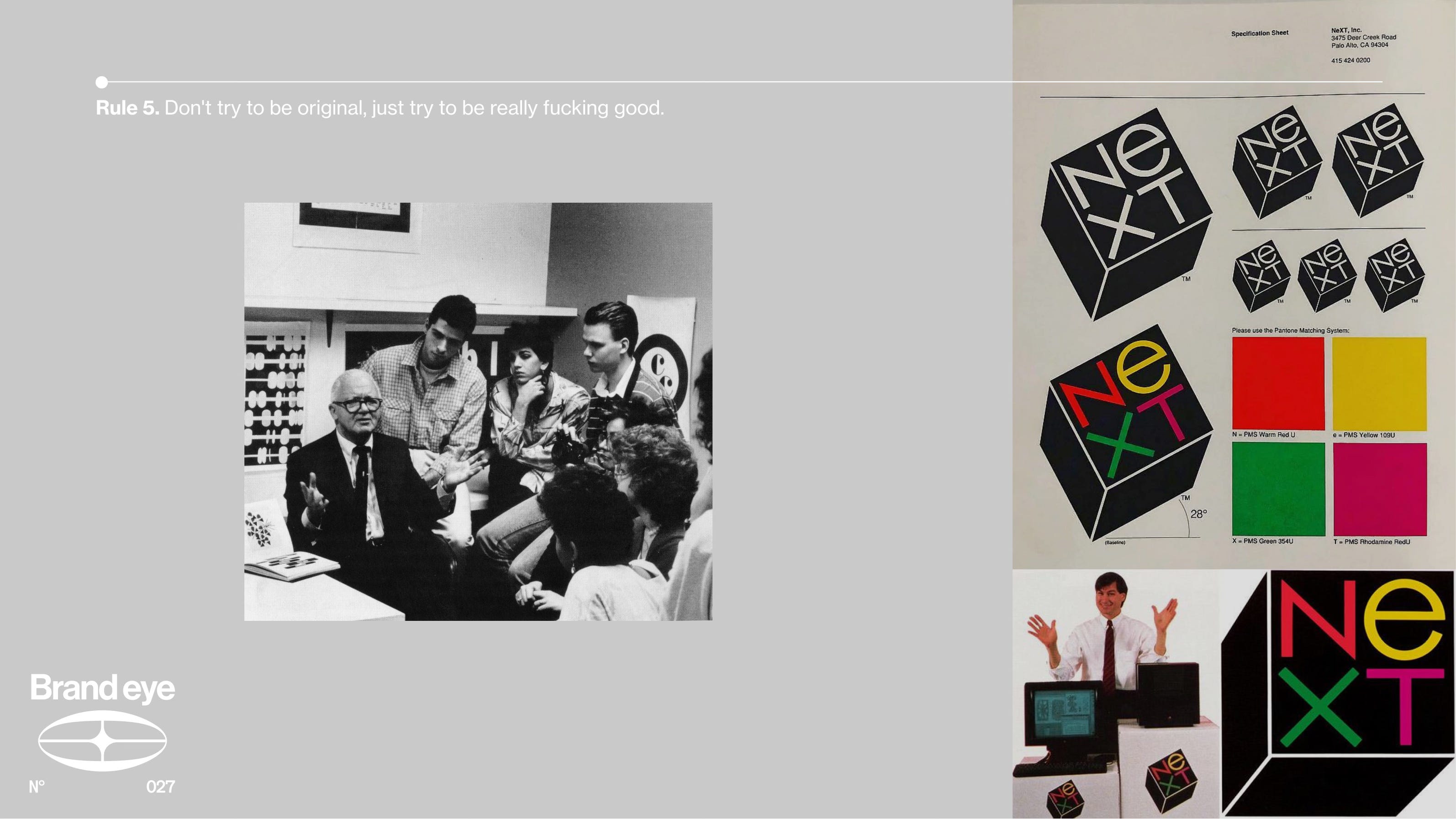
Rule 5, his advice to his students, don’t try to be original, just try to be really fucking good.
It sounds simple, but Rand believed a good idea, when done properly, beats a new one every time. In the age of the feed, novelty seems to be the only good way to get attention, but remember that for brand building, impressions don’t matter as much as positive sentiment compounded over time. People will still notice what has been executed well versus what is quirky and new but sloppy.
These might sound simple, even simplistic, but that’s what first principles need to be. There’s plenty of room within Rand’s philosophy to build out your own way of working, but these fundamental tent poles can help you not go in the wrong direction. They’re earned lessons that have been proved in implementation, so use them as advice from the elders. Jobs paid $100,000 for one logo and followed every one of them. Whether you’re building the brand or paying someone to build it, so should you.