


Rocky Balboa, 2015/16 Leicester City FC, Frodo Baggins etc. etc. Everyone loves an underdog. So it should sound pretty obvious that being a challenger brand in a category dominated by champions can be as much of a branding asset as a business disadvantage.
But how exactly do you leverage that innate desire people have to back the little guy? Well let us be the Mickey Goldmill to your Rocky, the Ranieri to your Leicester. Because we’ve got five key strategies for turning your challenger status into a cheat code and if not unseating the reigning champs, at least making them sweat up on their perch.
It’s the classic tale of David vs. Goliath. A story paradigm that dates back across ages and cultures and encapsulates that affinity we share for the underdog.
Here are five strategies for leveraging branding to exploit the fact that your brand is the underdog, and some companies that executed these strategies successfully to steal market share.
1. Reframe What the Category Is For
Giants get trapped by their own positioning. They’ve invested so much in a singular story that changing it would mean losing the audience they’ve spent decades building. Challengers don’t have that problem. Their only loyalty is to finding a better story.
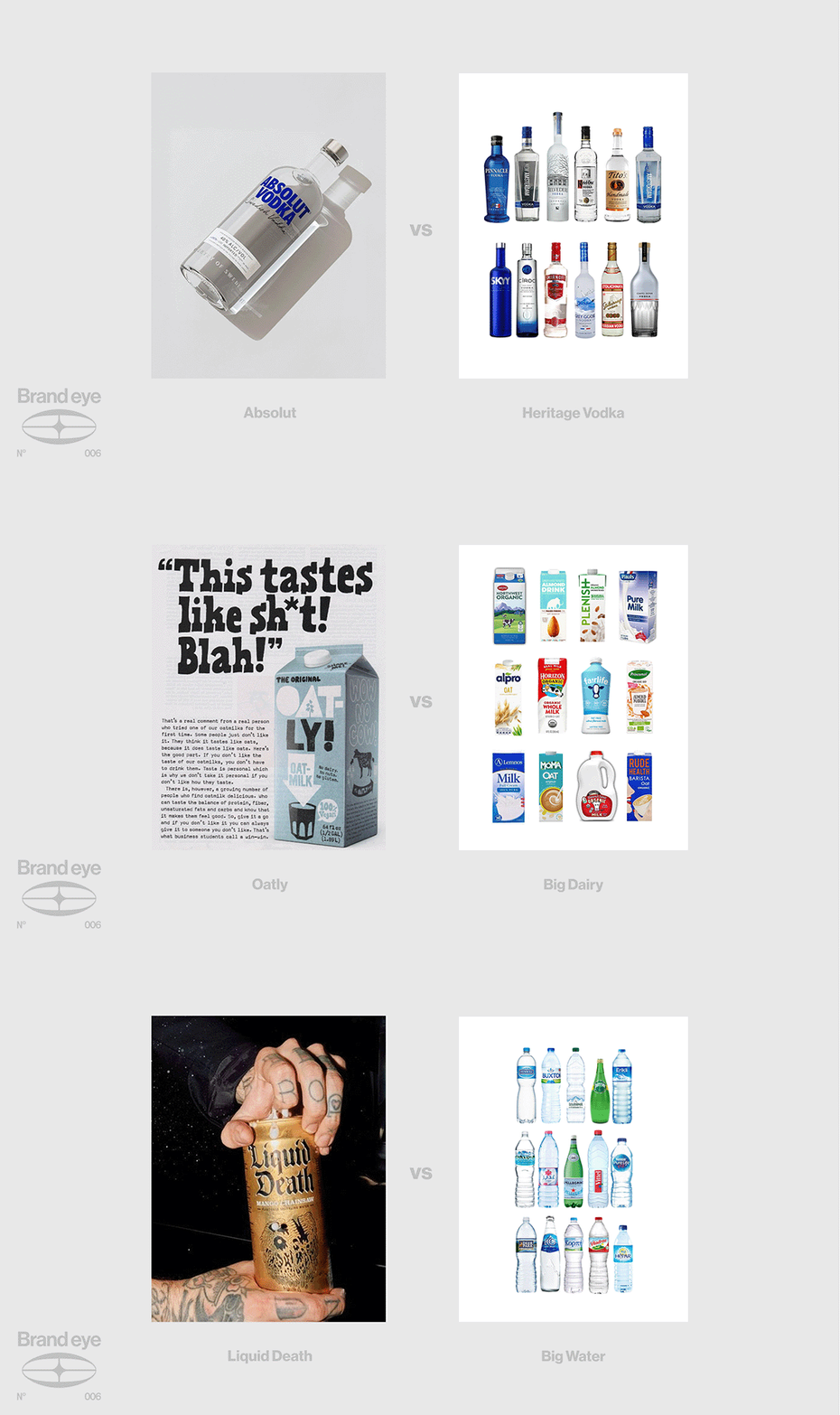
If the vodka industry is dominated by brands leaning on Russian heritage, aristocratic crests, and claims of purity, how do you compete? Those are inherently non-fungible brand assets, right? That’s why Absolut went about it differently. They put premium Swedish vodka in a distinctive bottle inspired by 19th century medicine bottles and handed it to Andy Warhol. The bottle became pop art. In one branding move, they had moved vodka away from its old associations and turned it into a badge of modern creative culture.
Oatly took the same approach in the alternative milk industry. No pictures of cows in green pastures, no competing on nutritional credentials. They treated their carton as a canvas for irreverent copy, embracing sarcasm, absurdity, and comedy. Instead of trying to out-milk milk, they leaned into what a deeply traditional industry wouldn’t think to do.
Liquid Death took it furthest of all. Water in tallboy aluminium cans with heavy metal branding. The juxtaposition isn’t just appealing to consumers, it makes the product stand out on shelves. The Goliath was Big Water’s marketing of snow-capped mountains and soft purity. The slingshot was turning plain water bottles into an edgy statement piece for the sober-curious.
2. Weaponise the Object
Sometimes the slingshot isn’t the story. It’s the product itself.
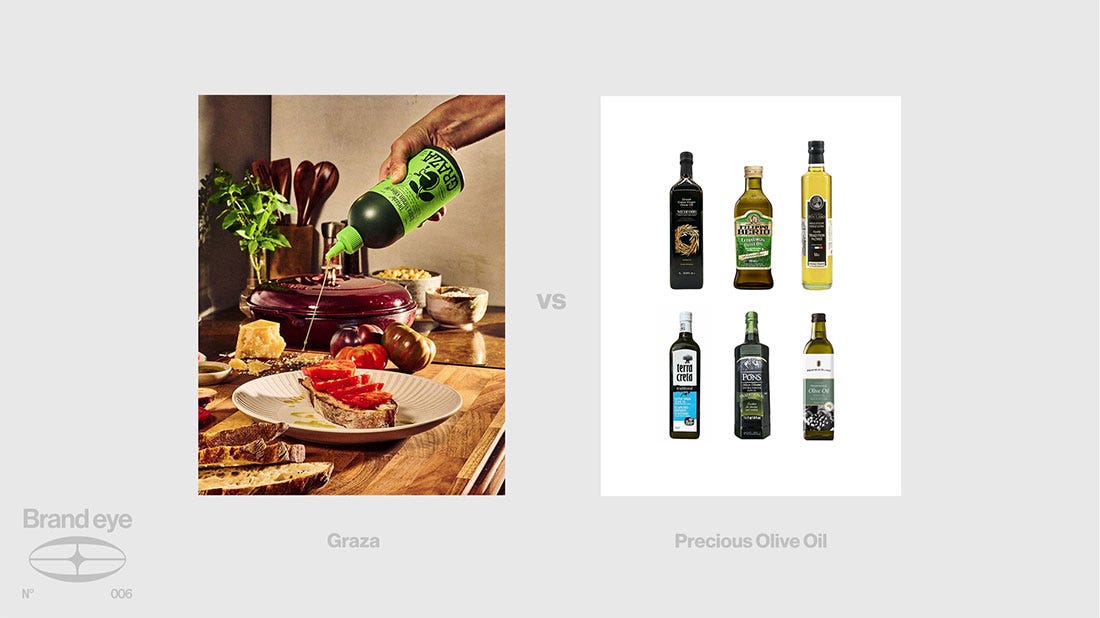
In prestige categories it’s common to imitate the trappings of luxury and quality in order to lay claim to legitimacy. Graza doesn’t use old-world iconography or glass bottles to signal quality. Instead its humble squeeze bottles suggest a different way to engage with the product entirely. Change in form leads to a change in use. Olive oil becomes a fun garnish to be experimented with rather than a serious Old World ingredient you’re afraid to actually use.
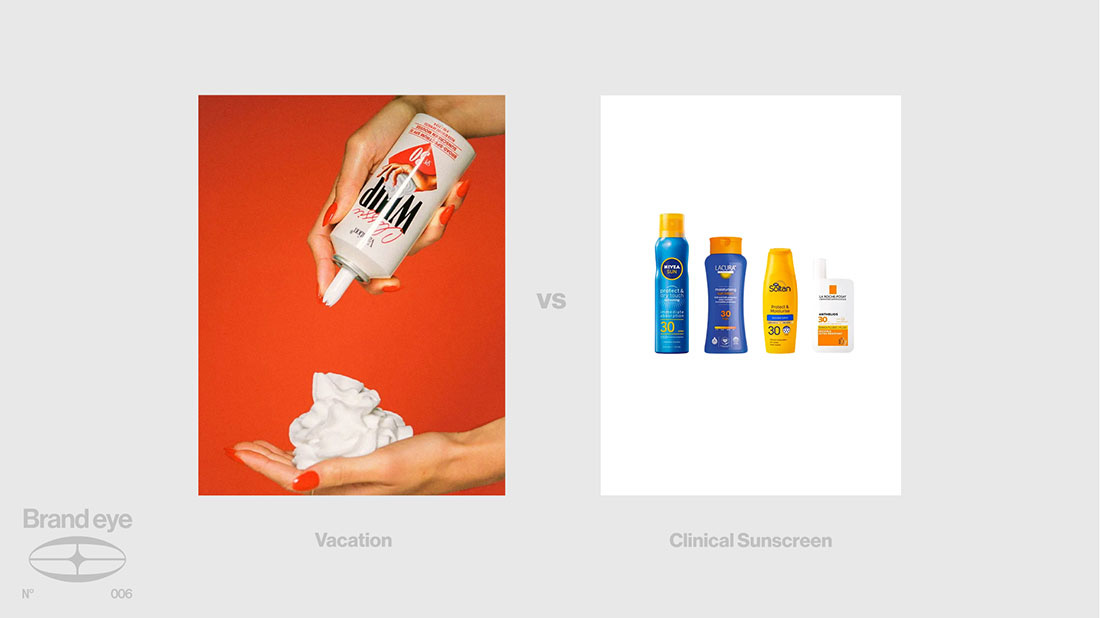
Whip Vacation applied the same logic to whipped cream. Selling 80s Miami nostalgia, Whip engineered its bottle to spray like mousse. The nozzle isn’t just distinctive on shelf, it’s an integral part of how the product is experienced.
3. Make the Mundane Aspirational
Challengers often take a product category that markets itself on manipulation (you ought to use this product) and reframe it as an inspiring one (you want to use this product).
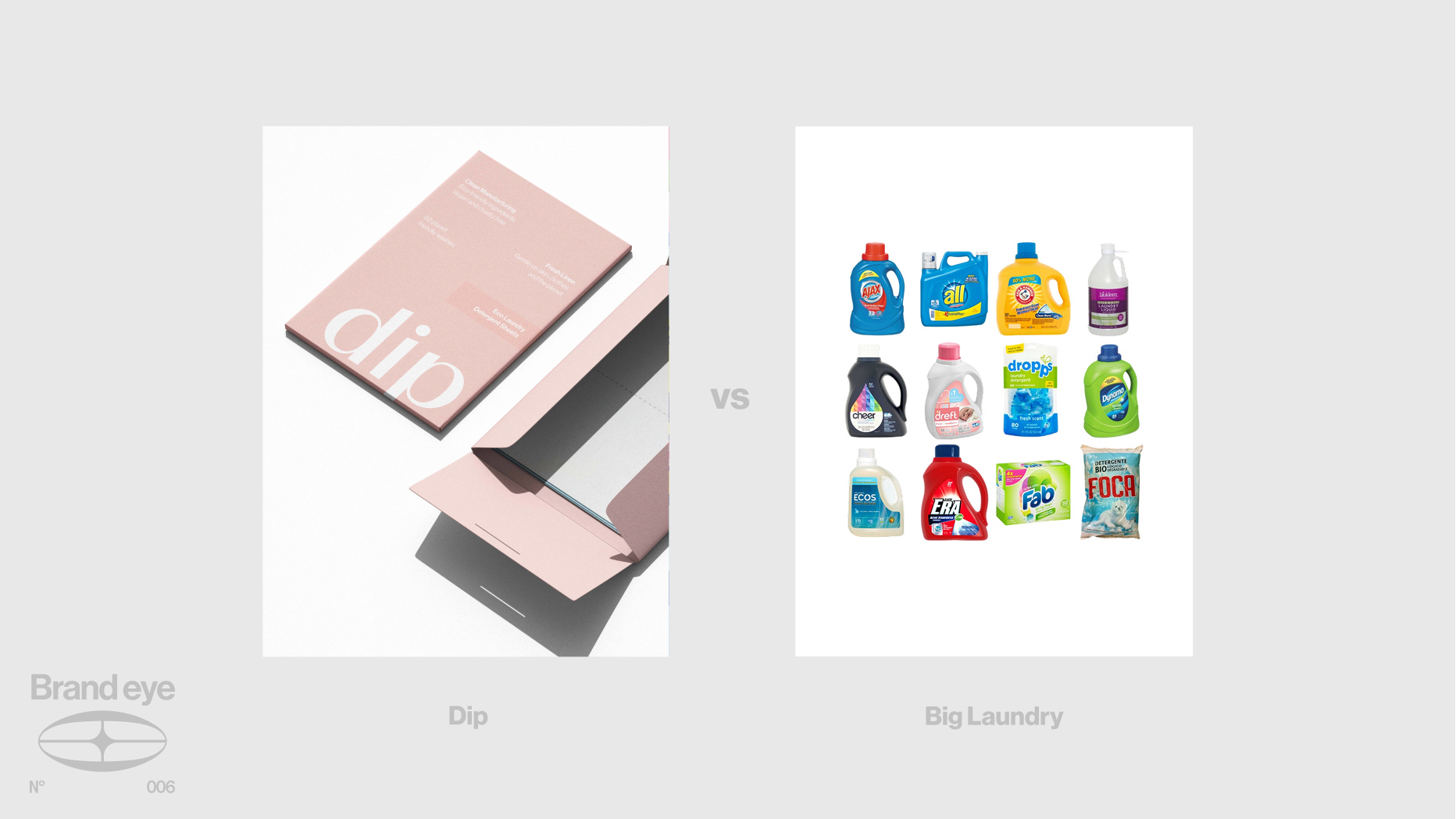
Big Laundry speaks to beleaguered parents and stained sports kits. Enter Dip, which reframed this purely utilitarian product by embracing laundry not as a chore but as a part of self-care. Dip’s laundry sheets come in packaging that looks like it belongs on the bathroom shelf alongside Aesop or The Ordinary. Sterile plastic hidden away under the sink became aspirational, design-forward branding that reframed laundry as part of a home wellness ritual.
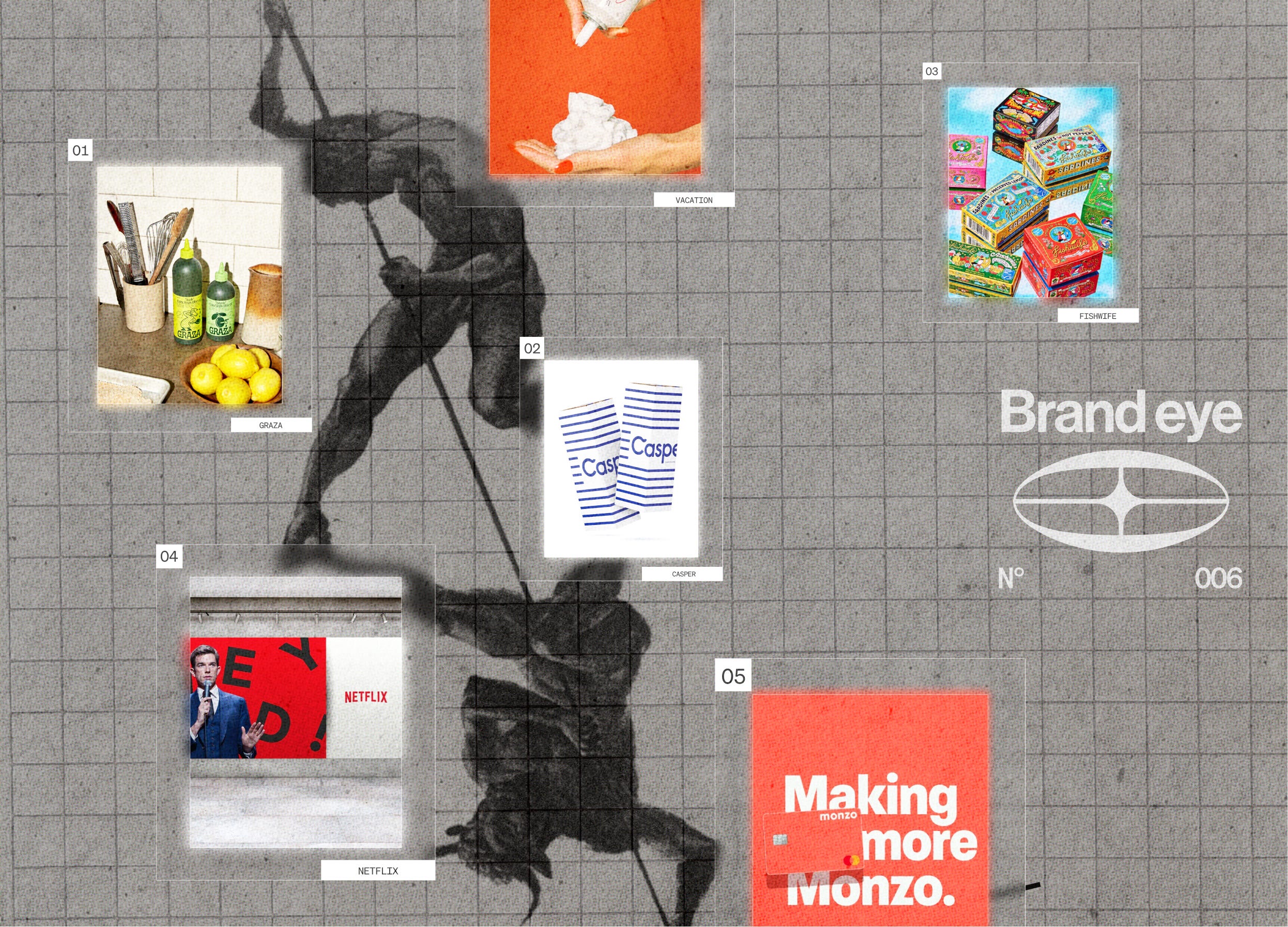
Fishwife did the same for canned fish. Boring pantry tuna, the definition of commodity survival food, became a viral status symbol through bright, story-driven illustrations and a gift box sleeve that gave a standard tin room to tell a story.
4. Cut the Friction
Sometimes the most powerful David move isn’t a better product. It’s identifying the thing that makes the dominant experience quietly miserable and removing it entirely.
Incumbents build their models around assumptions about how their category works. Over time those assumptions become invisible to them, obligatory for consumers, but obvious to anyone looking in from the outside.
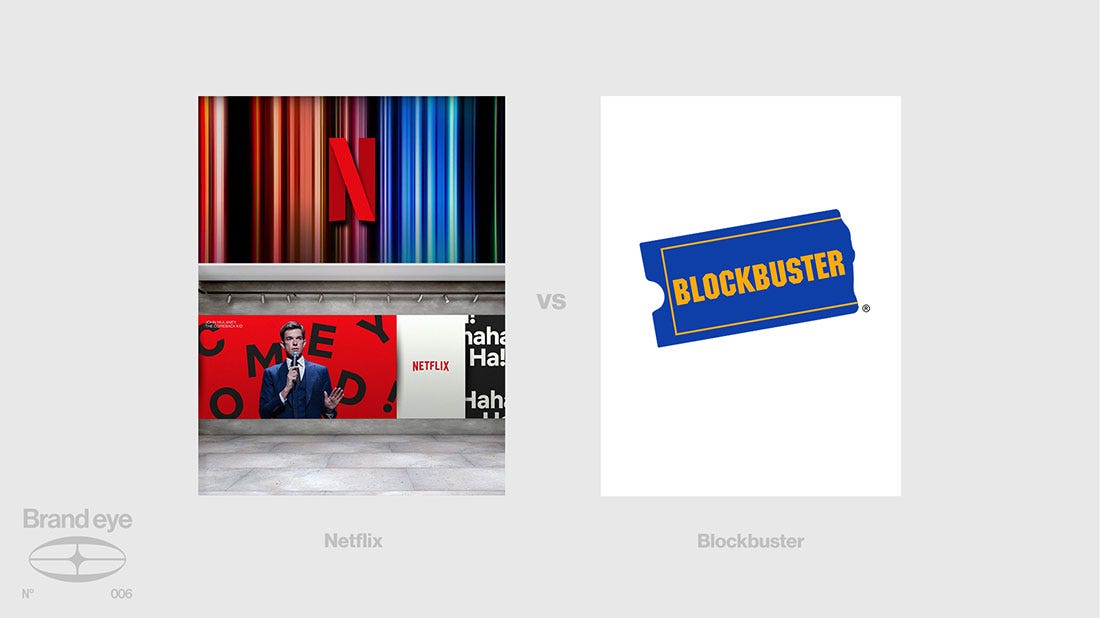
Blockbuster’s model depended on late fees, a friction element which made them money but baked punishment into the customer experience. Netflix, as an outsider, understood that building a business around negative customer experience was a recipe for disruption. Kill the friction, introduce a subscription model, remove the late fees, and suddenly customers no longer felt like they were being scolded by the place they went for entertainment. The cinematic branding helped too.
The same logic applied to banking. Branches, confusing fees, clunky corporate apps. Monzo’s slingshot was a hot coral card and instant, emoji-filled spending notifications. Financial transparency stopped feeling formal and anxiety-inducing and started feeling warm, social, and oddly fun. Casper did it for mattresses. One perfect product in a box with a 100-night trial turned buying a mattress into an aesthetic, viral unboxing event.
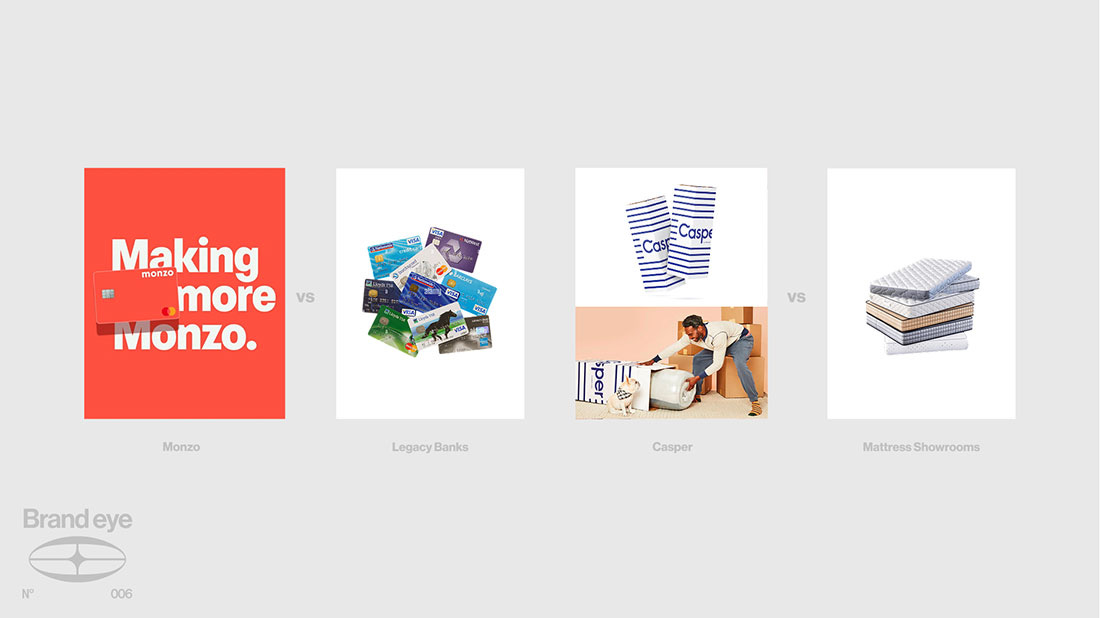
Just because audiences put up with incumbents, that doesn’t mean they won’t flock to a challenger who offers them an alternative.
5. Out-Human the Giant
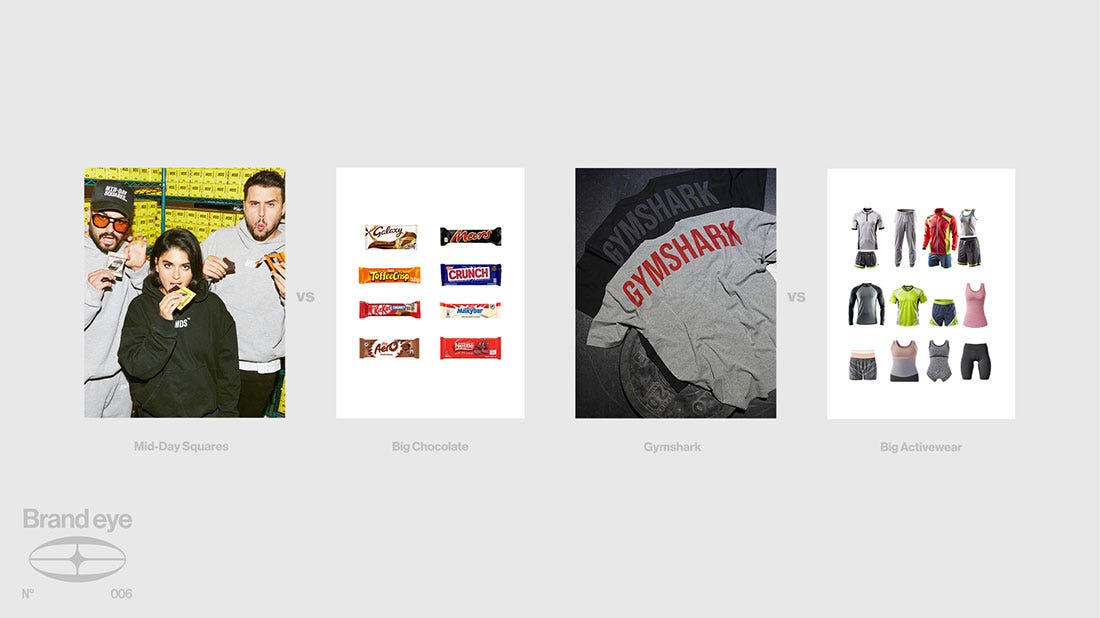
Mid Day Squares encapsulates our fifth strategy. Brand activations that emphasise the fact that they’re not limited by the slow-moving machinations of corporate snack brands. A founder reality show? Sure, why not. Polished ads were replaced by real human content that put real humans forward.
Gymshark is the multiplier effect of this approach taken to its logical conclusion. Think about what goes into making Nike and Adidas work. It’s not just the mental market share built off decades of advertising, it’s the logistical machine. Tonnes of merchandise in premium retail fronts on prime real estate the world over. The counter move for a startup is to lean into the fact that you’re not a global mega-corp. Sponsor relatable fitness YouTubers. Sell online, because that’s where real people shop. Build a massive, agile digital community grounded in gym-floor authenticity. You know what it feels like to swipe in after a long day at work in a way that ad execs on multi six-figure salaries with vested stock in legacy sports brands can’t necessarily relate to.
The Wheel Keeps Turning
Here’s one more thing to consider. Many of today’s Goliaths started out as Davids.
Airbnb and Netflix, once your prototypical California tech startups, are now established billion-dollar public companies. The same innovations that position a challenger brand can become established standards ready to be subverted by the next wave.
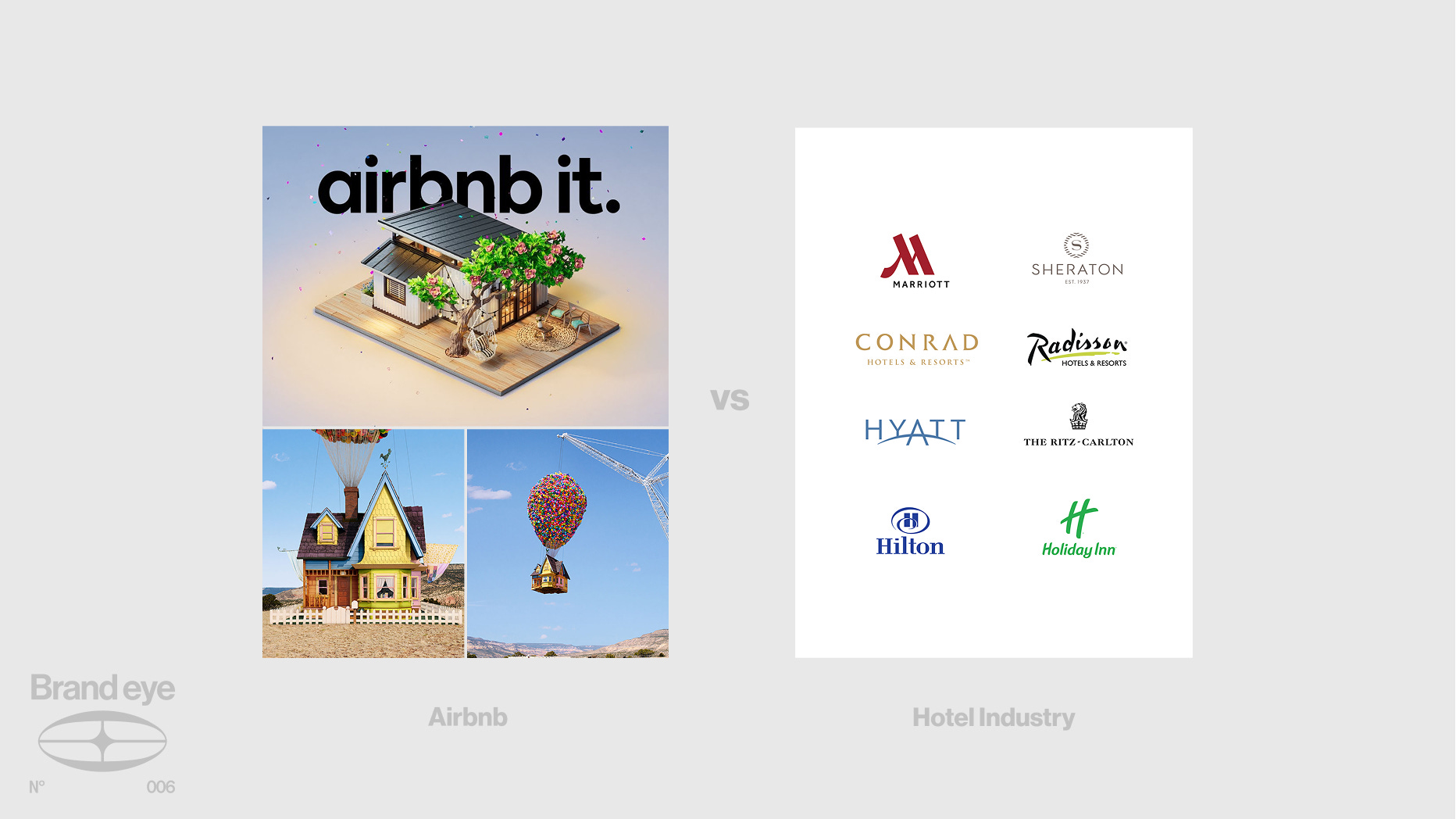
So keep thinking within this framework even as your company grows. Because there will always be new angles opening up for challenger brands to approach their incumbents.