



In the age of algorithmic feeds and an endless churn of content, a new asset has come to dominate the world of branding. If you spend any amount of time inside the modern social media ecosystem, you’ve heard the phrase. The attention economy.
Coined by economist Herbert Simon, it describes a simple but consequential dynamic. As information becomes more abundant, attention becomes more scarce. On the modern internet, where content is effectively limitless, the ability to capture attention has become one of the most valuable commodities a brand can hold.
Of course, knowing what something is and knowing how to operate inside it are two different things. So how do you actually navigate the attention economy? These are the five principles we keep coming back to, the ones we think are essential to making sure your brand doesn’t just borrow attention, but accumulates it.
1. Sameness costs you twice
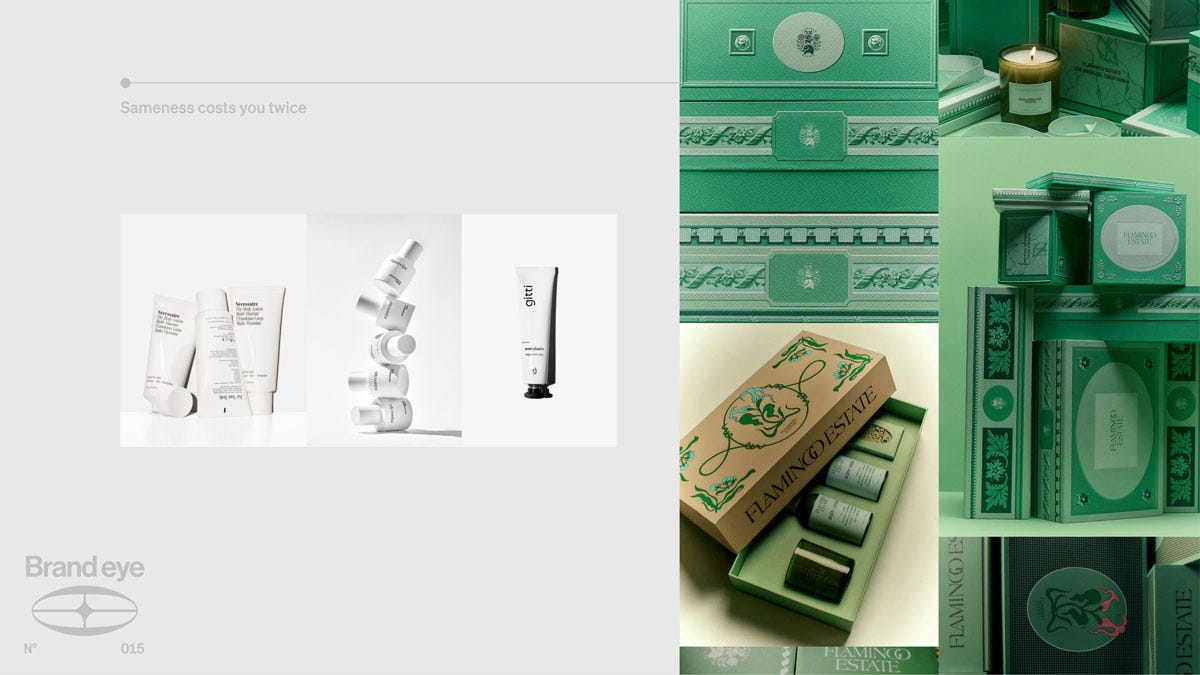
Density of content competing for your attention means that it’s not just a matter of getting people’s attention, but holding onto it. A brand that doesn’t differentiate itself can buy a moment of attention, but it can’t keep it. Which means you’re paying twice. Once to get noticed, then again the next time, because the first impression didn’t stick. Even if you do draw a segment of the audience, an undifferentiated brand can’t hold them. The ROI on every ad pound erodes. You’re not accumulating attention, you’re renting it by the second.
2. The brain doesn’t stop for the familiar
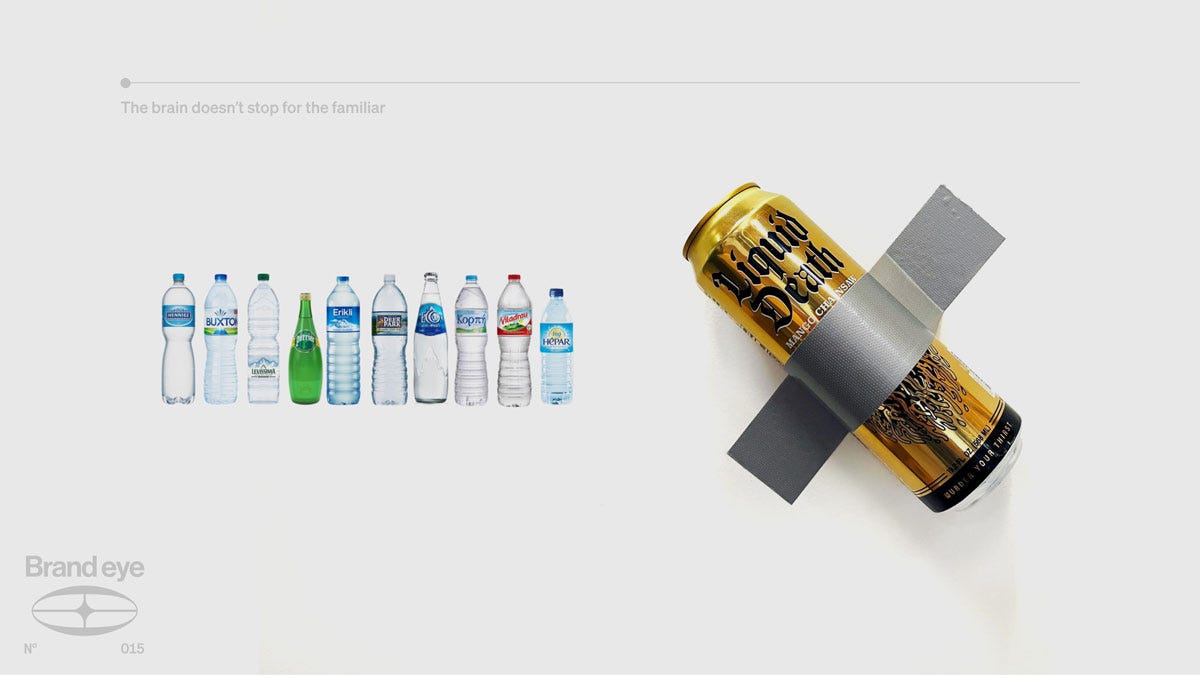
We’re trained to navigate an information-rich feed by filtering out samey content, so the only way through is to stand out. The sheer volume of brands fighting for attention means it’s impossible for the average person to invest themselves fully in every brand interaction. Consciously or subconsciously, most of what they scroll past gets muted or glossed over. The way to avoid falling into that category is simply to be different. In a sea of iterative brands that differ only by slight tweaks to an established formula and the same category clichés, the one that inverts the stereotypes is the one that stands out.
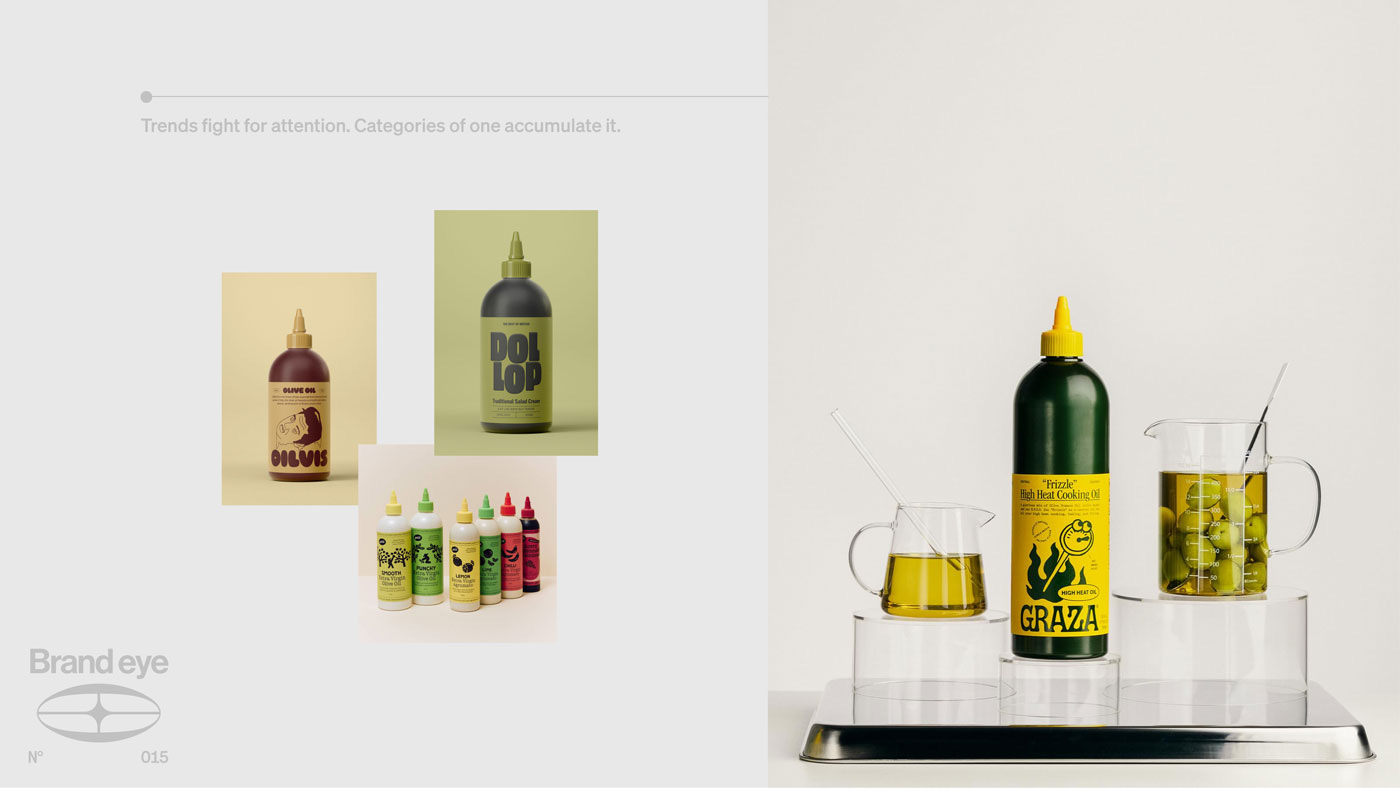
3. Trends fight for attention. Categories of one accumulate it.
David Protein doesn’t look like a protein bar. Its design language pulls from luxury categories and minimalist editorial, not gym culture and typical protein barbold graphics and primary colours. So it doesn’t just earn a glance, it earns a conversation. People stop, talk about it, share it, and the brand starts compounding social proof every time it appears.
That’s the difference between trying to win on trend and trying to win on category. A brand chasing trends is borrowing attention. A brand that’s a category of one accumulates it. Rains did the same thing with rainwear, reframing bad weather from an obstacle to a setting worth designing around. That kind of move stays with people long after the moment of impression has passed.
4. Blue ocean turns every move into a deposit
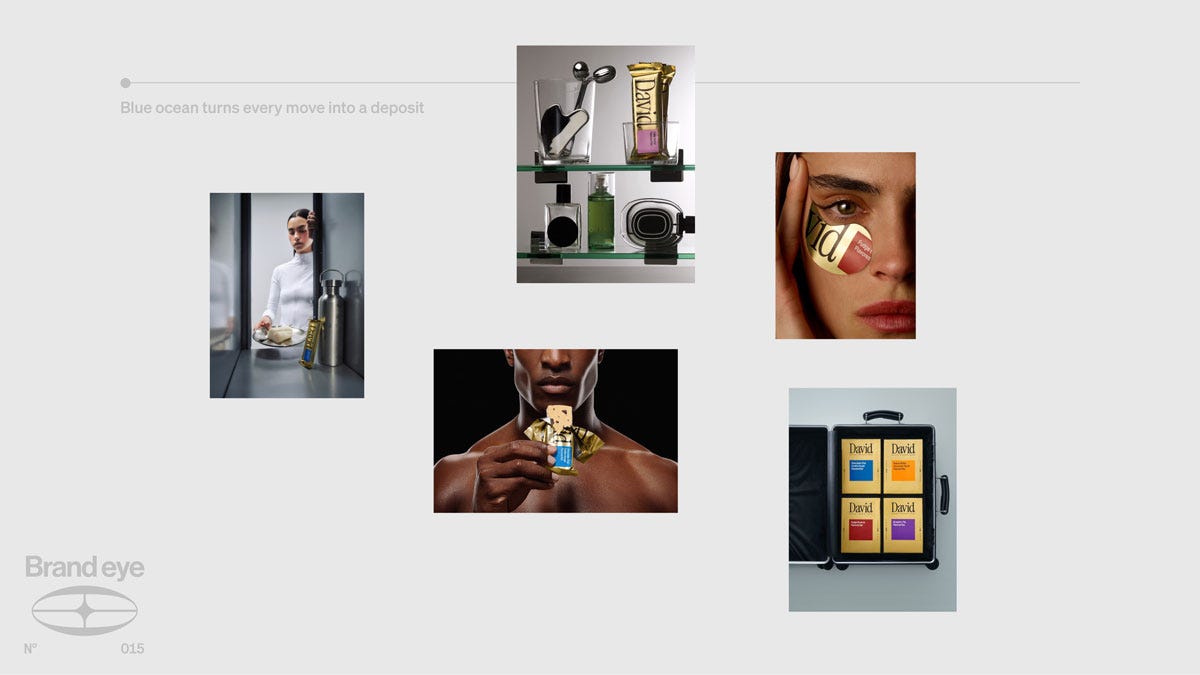
This is where Blue Ocean Branding compounds. When your brand sits in its own category, every move you make does double duty. You’re not just building the idea of your brand, you’re building the idea of the category itself. The two become inseparable. So every campaign, every product, every piece of content reinforces both at once.
That’s how attention shifts from rental to ownership. When consumers think of the category, they think of you, because you defined it. It’s a different economic reality. Every pound spent on branding builds permanent territory rather than another billboard rented for the week.
5. If you can’t outspend, you can out position
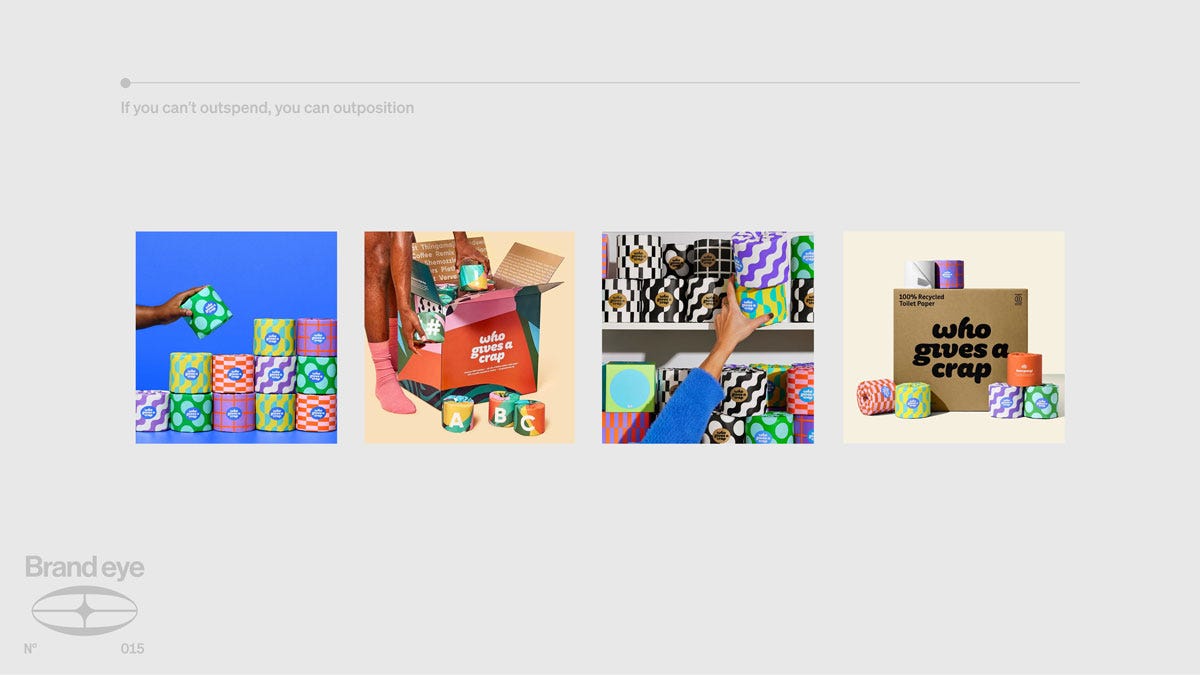
Money buys volume. But the attention economy already has volume. That’s the whole point. What it doesn’t have is differentiated, well-positioned brands. So the leverage moves from spend to strategy.
This is good news for challengers. You can’t out-spend an incumbent, but you can out-position one. And positioning isn’t something you throw money at. It comes from understanding your brand story, knowing your category, and identifying the angle nobody else is willing or able to take. Get that right and every pound of marketing spend works harder. The smartest positioning multiplies every other branding decision you make.
The Takeaway
The attention economy makes one thing clear. Visibility isn’t the same as relevance, and an ad isn’t the same as a brand. The brands that win in this environment aren’t the ones with the biggest budget. They’re the ones who built a world worth paying attention to in the first place.
The fundamentals haven’t actually changed. Story, Signal, System. Build a category of one, and attention stops being something you chase. It accumulates on its own terms.