


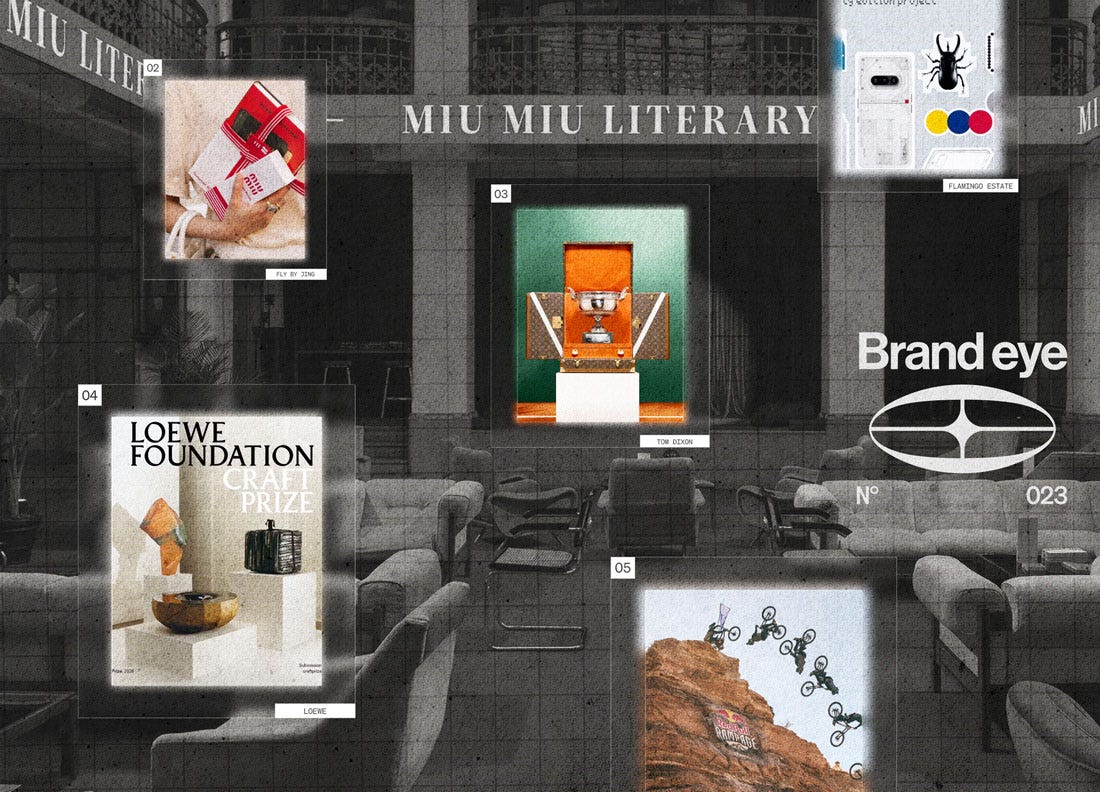
Sponsor the Story
What makes for good sponsorship? Slapping a logo on something gets you attention, but beyond name recognition, what does it accomplish? Aligning sponsorship with brand story does something with that attention. It builds associations and anchors your brand in the fabric of the event or thing you’re sponsoring, rather than sitting on top of it as an advertisement.
The bottom rung is the simple act of putting your brand name on something. It wins you name recognition and nothing more. Above that sits alignment on the level of values, which is obviously valuable. But aligning story is the logical next step. Story alignment doesn’t pair two entities that share similar abstract values, it pairs ones whose arcs, histories and paths parallel one another.
But while story alignment remains a gold standard for sponsorship, there’s another sort of relationship that takes things even further, where stories are intertwined, not aligned. This last type of relationship is what we call ‘hosting culture’, and it’s a form of branding that’s getting more and more popular, particularly with regards to high end and luxury products.
In this issue we’ll break open a few of these sponsorships to see how the dynamics work: two that align story, four that host culture, and what separates each rung of the ladder from the one below.
Louis Vuitton and the Trophy Journey
Louis Vuitton started as a manufacturer of luxury luggage in 1854. Their heritage of craft is their blue ocean, because it’s inimitable. No competitor can buy 170 years of history, so it serves LV to leverage it wherever they can.
The other pillar of the LV story is its global nature. Fashion is a conspicuously global industry. The big four fashion weeks take participants and the fervent crowds that follow the events on socials and in legacy media from Europe, to North America and back again. And luggage, the founding product, is the object inherently associated with travel itself. LV doesn’t just sell to a global class of people, it brands itself as a facilitator and part of the global flow of culture and commerce.
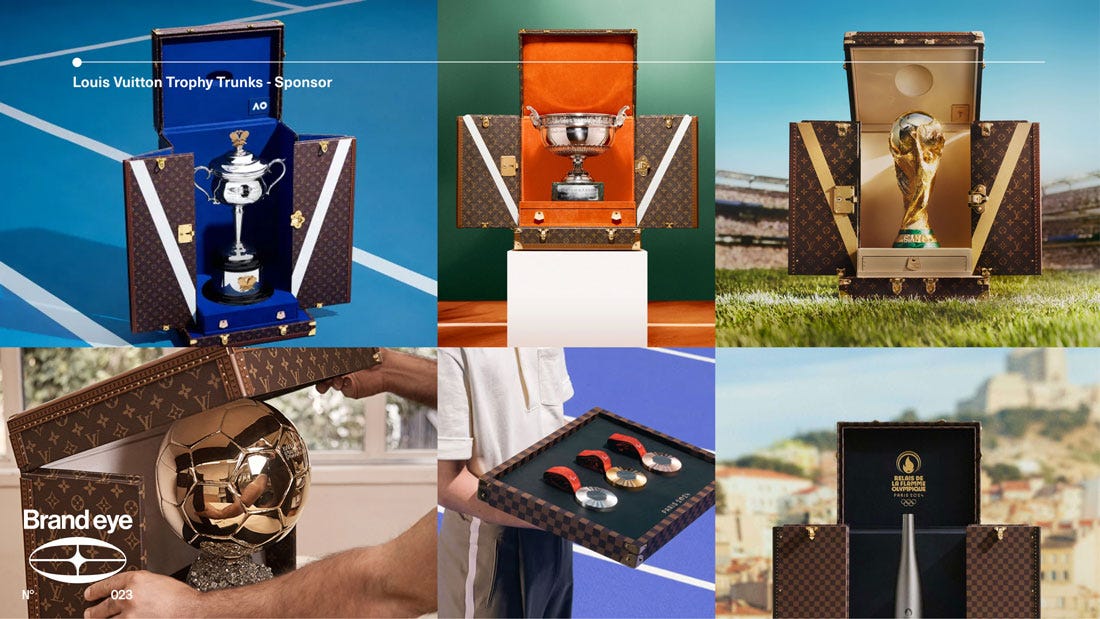
So when LV sponsors the World Cup or the Monaco Grand Prix, they don’t dress the athletes. They provide bespoke LV baggage to carry the prize. The World Cup trophy travels the world in an LV trunk, and the winner’s trophy at Monaco comes out of one. At the Paris Olympics in 2024, the medals and the Olympic torch arrived in LV trunks too. The company justifies its presence, not by plastering its name on a billboard, but by doing what it does and has always done, just in a conspicuous context.
By sponsoring the trophy cases specifically, LV anchors itself to the story of the journey. Global presence, prestige, heritage, and an object of value protected in transit.
A tradition of elite performers in their field, committed to a globe-spanning enterprise, linking cities and cultures around a shared obsession.
Rolex and Wimbledon
Precision instruments and elite sport are natural partners. Omega has timed the Olympics since 1932. Tag Heuer are in on that action too with F1. Accuracy matters to both, so the pairing makes sense. But that’s value alignment. Rolex and Wimbledon go a rung higher.
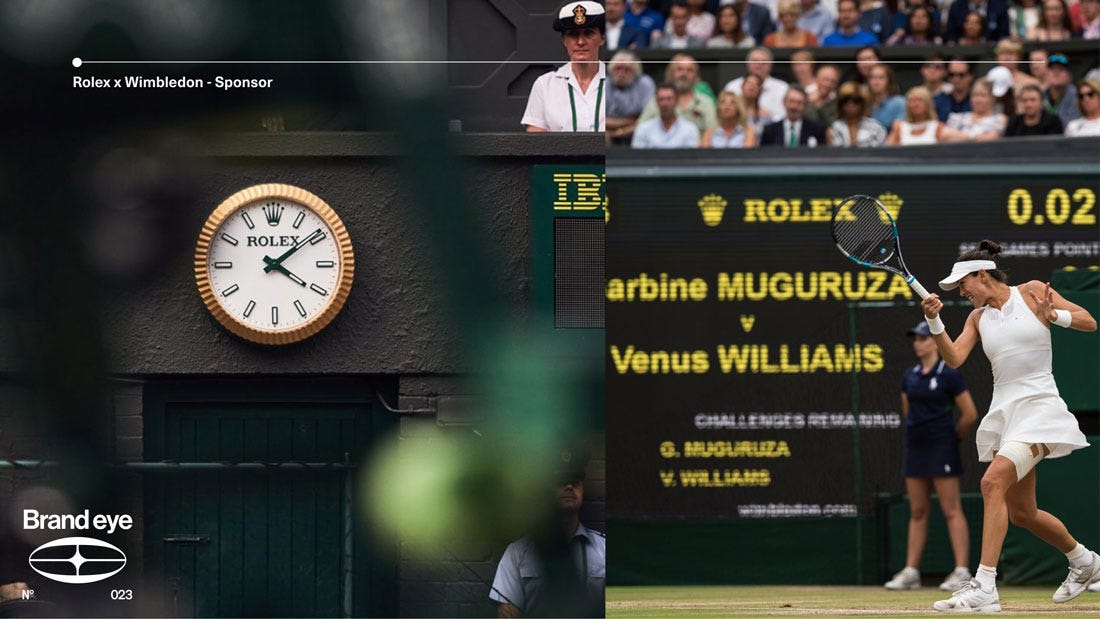
Rolex has been the official timekeeper of Wimbledon since 1978. Yes, engineering excellence defines Rolex, but plenty of watch companies get the job done with regards to timekeeping. Rolex is there for a different reason, and the reason is that Wimbledon is not just any elite competition, it’s the most famously ‘high-status’ sporting event in the world.
Both Rolex and Wimbledon were built in the early twentieth century on the same obsession: technical excellence inside a traditional craft. Both spent the next hundred years being sticklers for tradition when it comes to their image while simultaneously modernising everything underneath it in order to retain their market position.
Wimbledon still plays on grass and still enforces all-white kit, and also runs the most advanced broadcast operation in tennis. Rolex still makes mechanical watches, and also invented the waterproof case that made the modern sports watch possible.
The allure of ‘old-money’ oozes from every part of Wimbledon, which takes place in one of the wealthiest neighbourhoods in London, from which it takes its name. And a tennis court holds a fraction of the crowd a football stadium does, so scarcity is built in. Wimbledon permits almost no visible branding on its courts, another nod to the idea that they sit above the commercial considerations of most other competitions. The Rolex clock on the scoreboard is one of the only commercial logos in the grounds. This is a tournament that famously turns down sponsorship money to protect its atmosphere. Presence there can’t be bought. Rolex runs on the same logic. Waiting lists, limited supply as a factor of manufacturing excellence, not in order to juice markets, presence in the right places.
Wimbledon and Rolex bridge the gap between the pre-war era of European elegance and old-world prestige whilst maintaining a commitment to technical excellence.
How to Host Culture
Hosting culture is one rung above story alignment. You’re not placing your story next to a matching one, you’re actively entangling the two. Rather than handing over cash in exchange for a logo placement, you’re doing the work that makes the culture possible. The event doesn’t just reflect your brand. It depends on it.
Red Bull sponsors athletes who want to break records and take their performance to groundbreaking levels. But the sports they choose to prioritise are often not heritage sports. Cliff diving, air racing, freestyle motocross. They know the role of upstart that they play in their own story, and to keep it cohesive they make themselves part of the stories of upstart sports communities, as the patron that makes their activities possible. Red Bull didn’t attach itself to an existing culture, it helped build the infrastructure of that culture and scaled it to a global audience.
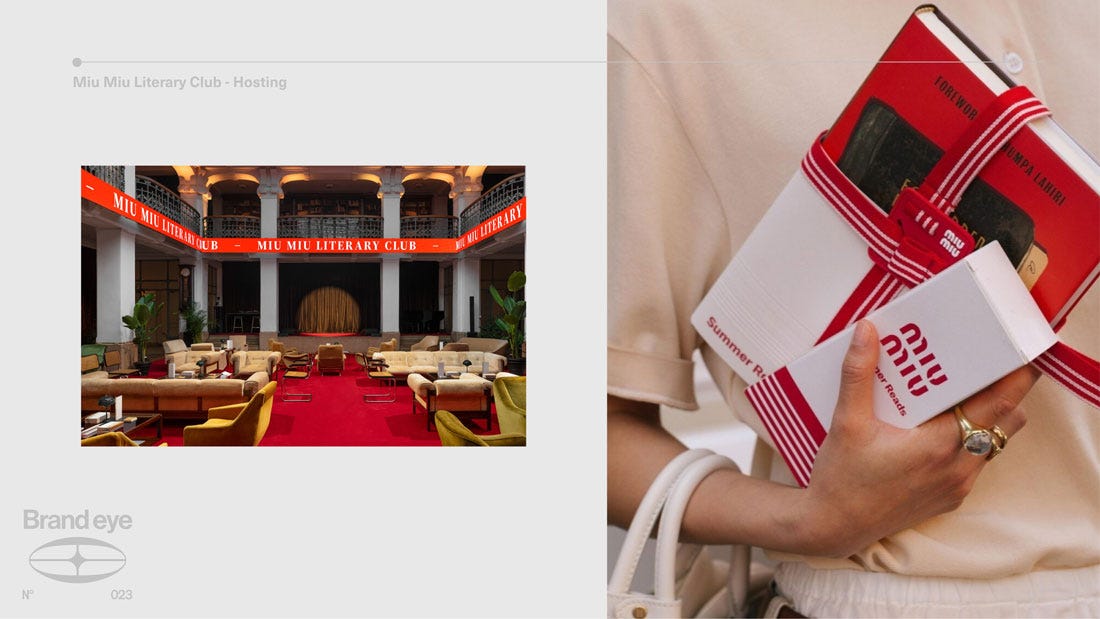
Miu Miu runs its own book club. A fashion house built on a particular kind of femininity builds the room where that femininity gets discussed. Intellectual, unconventional, a little subversive. Centering conversations about art and anchoring their brand as a creative enterprise.
Loewe began in 1846 as a collective of leather craftsmen in Madrid, so in 2016 it created the Loewe Foundation Craft Prize. A prize worth fifty thousand euros for the best piece of craft in the world, in any discipline. In the early years makers were hesitant to enter, but the latest edition drew more than four thousand entries from over a hundred countries. There’s no bigger stage in world craft.
Absolut spent four decades on the same idea, filling an art collection with its own commissions from Warhol’s bottle onwards.
Facilitating discussion, preserving, patronizing, curating, and broadcasting, these are ways in which brands can go from guests in a space, to hosts and from simply being adjacent to culture to being involved in its making.
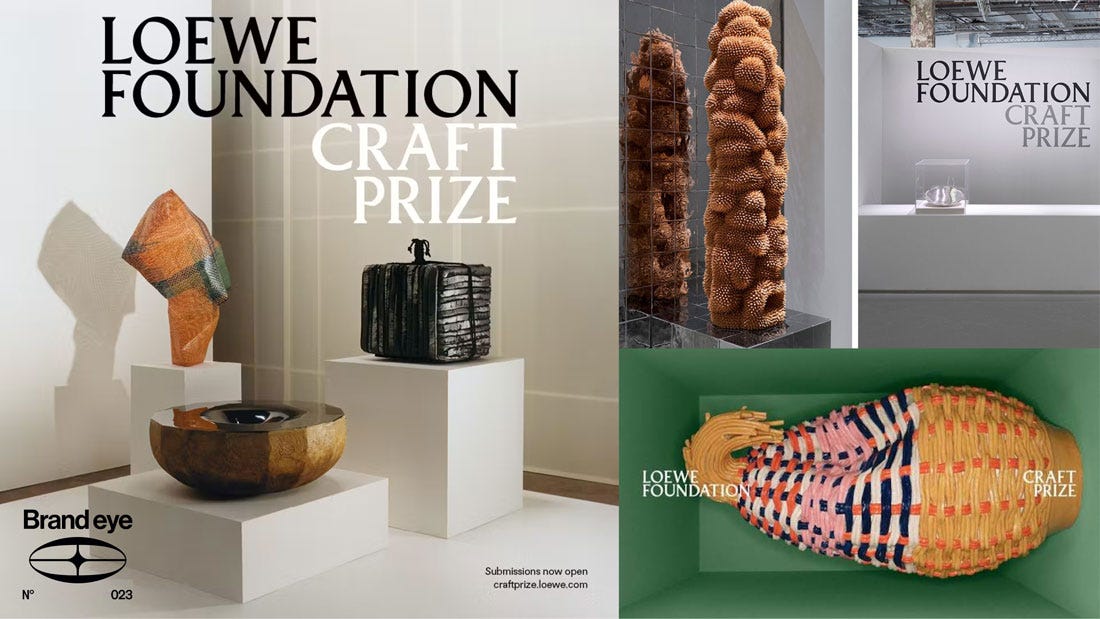
Loewe and LV, Rolex and Wimbledon, these are about as old as brands get, but you don’t need 180 years of heritage to do this.
Nothing, the London phone brand has been hosting its community since before it had a product. Fans hold an elected observer seat at board meetings. Maybe a gimmick for another company, but Nothing’s build-in-public ethos and their transparent aesthetics draw on the communitarian and DIY histories of modern tech, so audience involvement has always been what they do.
What’s the outcome? The Phone (2a) Community Edition, co-designed by the community: hardware, wallpapers, packaging and the marketing campaign, submitted, voted on and shipped. And as a result, audiences have a vested interest in a product before it’s ever hit the market. Launch events are meetups where people attending helped build the thing being launched.
Nothing’s story is that technology got closed and boring. So they opened the company up, and grew the culture from inside it.
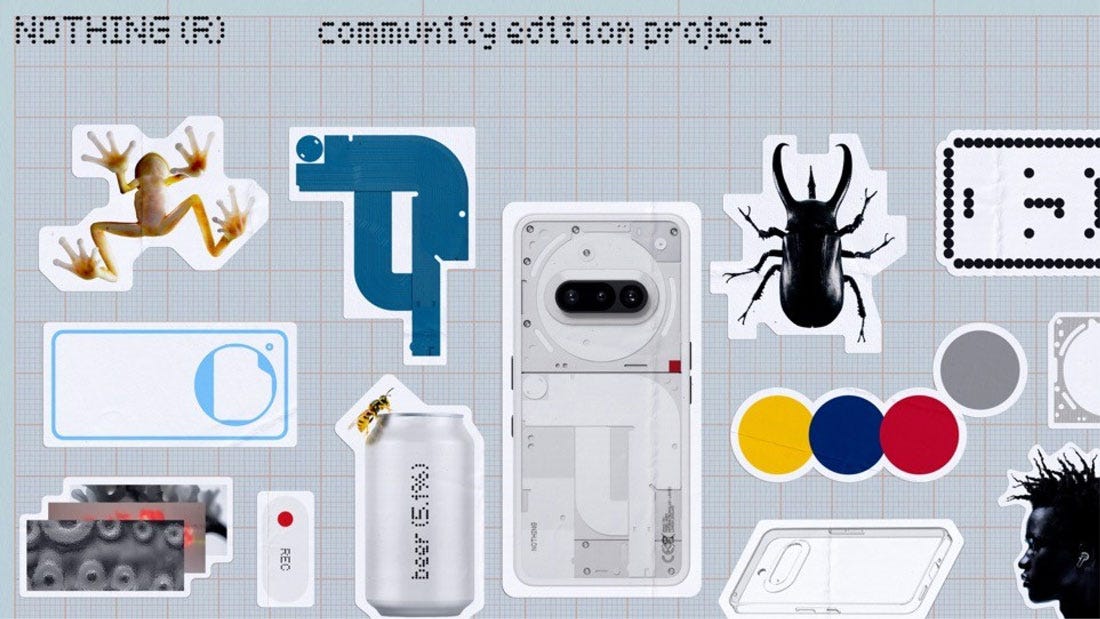
Each of these brands is noticeable but not out of place. Because they share a point of origin and a destination with the culture they support, the association forms on its own. Nobody has to be told what Loewe has to do with craft. The prize shows that.
The Ladder
Anyone with enough money can slap a logo on a board. Fewer brands can find a story that runs parallel to their own. Almost none are willing to host the culture themselves.
That’s the ladder. Every rung you climb, the association gets harder to copy, because the higher you go, the less you’re paying for the connection and the more you’re building it.
We know a lot of you read and enjoy the newsletter every week and we truly appreciate your continued engagement. We'd like to ask you a tiny favour, which would help us continue to develop Brand Eye and get it in front of even more readers. If you're used to reading Brand Eye from your inbox, you might not know that Substack has its own algorithmic feed in the app and on their website. The algorithm uses engagement to gauge what content might be of interest to other readers so if you enjoy what you're reading please click that little heart icon at the top left of the post, or even better leave a comment and let's chat about your own thoughts on the week's topic!