


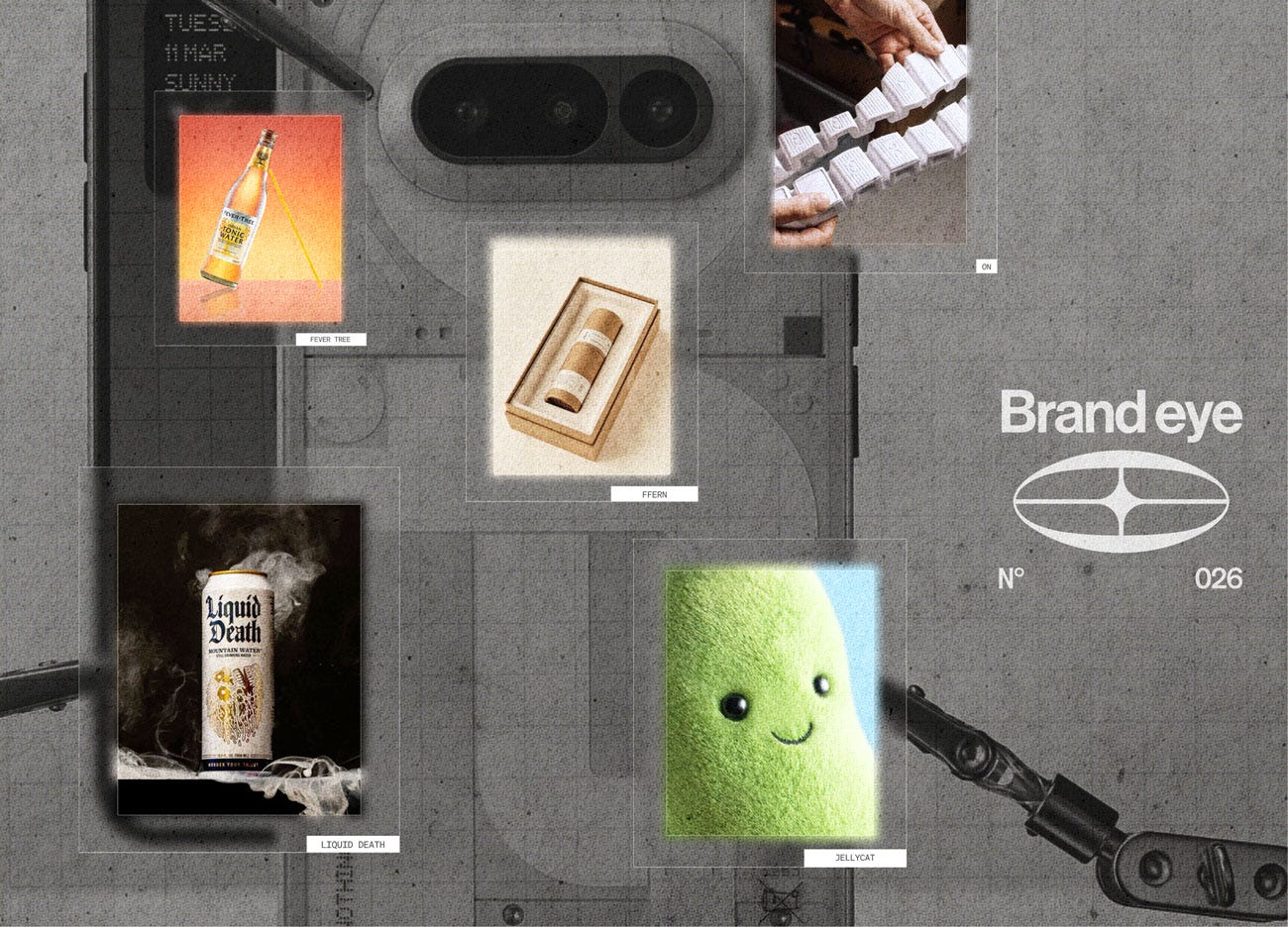
For this week’s post we’re going into the nitty-gritty of how you, or anyone, can go about building a cult brand. The kind of brand people go out of their way for, pay full price for and come back to on their own, usually with a friend in tow.
It’s a status that most brands never reach. They look like everyone else in their category, so they pay more for every customer they get, forced to compete on cost or brute-force attention through ad-spend. Billboards to be noticed, a discount codes, then more ads to bring them back as clicks get pricier with every passing quarter. We call it the sameness tax. More paid won’t fix it, and neither will a shiny new logo, because the thinking beneath the brand is missing.
Don’t get us wrong, building a cult brand isn’t easy. But it isn’t a mystery either. What we’re offering you is the playbook, the same one we use with our own clients.
It runs in eight moves, in order, and they sit inside the Story, Signal and System pillars you’ll know from earlier issues. Each one comes with a tell, the sign that move is missing from your brand. Pin it, stick it in the Notion, and come back to it as you build.
Story
1. Map the Red Ocean
The tell: you look like everyone else on the shelf.
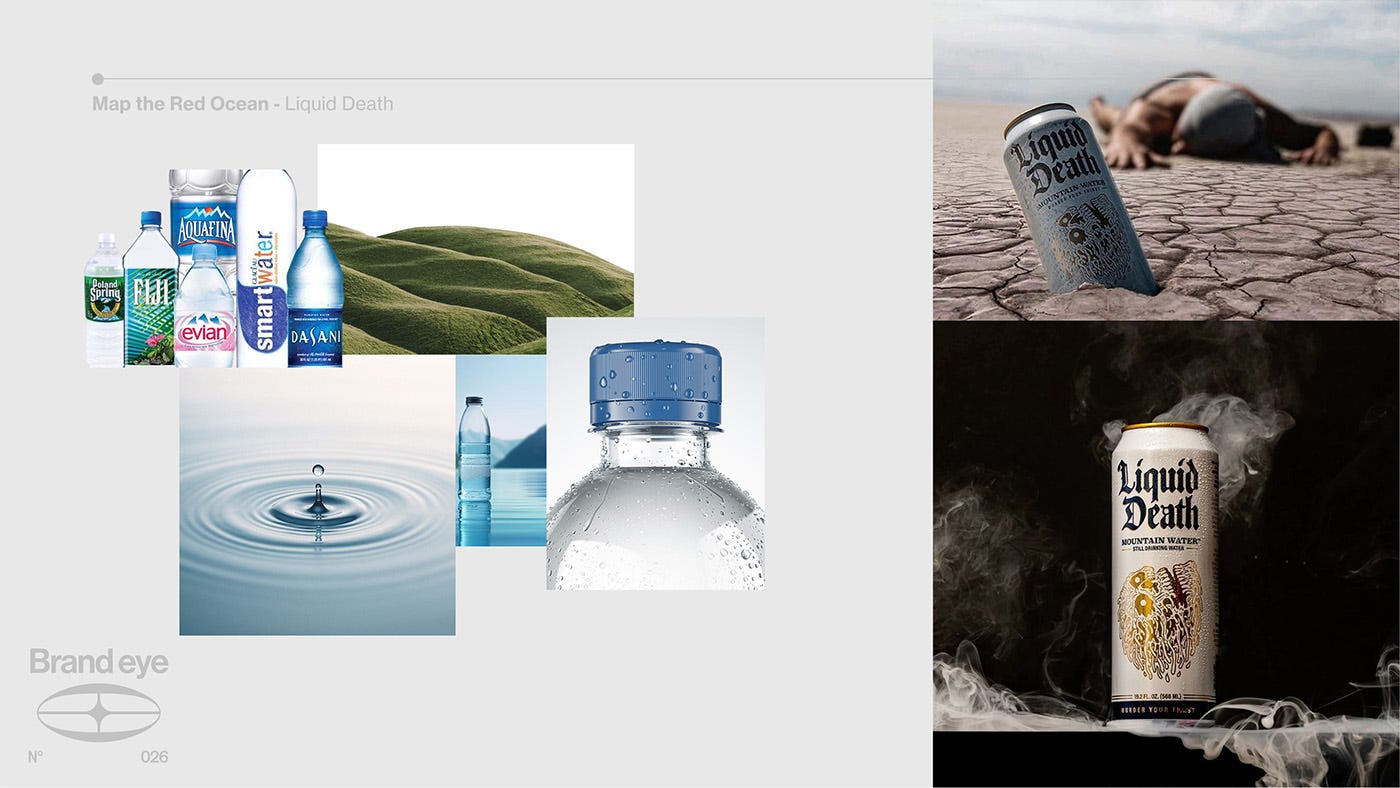
Step one is opposition research, but not the usual kind. Red Ocean mapping looks past what your competitors are doing and targets the shared language of the whole category. How every rival looks, what they say and how they sell. In plain English, the unspoken grammar and the rules that run branding in your industry.
Only once you can see the rules can you start straining against them, and work out which ones are load bearing and which are just habit.
Red Ocean Mapping comes first for a simple reason. All branding exists in context. Audiences read you in relation to every other brand on the shelf, so if you build without a map you’ll lack direction and risk being misread. Liquid Death started here. In bottled water, pure was no longer worth printing on the label, because every brand already did.
2. Find the Unfair Truth
The tell: when people ask why you, the answer is quality.
Every business has something true that a rival can’t claim. It might sit in the product, the founder or how it’s made. The quickest way to find it is to look for the compromise everyone else in your category has made and you haven’t.
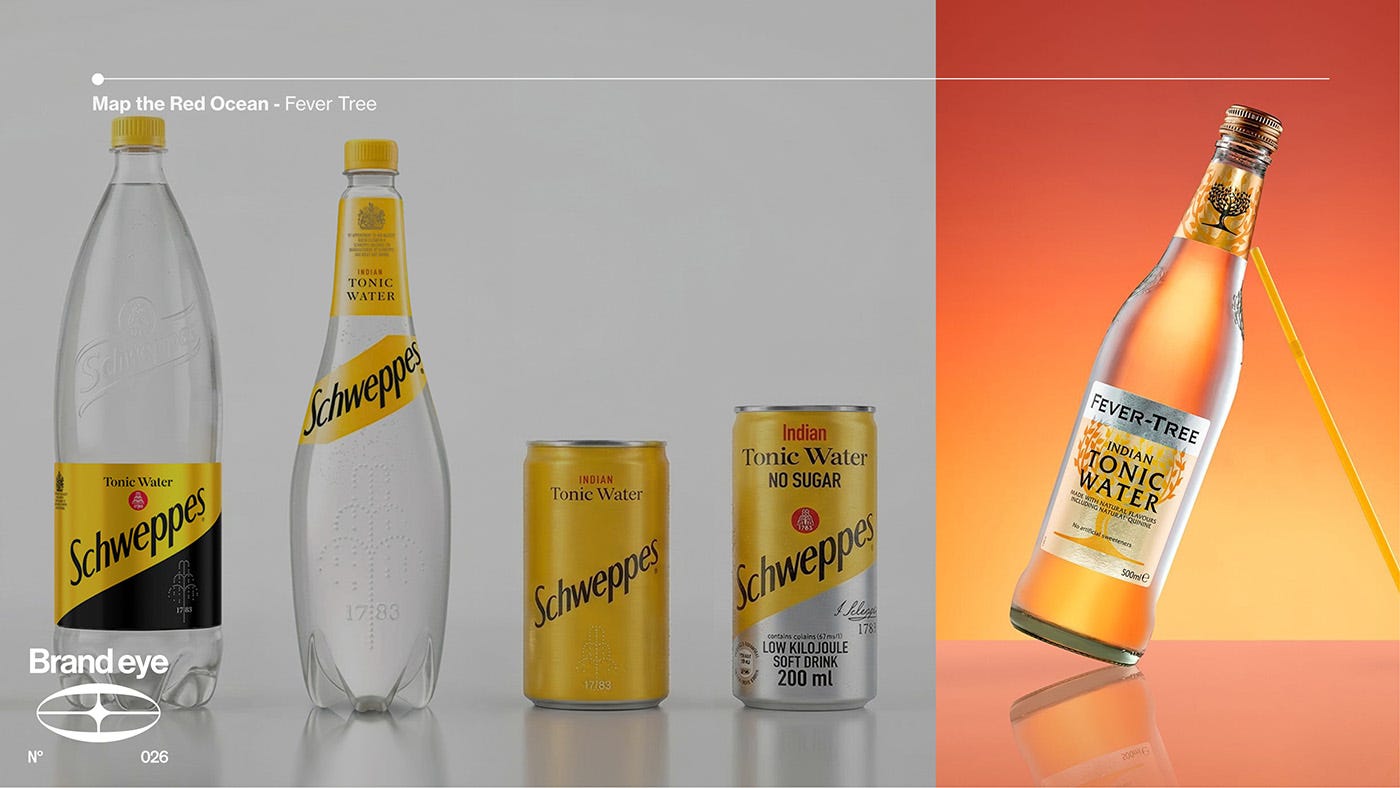
Fever-Tree spotted a paradox. Three quarters of a gin and tonic is tonic, yet people would split hairs over expensive gins and then top them up with Schweppes. Schweppes kept its tonic cheap to make, because that’s how the default protects its margins. Fever-Tree made a tonic with better ingredients and said so plainly: if three quarters of your drink is the mixer, mix with the best.
Schweppes couldn’t follow without admitting its own product was the compromise. That’s what makes the truth unfair. The incumbent can’t copy it without looking like a hypocrite. By January 2018, Fever-Tree had overtaken Schweppes as the biggest mixer brand by value in UK supermarkets.
3. Make the Blue Ocean Move
The tell: you’re competing on price, and paying for every sale.
Once you’ve found your truth, turn it into a direction no rival can follow. This is where you stop being one option among many and become the only option in a category of one. And when you’re the only one with supply, high-school economics says you stop competing on price.
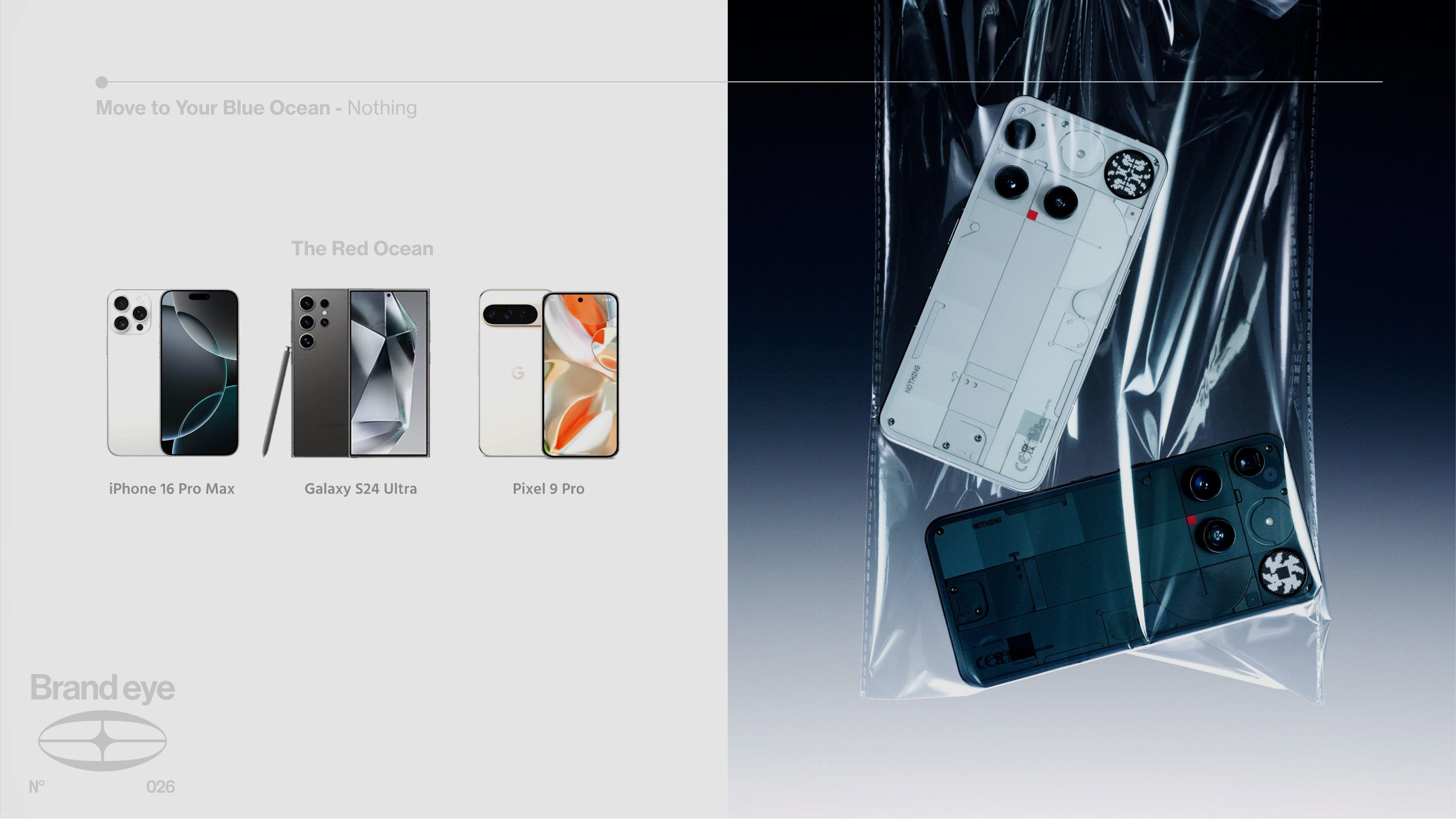
Take the Nothing phone. You’re not beating Apple on ecosystem or Samsung on supply chains, so Nothing chose not to compete. Under the glass it’s a lithium-ion battery, a touch screen and an ARM processor like everyone else’s. But if you care about product design and new tech, it’s the only choice in town. The phone for the heads. Fanatics want to be part of the process, which is how Nothing raised $1.5m from its community in 54 seconds, and why community investors hold a rotating seat on its board.
Dip made the same move in laundry. Big Laundry sold clean through clinical, joyless packaging that lived under the sink. Dip could have competed on being greener or cheaper and stayed a good choice among many. We positioned it as the first home wellness brand instead, borrowing its codes from beauty and lifestyle rather than cleaning. It went from £1m to £10m in 24 months.
4. Write the Story
The tell: ask five people on your team what you stand for and you’ll get five answers.
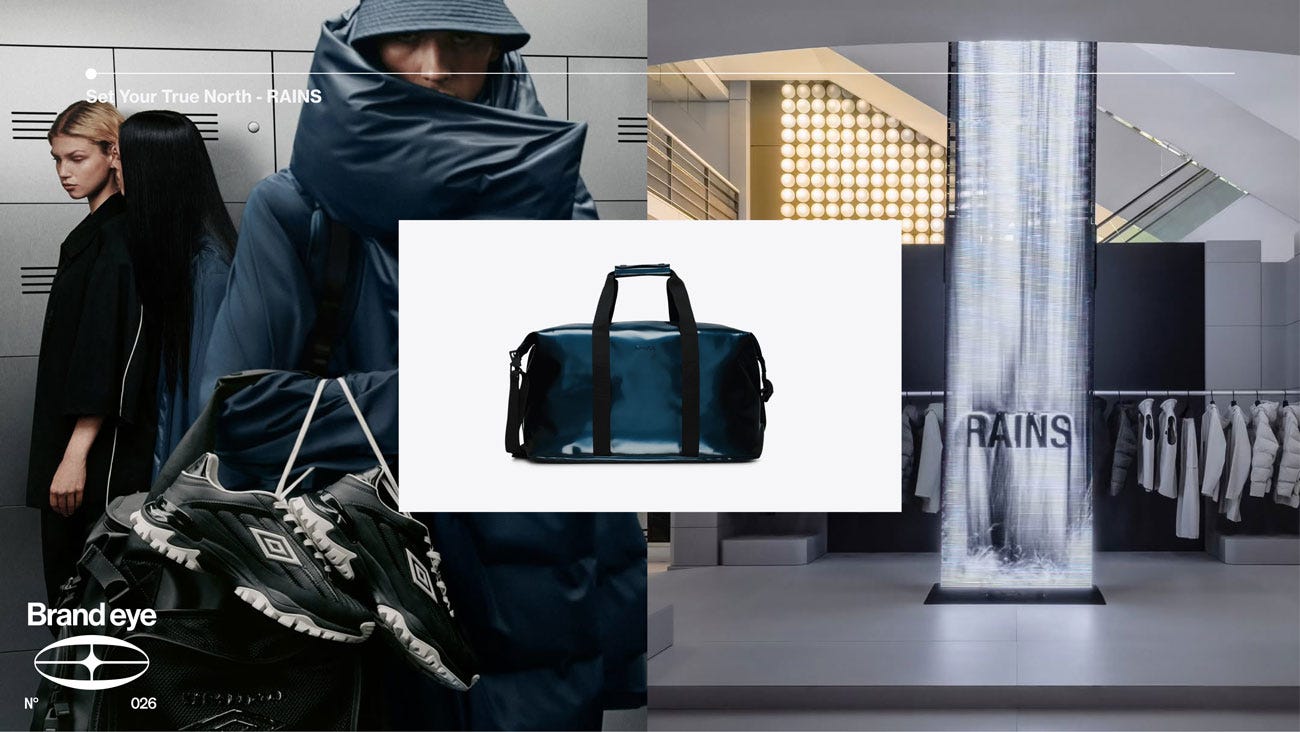
Every brand above has one thing in common. A single line that guides every creative decision. For Liquid Death it’s the hardcore presentation. For Nothing it’s building in public. That line is your North Star, and it’s the headline of your Story.
Brand building is a long game. A new position only matters if you back it up relentlessly, with every piece of content, ad and activation speaking in one voice. That gets harder as more hands touch the work on its way from studio to production. So write the story down in full, so the whole team can say it. Then boil it down to the one line anyone can reorient towards. It’s the filter every other decision has to pass through.
Rains doesn’t start each creative brief from scratch, because it knows one thing for certain. The brief will centre on rain. That makes every project more streamlined without being confining.
Signal
5. Build Your Signal
The tell: you changed the look and nothing else changed.
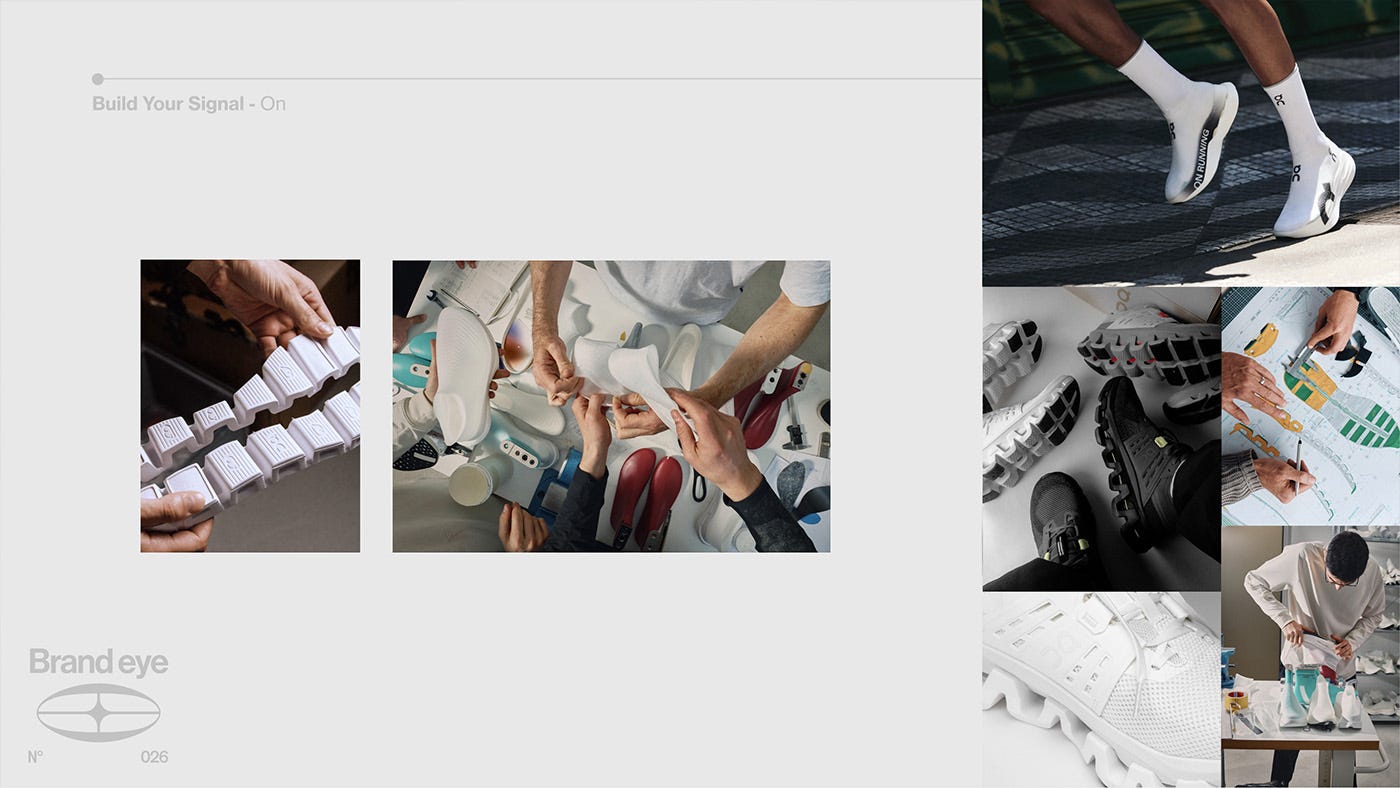
This is the only move of the eight that’s about how you look, which is why a new look on its own rarely changes anything. The look has to be built from the Story, not from taste.
At its centre sits one hero asset you own. It has to do two things:
Tell people instantly who made the product they’re looking at
Tell them something true about the brand that made it
Copy, content and social proof tell people about your brand. The Signal shows them.
On’s CloudTec sole is the practical version. It’s recognisable from across the street, and only On makes it. And because the sole is a performance part of the shoe rather than an aesthetic one, it shares an essential truth about the brand: Swiss engineering for people who care what’s on their feet. It’s a big part of how On went from upstart to the brand that just prised Kylian Mbappé away from Nike.
System
6. Establish the System
The tell: the brand only holds when you’re in the room.
You’ve mapped the category, found your truth, made your move, written the story and built the signal. Now it has to hold as you scale, take on staff and hand work to people who weren’t in the room
The best brand worlds commit to their story at every touchpoint, and a system is what makes that possible. It sets the operating rules, takes trivial decisions off the table and lets you measure twice and cut once on the big ones. Work that comes through the same pipeline makes sense together.
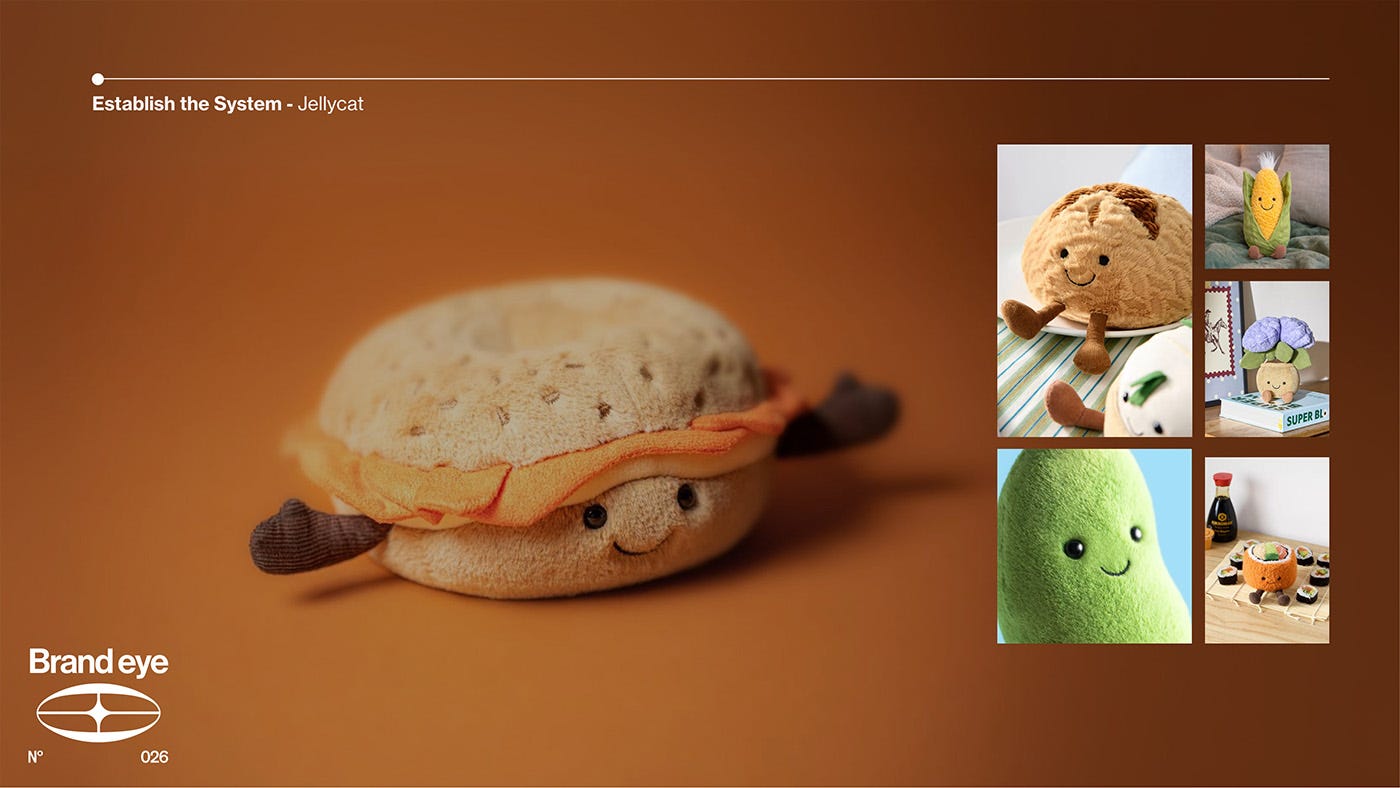
Jellycat’s brand is about the life inside each character, so its toys can’t just sit on a shelf. Jellycat built a system where the plush lives where it’s sold. Fish and chips at Selfridges in London, a diner at FAO Schwarz in New York, a patisserie in Paris. One creative decision, engineered to be reapplied anywhere with local feeling.
7. Set Your Pillars
The tell: you’re paying for content that never adds up to anything.

If you’re pushing content constantly, it has to be fresh enough to hold attention and predictable enough that people come back. Pillars do both. Break your story into a handful of content categories and a few series, each telling a different part of it, and rotate between them. Together they hold the brand up, hence the name.
Ffern’s Autumn ‘25 release, Cloud Orchard: A Wild Apple Heist, shows how. The film was the first pillar, cut for every environment from full screenings to vertical video. Behind the scenes was the second, bringing audiences into the making. Ingredient posts were the third, giving each note its own moment. The fourth was people, portraits of the makers that made the brand world feel lived in.
8. Build the Brand Trojan Horse
The tell: customers buy once and forget you.
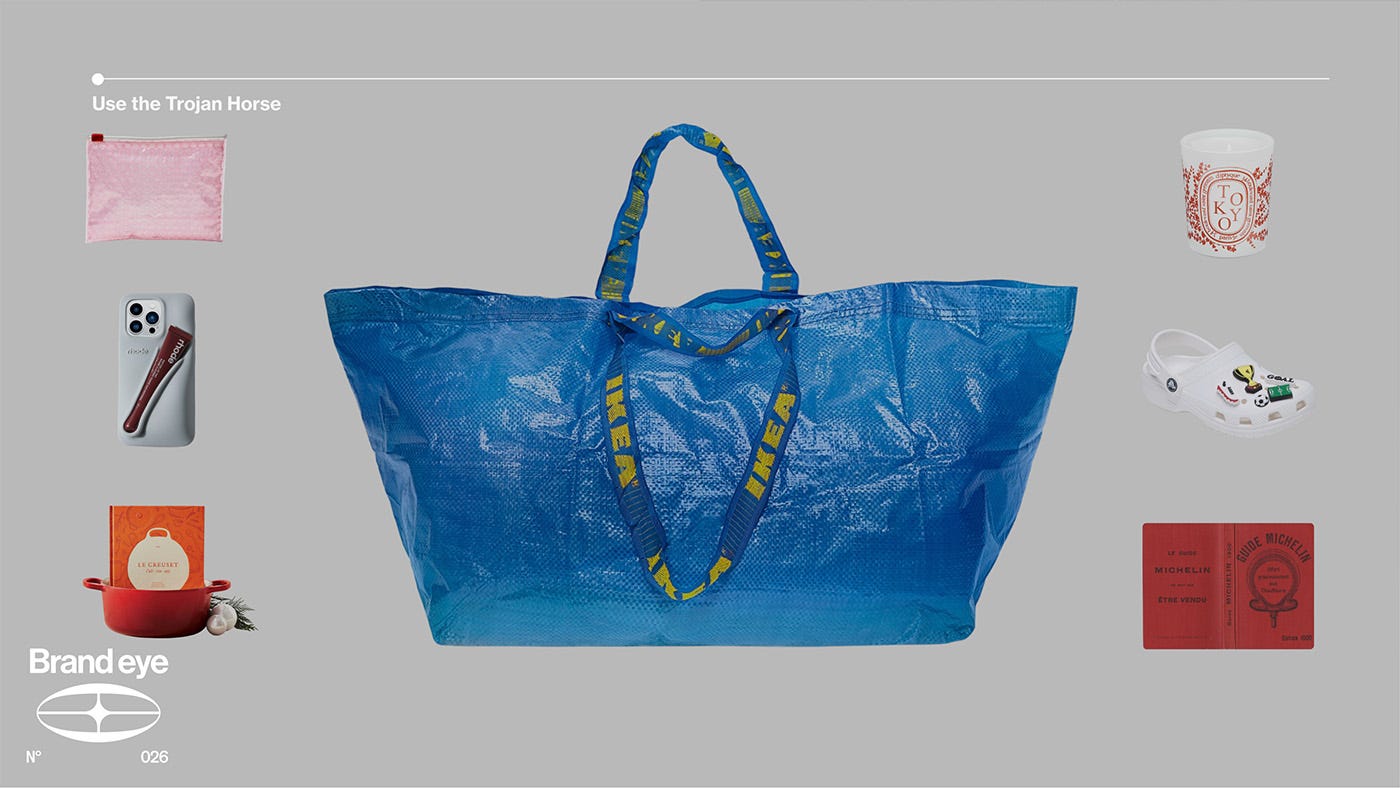
The last move ends in the product, not the logo. A Brand Trojan Horse is something customers keep and use long after the sale, which keeps the brand in their life and puts it in front of everyone else’s. We’ve gone long on this in an earlier issue, so here’s the short version.
The Michelin Guide is the example par excellence, a tyre company’s side project that became a parallel business. But IKEA’s blue FRAKTA bag and Rhode’s phone case with a slot for its lip tint are arguably even better. They’re conspicuous. They turn up in mirror selfies and come with you to the shops. They sneakily turn customers into ambassadors without them even knowing it.
Where your brand world breaks
Those are the eight moves. Story, Signal and System, opened up. Knowing the moves and doing them in order on your own brand are different jobs, and most brands stall at one move and build everything else on top of the gap.
If a few of those tells sounded familiar, find out which one matters most. The Brand World Score is eight questions, one per move. You’ll get a score out of 10 and the exact move where your brand world breaks.
Take the Brand World Score here.
the thing i keep circling is that moves 3 and 5 come from two traditions that don't agree with each other
"category of one" is differentiation in the porter / blue ocean sense, the hero asset in move 5 is distinctiveness in the ehrenberg bass sense, and sharp's whole position is that meaningful differentiation barely shifts purchase, growth comes from penetration, availability and assets people recognise instantly
both show up in your examples, but they imply different budgets and a different first hire, so which one do you think is actually carrying the weight when they conflict?