


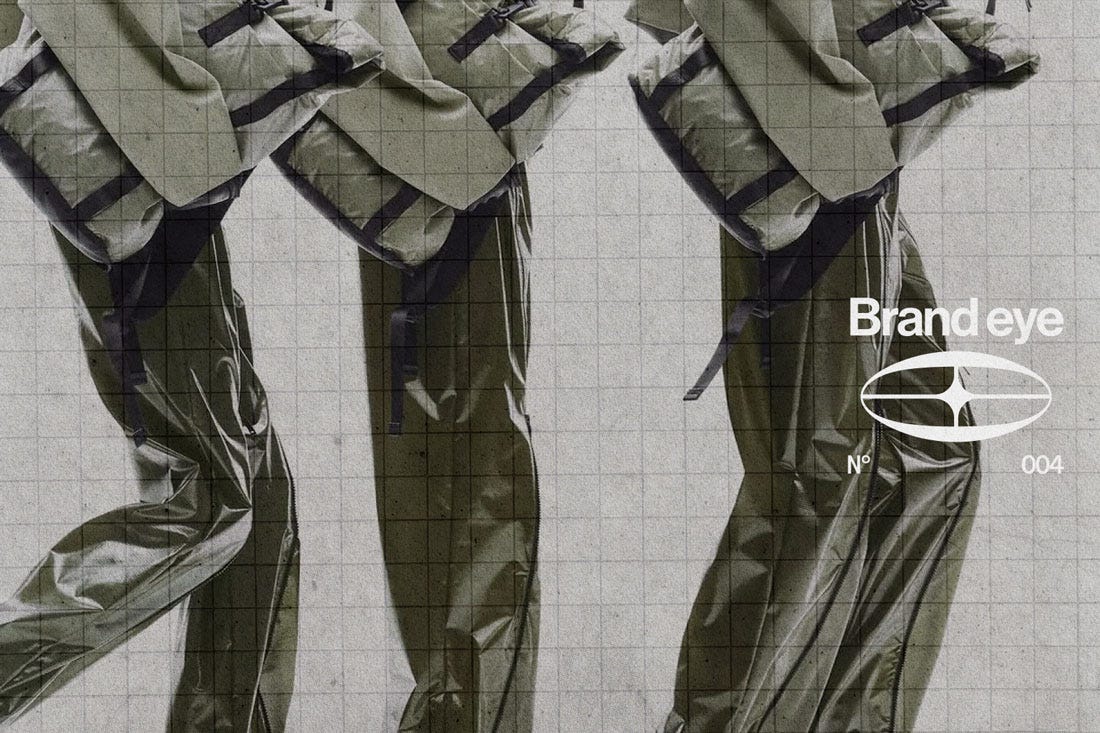
In Scandinavia, a common saying you’ll hear when temperatures hover near the freezing mark and rain comes down at a 45-degree angle is “There is no such thing as bad weather, only bad clothing.” In Danish: Der findes ikke dårligt vejr, kun dårlig påklædning.
When you consider that Denmark gets 171 days of rain a year, that attitude starts making a lot of sense. Hiding from the elements doesn’t really work unless you want to spend half the year indoors.
Maybe that’s why Danish apparel company Rains, founded in Århus in 2012, decided to make leaning into bad weather the core of their branding strategy. It’s a brand committed to elevating a part of the wardrobe often relegated to pure functionality, with little concern for style. That ethos, of living in the bad weather rather than hiding from it, is the essence of their approach: outdoor apparel that is functional, fashionable, and forward-thinking.
This is Rains’ brand story, and it makes up the first of three pillars at the foundation of their success. Along with a distinctive signal and a cohesive system, their story is what makes them one of one.
Pillar 1 - Story
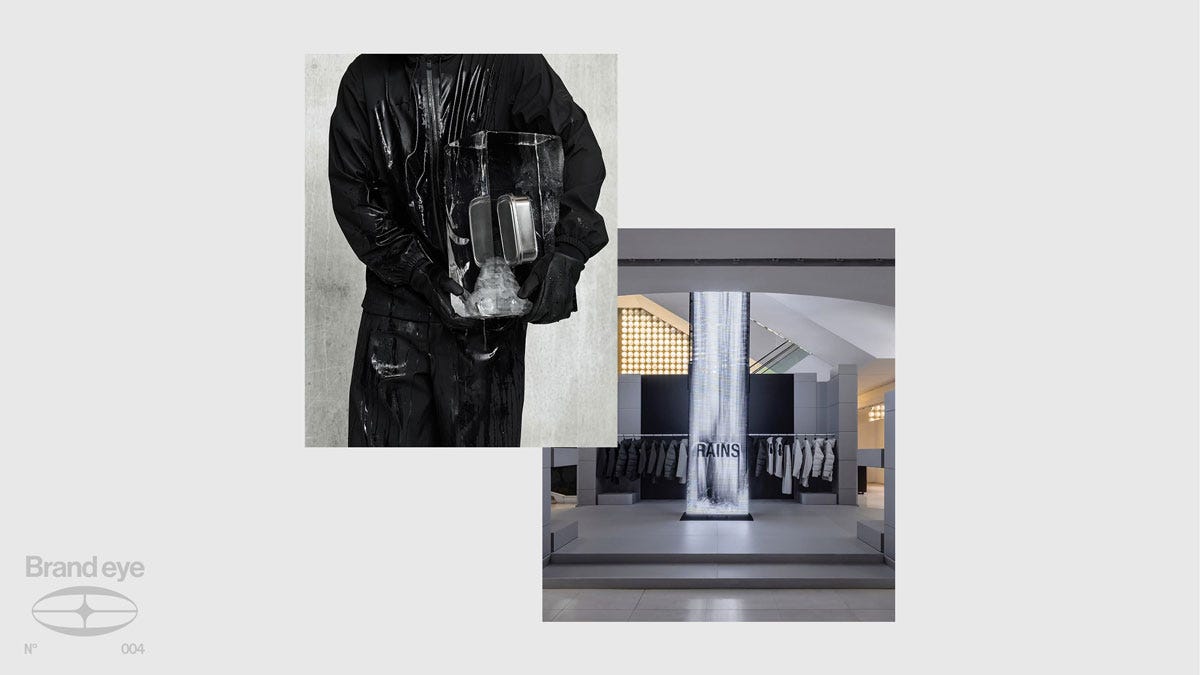
Rains is a textbook example of how inspirational motivation beats manipulative motivation, a principle from Simon Sinek’s Start With Why. Sinek applies this distinction between inspiration and manipulation to leadership, but the dynamic functions just as well in marketing. Manipulative motivation relies on discounts, fear, or social pressure. Inspirational motivation gives people something to believe in.
Rains gives people a worldview. Rather than viewing rain as an obstacle, they treat it as a backdrop, as home. That reframe is simple, but it’s powerful enough to build an entire brand around, and that’s exactly what they’ve done.
The blueprint they’re working from isn’t unique to them though. This three-part system of story, signal and strategy can be the structural foundation of almost any brand. So let’s break down the other two elements.
Pillar 2 - Signal
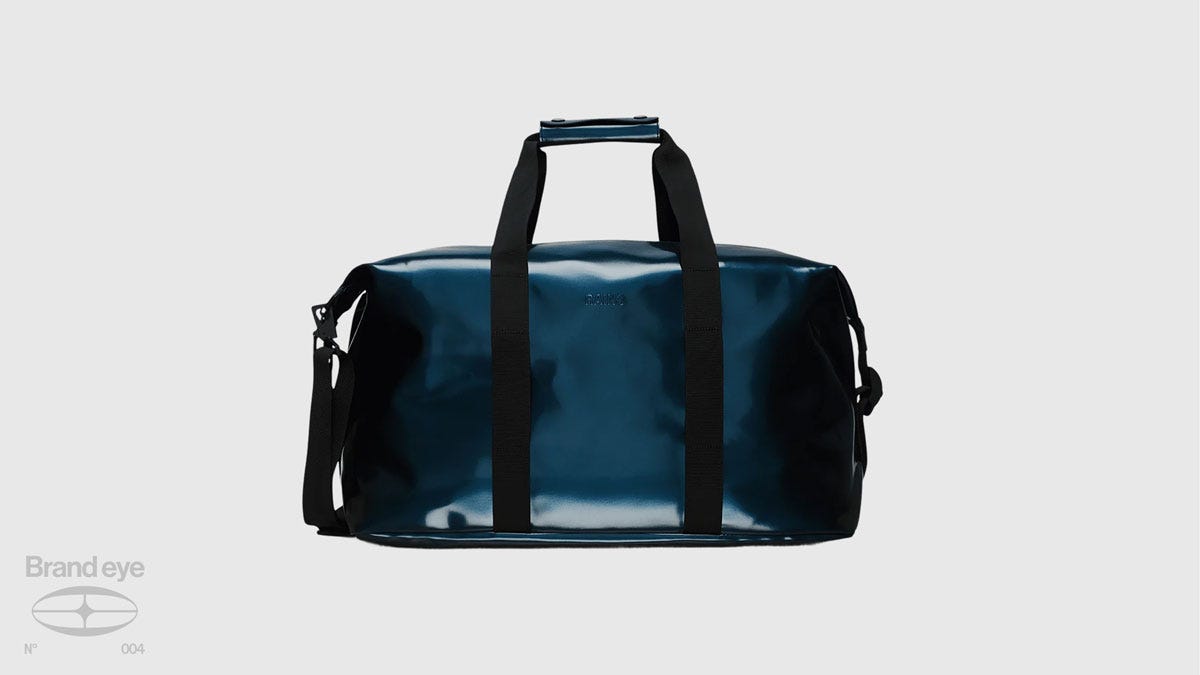
You’ve heard the old saying: show, don’t tell. That’s what the signal is for. It’s one thing to tell people what you’re about, you also need a simple, obvious way of showing them. The signal is a standout product, piece of packaging, or brand asset that entirely encapsulates your story without needing any explanation.
Rains’ appeal goes beyond the idea of being at home in the rain. That same principle, of taking what others view as a limitation and making it the lynchpin of your identity, extends to their choice of fabric. The textiles that make for good rainproof coats, rubber and stiff modern synthetics, are not typically associated with runway fashion. But that doesn’t mean the two are incompatible.
Where many brands would be paddling for shore, Rains simply floats. Their signature PU and rubber textiles are conspicuous and function as well as any logo, but unlike a logo, the use of signature fabrics is integral rather than superficial. It doesn’t just tell you who made this. It tells you what this is, making the brand inseparable from its value proposition.
Their core product choices follow the same logic. The duffel bag is an item of pure practicality: formless, built to carry as much as possible while remaining easy to store. But that same formlessness can be reread as minimalist, clean, and crisp, the precise qualities that define the neo-Scandinavian aesthetic Rains is known for.
The raincoat needs to be loose and capable of layering over an existing outfit. But that also gives designers license to play. Flared sleeves, untapered pants, geometric outlines. All of it works because the functionality is never sacrificed. The signal and the substance are the same thing.
Pillar 3 - System
Rains’ story tells audiences why they do what they do. The signal tells people what they do. The system tells both audiences and their team how they do it. Building a system is the difference between a slogan and a strategy. It dictates architecture, packaging, campaigns, and social media.
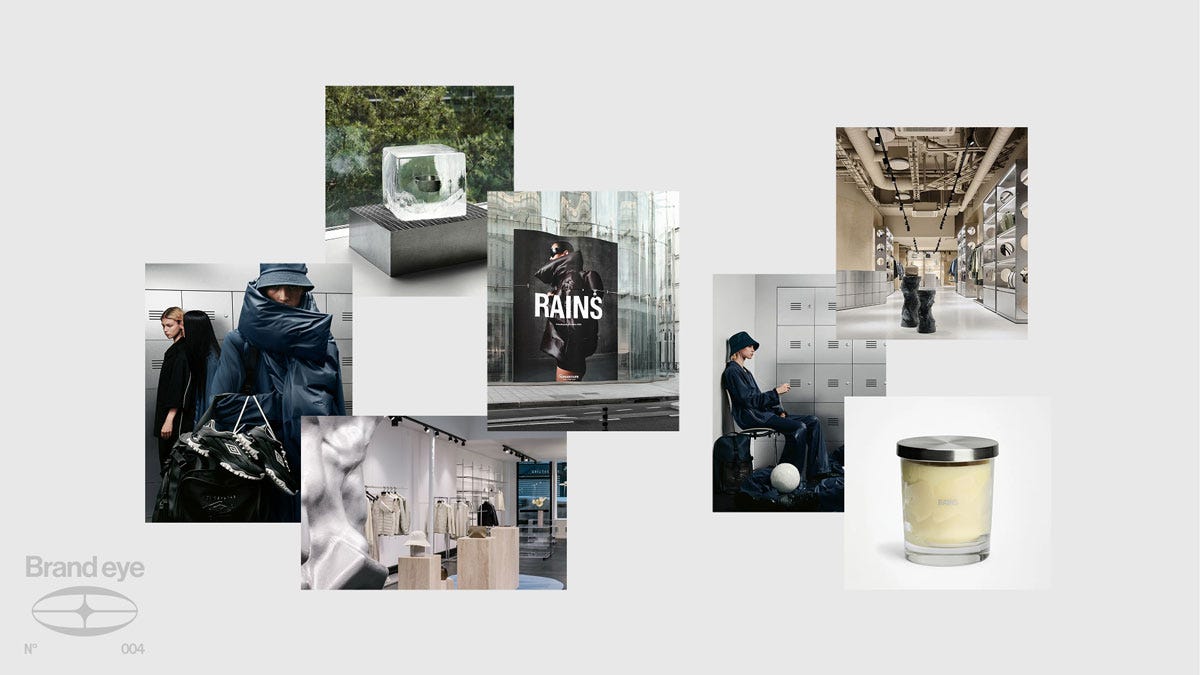
Rains’ commitment to the aesthetic of rain goes far beyond apparel. Scented candles designed to smell like environments after rainfall. Fisheye-lens videography that mimics water droplets on a camera lens. Typography that reads like looking through glass in a storm. Timelapse videos of new products emerging from melting ice. Ad campaigns built around the feeling of playing football in cold rain, looping their brand narrative into that of sports giant Umbro. Retail stores built with zero hard angles, designed to mimic the flow of water.
Rains spreads their content strategy wide because they keep their design principles tightly bound to a single concept. Architecture, decor, web design, collaborations, copy: every element of their branding is motivated by the same central aesthetic. Water. Full stop.
This cohesion draws people in and marks Rains out from their competition. But it only works because it’s in lock-step with their brand story. A consistent aesthetic will get attention. Being able to explain why that aesthetic matters is what builds a lasting connection.
From a production perspective, all creative decisions are streamlined by a unified framework. From a reception perspective, audiences come to associate the brand with one powerful message rather than a series of disconnected slogans. That consistency builds trust. Customers know that this central idea is at the root of everything the company does.
Story, signal and system. Why, what and how. Together, they turn a series of individual branding decisions into interconnected parts of a machine, all working in tandem to produce something greater than any single piece could on its own.