


Five Brand Traps
The bulk of the branding advice out there tells you what to do. Build a strong identity. Be consistent. Tell a good story. And that's all true. But some of the most costly mistakes brands make aren't about what they should be doing, they’re about what they're actively doing wrong, often without realising it
Over years of working with founders, startups and scaleups at Blink Twice, I’ve identified five patterns that consistenly bleed brand value. These aren’t one-off case studies in ‘what they did wrong’ they’re predictable and consistent patterns that reappear across categories, company sizes and budgets.
The good news is that once you can name them, they’re entirely avoidable.
Trap 1: Not Having a Clear Signal
When it comes to branding, you should be trying to stay in the minds of audiences beyond just their immediate interactions with your ad or your product. It’s all well and good to construct ad experiences or product interactions that are positive in the moment, but if you don’t give audiences a distinctive signifier which they can remember you by, then you’re building from scratch every time.
The most powerful way to solve this is through what I call a signal. A signal is more than just a logo or a wordmark. It’s a visual element so intrinsically tied to your brand story that it communicates your entire identity without a single word. The best signals don’t just tell you who made something. They tell you what that brand stands for.
Diptyque’s approach to this is their oval label, the shape is a portal, the entrance to a brand world where custom typeface and dancing type combine to give each product a unique identity and sense of playfulness. They use type as the paintbrush to reinforce their unique brand story - the artistry of living
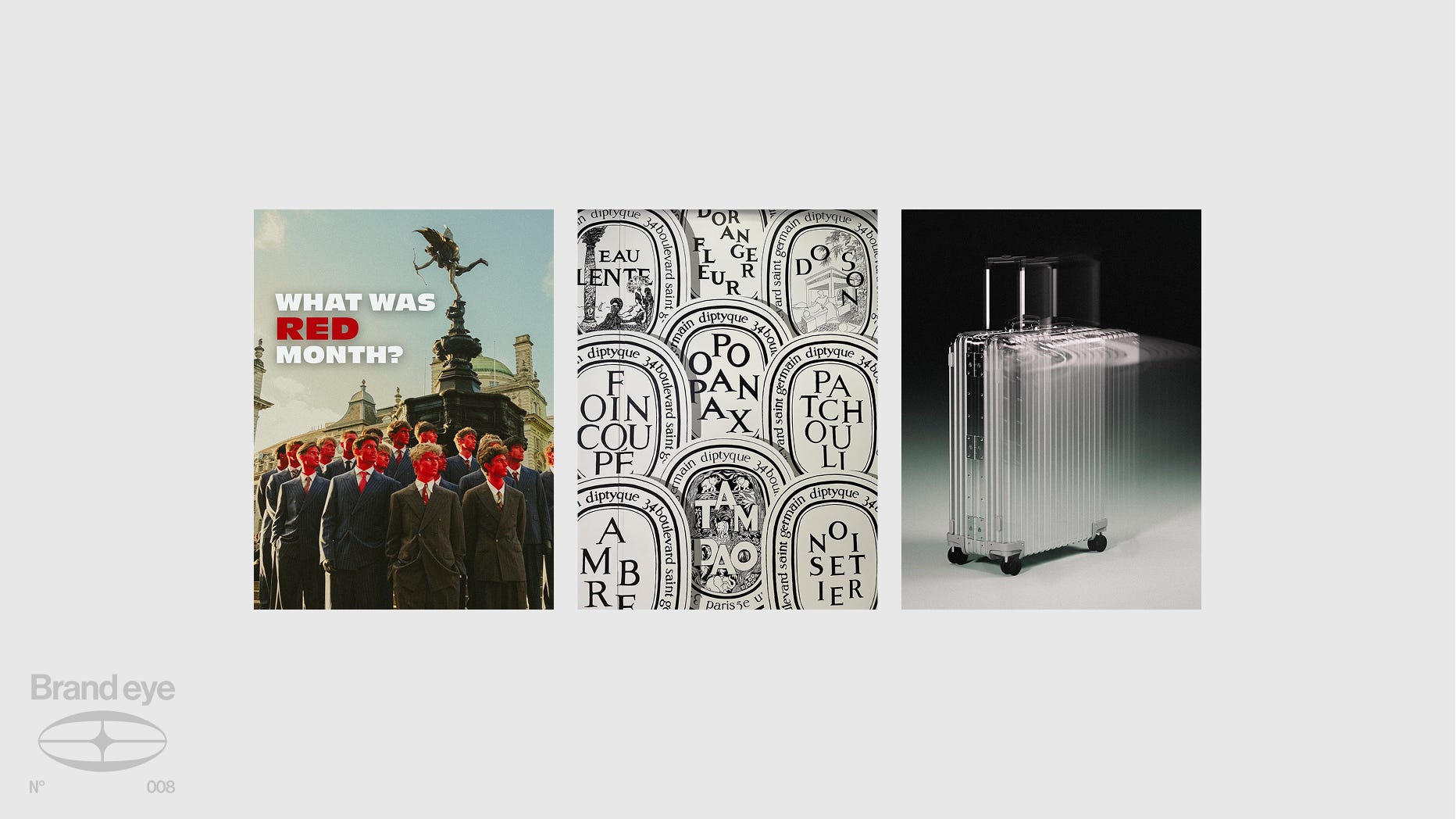
Monte’s Red Face uses red to connote how their hair styling product makes you stand out, Rimowa’s use of ridged aluminium, a lightweight modern and sturdy alloy highlighting their connection to early aviation and Tiffany’s blue, the color of royalty and prestige. These brands make use of visual metaphors that reinforce their core brand story. They’re not only recognisable instantly, they are part of the storytelling in and of themselves.
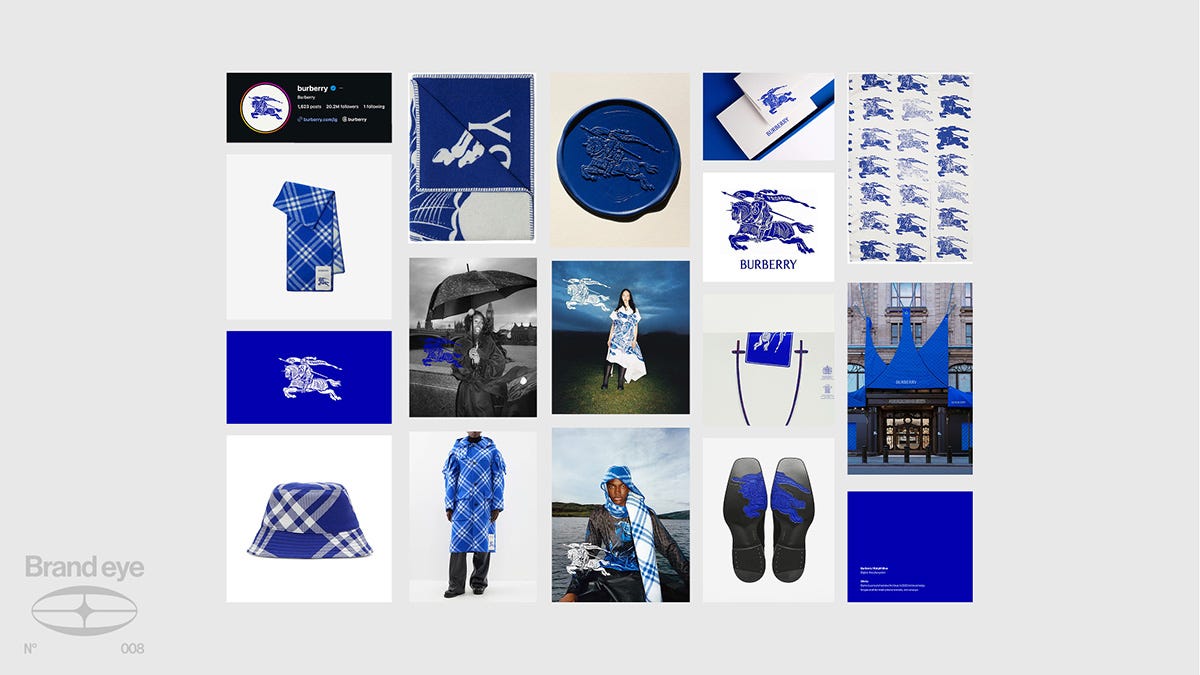
Burberry’s recent transformation is another excellent example, as well as proof that this type of signalling also opens up new avenues for you to communicate with audiences and customers. Rather than simply updating their logo, they committed to owning a specific electric blue across every touchpoint. Particularly for a brand which already has a world renowned visual signal, their tartan pattern, that colour became the signal of an entirely new era. You didn’t need to read a press release to understand something had changed. You just saw the blue.
Identifying and owning your signal is how isolated marketing moments draw on pre-existing context to maximise impact, every single time.
Trap 2: Trying to Fit the Category
Oftentimes, in order to signal legitimacy, brands lean into pre-established norms within their category. Doing this, however, not only means you’re forcing yourself to go toe-to-toe with established giants who already have access to a legacy and audience recognition, you’re also throwing away your inherent advantage as a new competitor, your lack of obligation to pre-existing customers and stakeholders.
But here’s the alternative, Blue Ocean Branding. It is not simply doing the opposite of your category’s norms for the sake of it. The reason it worked for Vacation Inc is not because they made sunscreen look like whipped cream. It’s because that playful, nostalgic visual identity was the expression of a genuine brand insight: that sun protection didn’t have to feel clinical or dutiful.
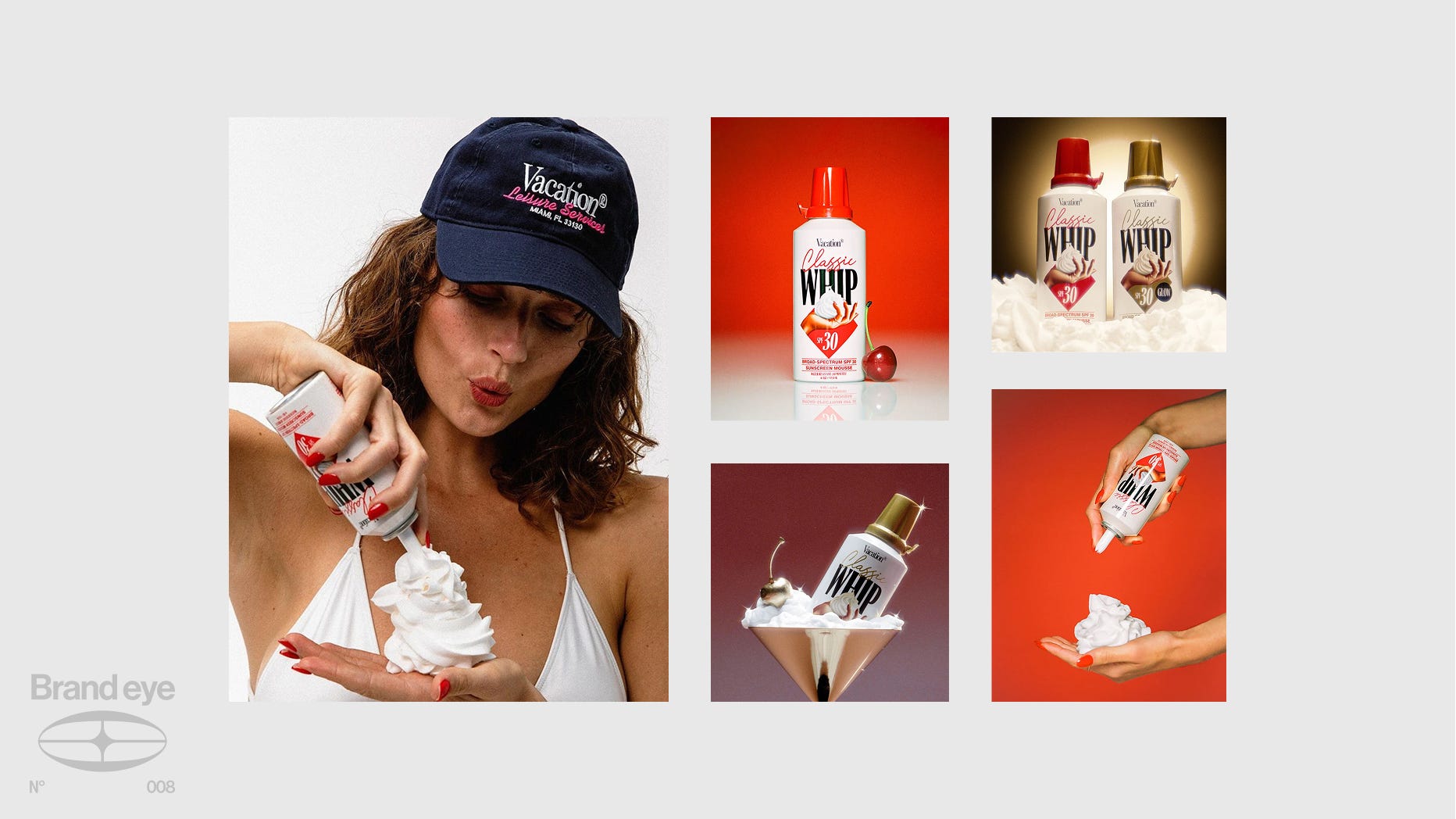
The design was the vehicle for the story but crucially, the story came first.
Blue Ocean Branding means finding positioning that no competitor can follow you into because it’s rooted in something only you can own. It’s the key product truth. An emotional territory nobody else is credibly occupying.
Trap 3: The Content Treadmill
In a race for virality it can be tempting to throw everything at the wall in order to get exposure and attention, understandably, but if you’re not ready with a consistent message that has a logical interplay with all of your other content, you start from zero every time you hit publish.
When you engage with audiences, do so in a way that crafts a story that continues beyond that interaction.
This is what I call the System, the third pillar of a strong brand alongside Story and Signal. Building a system is the difference between a slogan and a strategy. Every piece of content is actively building the associations you want to own.
Red Bull is the clearest example. They don’t post random visuals. Every single piece of content, every sponsorship, every clip reinforces the same two things: High Energy and Extreme. And by associating their brands with the careers of elite athletes or teams, they also give you a continuous and interconnected world in which the inherent drive to follow a story through, means audiences stay connected.
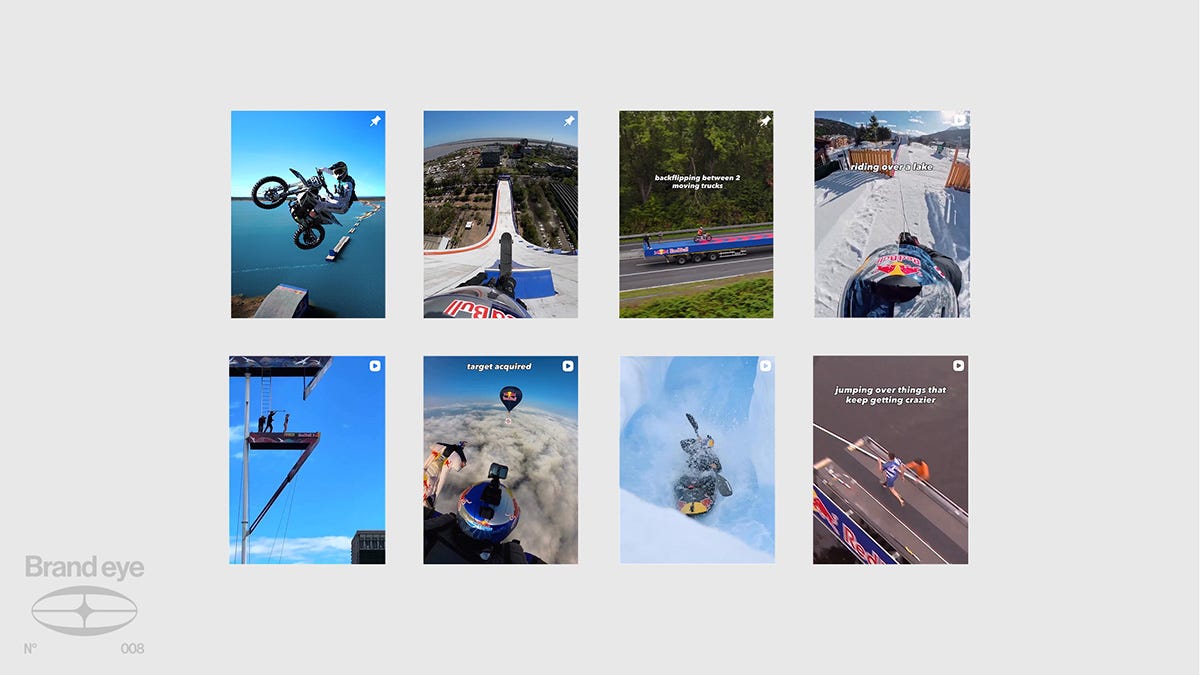
Each piece draws on every other, and the associations deepen over time.
This is the difference between brand storytelling that compounds exponentially and simple linear exposure.
Trap 4: Wasted Packaging
Packaging is not just a cost of fulfilment. It’s one of the most important branding opportunities you have, and most brands waste it entirely.
The moment a consumer touches your product, it fundamentally alters their perception of its value. Apple understood this. The slowly sliding box, the weighted resistance, the precisely placed materials: every detail builds anticipation. It’s why people can’t bring themselves to throw the box away. The packaging is part of the product.
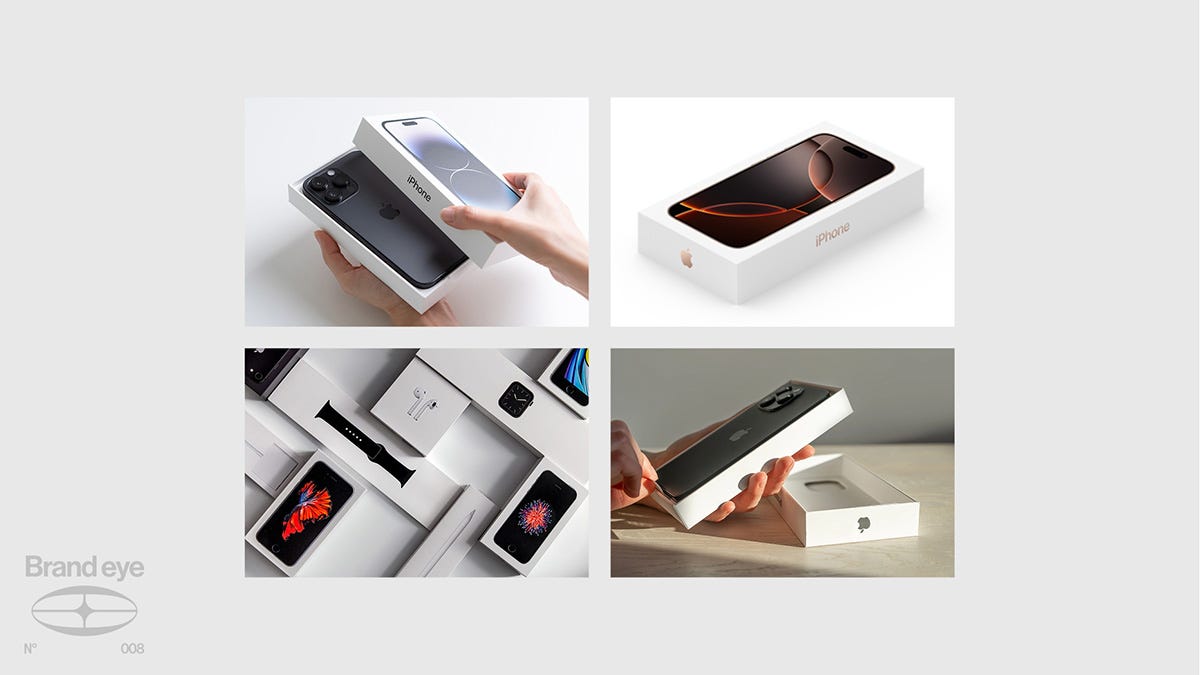
This moment is also the only time you have your customer’s full and undivided attention. Every other touchpoint competes. This one doesn’t. The smartest brands treat it as free media. Design for reusability and your packaging lives in your customer’s home for years, every reuse a free ad. Design for theatre and your customers film the unboxing for you. Design a unique shape and the form becomes the story, as Haws watering can proved with packaging that highlighted their products unique shape. Make it playful, as Innocent did with their smoothie hats, and people collect it. Make it personal and people share it.
Delivery is the only moment you have 100% of your customer’s focus. Treating it as logistics is throwing that away.
Trap 5: Retention Gap
What keeps your brand present in a customer’s life after the transaction ends? If you don’t have an answer to that, you disappear the moment your product is consumed. If you can repeatedly provide audiences with utility, then you’re building a lasting positive association.
The concept I come back to here is the brand trojan horse. A secondary product or asset, cheap (in comparison to the primary product cost) or free, and of immediate practical use, that infiltrates customer habits and keeps your brand front-of-mind long after the initial purchase.
Examples like the IKEA FRAKTA bag, Red-Bulletin and Rhode Lip case are some of our go-to’s but the Michelin Guide is perhaps the greatest example ever executed. In 1900, a French tyre company started distributing a free guide to the best restaurants in the nation. Following an incredibly elegant logic, they figured that if they wanted to sell more tyres, the best way was to get people to drive more so they’d wear their tyres out. And to get people to drive more, they’d need to give them a destination.
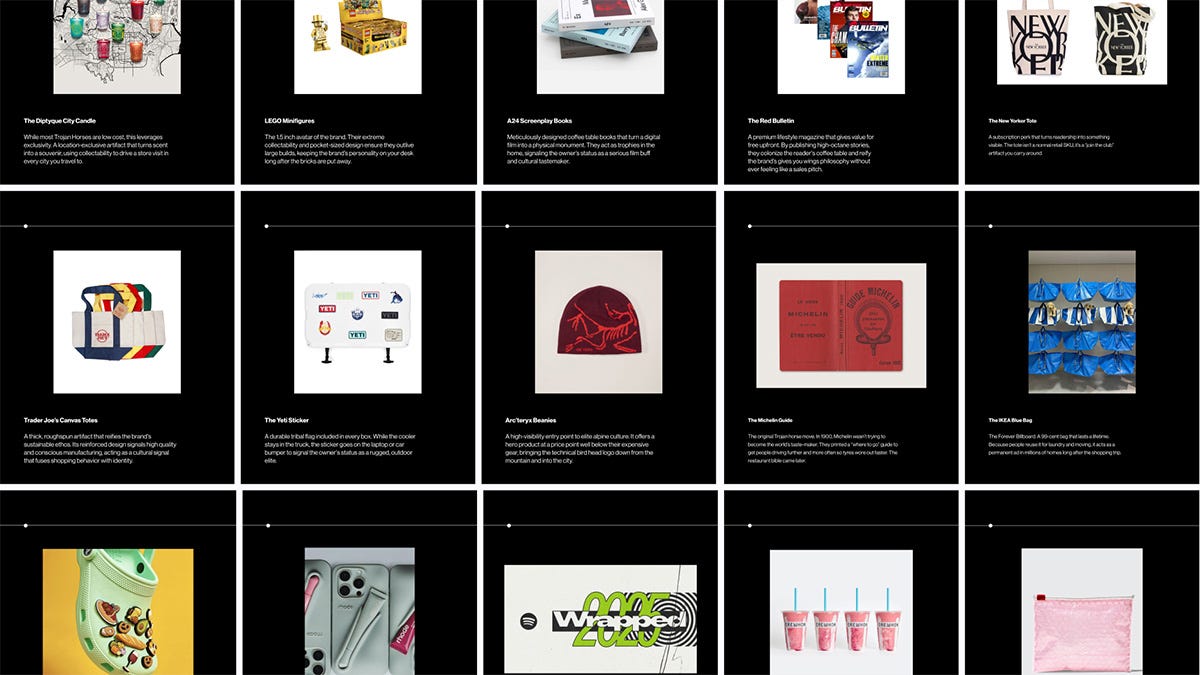
The guide became so trusted it is now the world’s premier restaurant rating system, synonymous with haute cuisine and refined taste. Customer retention, demand and an entire lifestyle their brand wanted to be associated with all built into one product, the perfect trojan horse.
The Takeaway?
The brands that win long-term aren’t just the ones with the best product. They’re the ones who understand that every touchpoint, every piece of content, every interaction is either building something or wasting it. Get them right, and the returns follow.