


When Tom Ford took control of Gucci as creative director in 1994, the company had lost over 100 Million Dollars in three successive years, the storied institution of fashion was hovering above bankruptcy, and one of the owners sold off all of his remaining investments the year prior for $140 million. By the time Ford walked back out the doors of Gucci in 2004, the company was worth $10 Billion.
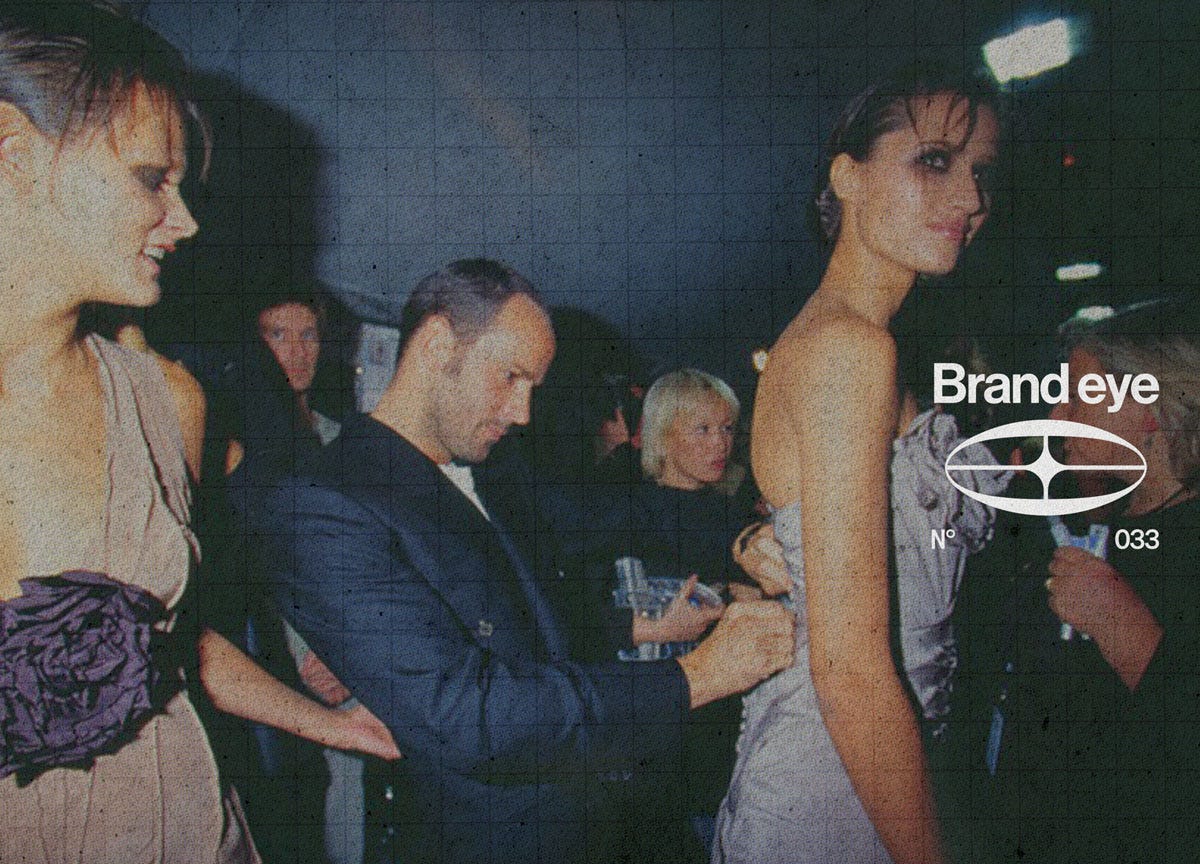
And lest you argue that Ford merely re-steadied a faltering brand whose deep legacy and vast resources gave him a leg-up then let’s consider that he started his own brand, named after the man himself, from scratch and sold it off to Estée Lauder in 2023 for $2.8 Billion.
Ford is the creative-cum-businessman par excellence, he’s synonymous with the type of designer or artist who is able to delicately balance both the aesthetic demands of a creative director with the business logic of developing a brand. That’s why he’s so admired, not solely because of the impact of his design as impactful as it may be, nor just his business acumen, no matter the billions he generated for shareholders. It’s the fact that he did both at the same time. Evidence of how tricky that is is that when he left Gucci in 2004, four separate people were hired to divide his previous responsibilities.
But the way he did that, isn’t pure esoteric vibes, he had rules, principles and clear cut ideas that defined his approach to his work, and he’s shared some of them over the years. We’ve gathered five of his core principles here.
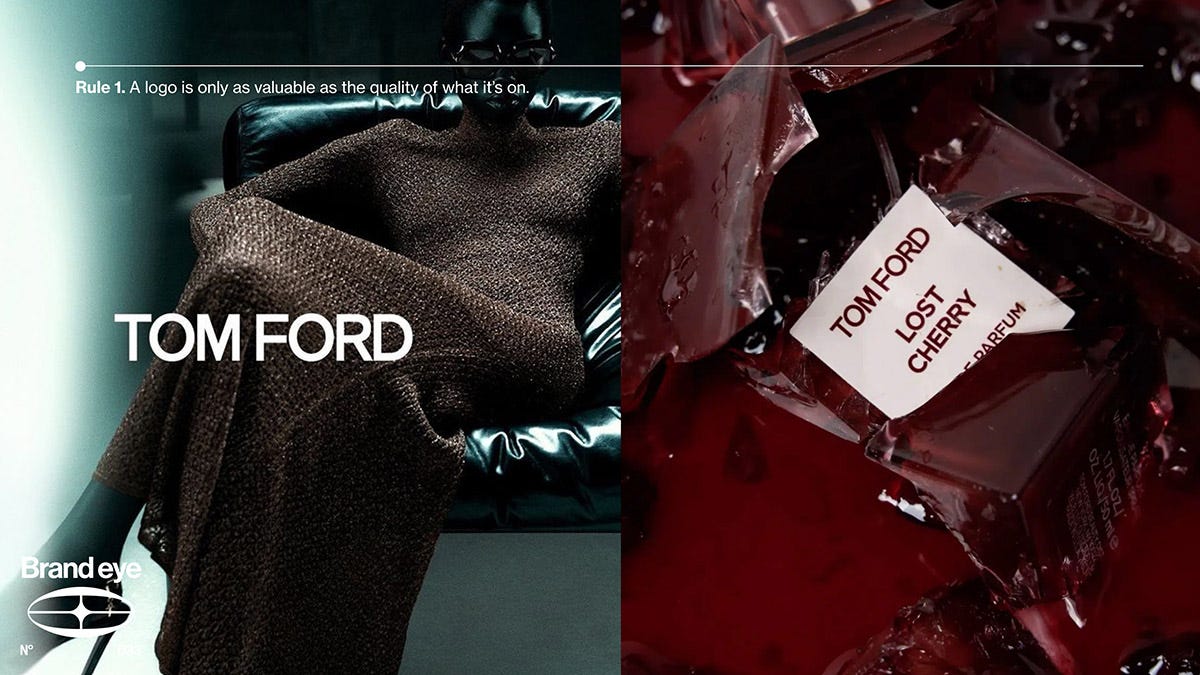
Rule 1: A logo is only as valuable as the quality of what it’s on
When Tom Ford took over Gucci in 1990, they had been licencing out their logo to unqualified, low-quality manufacturers. Good for generating short term cash, perhaps, but in the longer term it erodes the value of your brand – and it was. So Tom Ford clawed back control of the Gucci brand and became highly selective over who they associated with. Your brand is defined by the spaces it lives in, and the other brands it appears alongside, so be careful with how you collaborate to make sure that your core brand values remain ironclad.
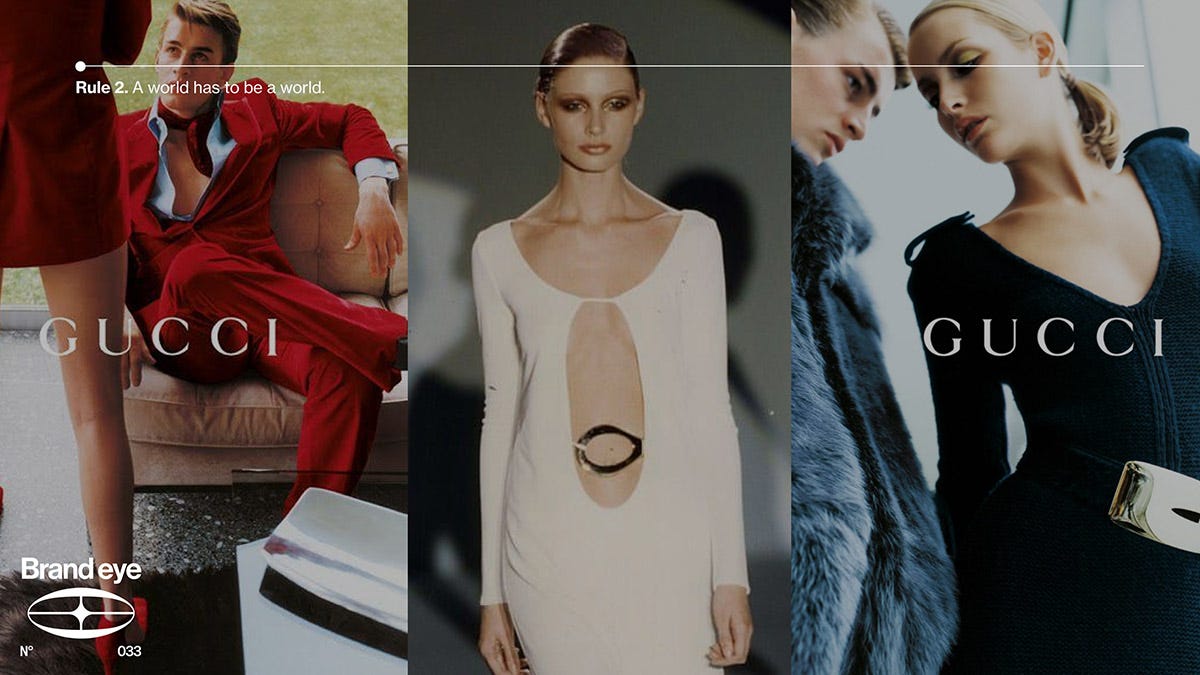
Rule 2: A world has to be a world
Tom Ford argued that a brand needs consistency, so that audiences know to expect a certain set of aesthetic principles. His approach to a fashion house was not simply an umbrella under which a diverse array of high quality or well-selling garments sat, it was a way of approaching design and a tightly defined type of apparel. The brand of Gucci derived its distinctiveness from the type of clothes it produced, not the other way around. You want to be able to recognise a design without its logo.
We talk frequently about this as part of our three pillars strategy. And Ford embraced a similar strategy, a clarion voice telling the story of him as a designer, who is was and what he liked. A set of signals that communicated this wordlessly through his work, be it the colour black, metallic textures or sleek silhouettes, and then a system to bring it all to the marketplace.
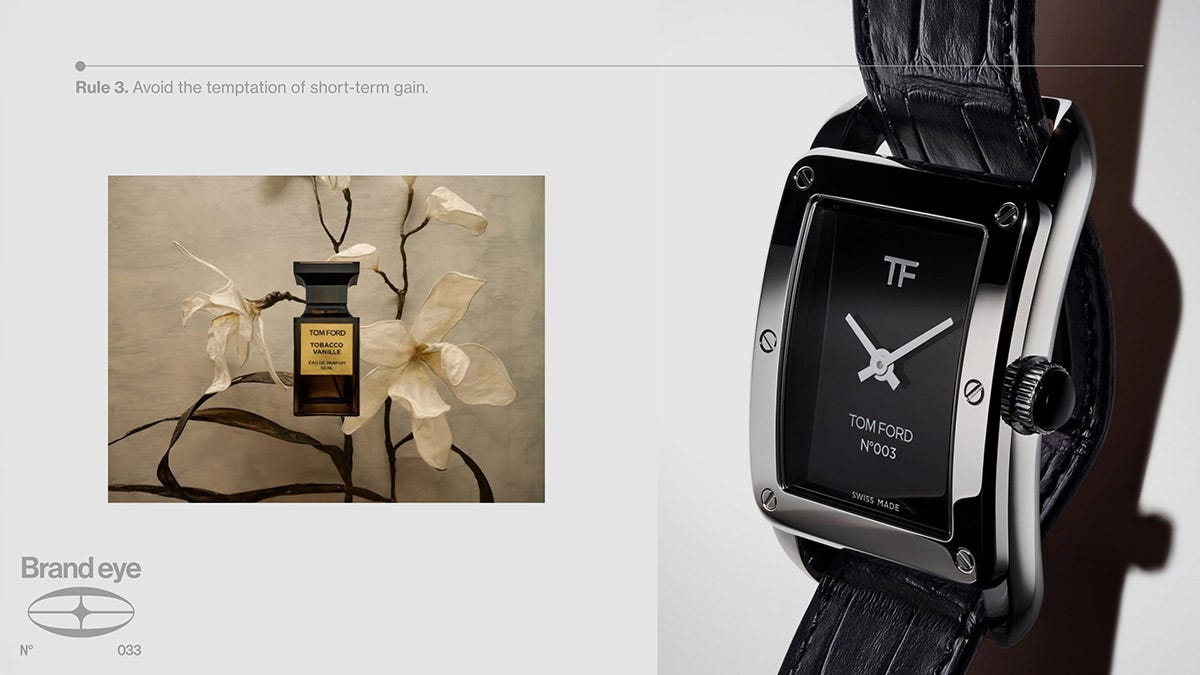
Rule 3: Avoid the temptation of short-term gain
A licencing deal can boost sales in the short term, but erode your brand value over time. When building a brand you might have conflicting incentives between long term value, which is hard to quantitatively measure and short term, easy to define sales targets. It’s tempting to try and do whatever you can to try and make immediate sales figures or revenue go up, but if you want your brand to continue to succeed it’s necessary to balance this with how those actions affect your long term brand sentiment.
This is really a throughline for a lot of the advice that Ford shares, and it makes sense, when you take the wide view of his career the sheer consistency of his trajectory makes it seem like he really did plan things 10 or 20 years ahead of time. This is easier said than done, and requires a certain amount of self assuredness but avoiding quick wins is a compounding strategy. You don’t immediately notice what you didn’t give up in the long term, you simply have to stay true to your principles.
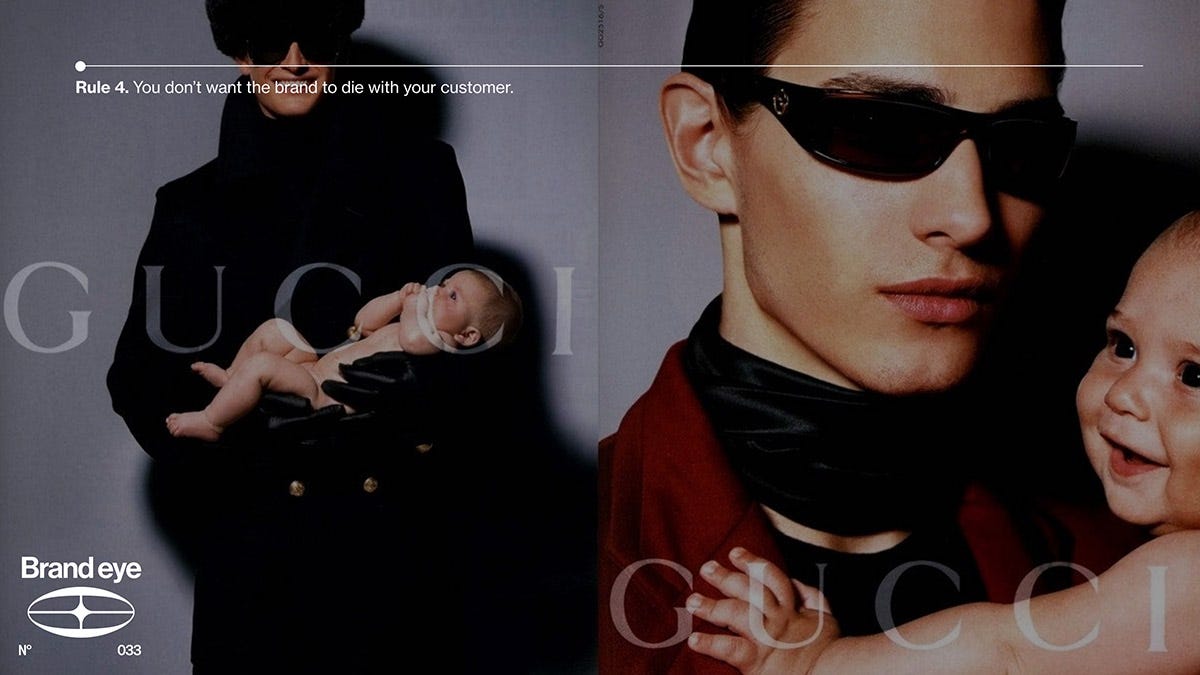
Rule 4: You don’t want the brand to die with your customer
Ford has been conscious not only of what his brand means, but who it’s for. A keen sensitivity for audience is, in many ways, Ford’s secret sauce, he’s obsessive about WHO he designs for, and it’s something he talks about repeatedly. On the one hand you can glean this from his focus on having ‘muses’ ideal clients who he keeps in mind when he’s designing, or even the fact that he - like many great designers is fairly consistent in his own apparel, donning something akin to a uniform of of the black suit and sunglass combo. He’s spoken himself about how for him, when he designs it’s not for him because he knows what he likes to wear, and so designing strictly for his own tastes would force him to be conservative, instead he pictures his idealized audience and goes from there.
And this has also allowed his brand to retain its youthful elegance even ad Ford and his original target audience ages.
He’s conscious of how the Tom Ford brand is targeted at people who already know their sense of style, not the very youngest wedges of the market who want to experiment wildly. By building something that is very consciously targeted at just the right demographic tranche of customers, young but not too young, urbane but not bohemian, cosmopolitan and with disposable income, Ford has ensured that his brand is not trying to everything to everyone and that it doesn’t fade into irrelevancy by chasing its original customer base as they mature.
Rule 5: Stay your own boss
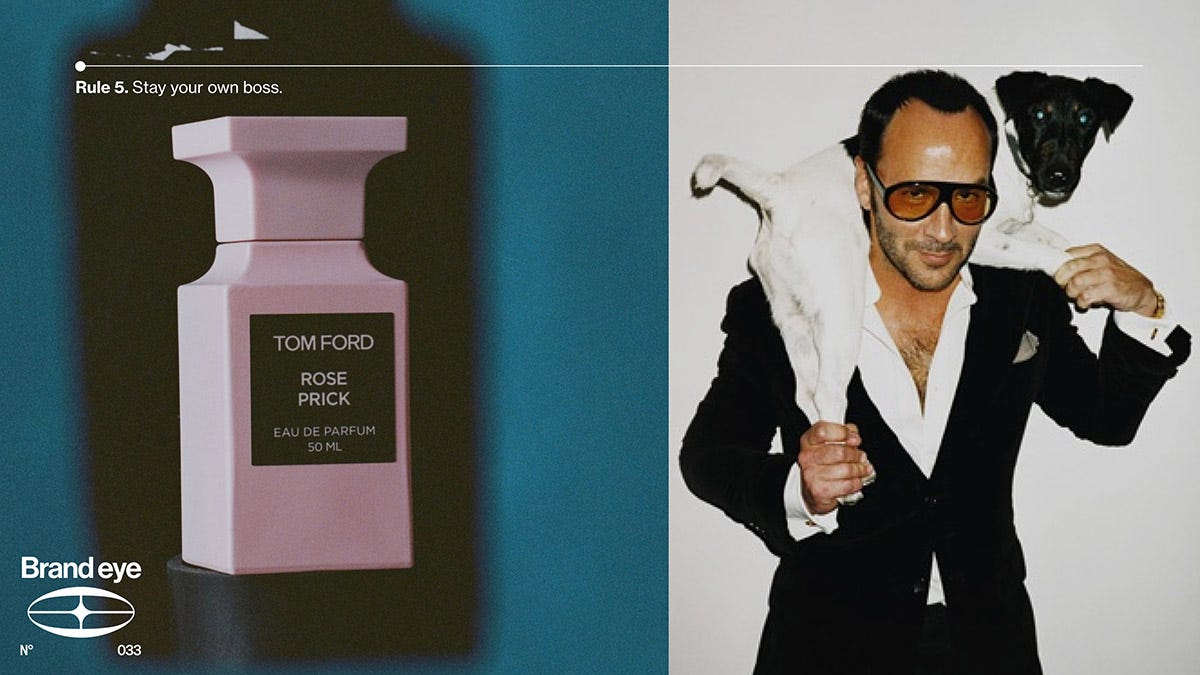
“Never sell a controlling interest in your name. Ever. Ever.” to use his exact words. Ford has always been very particular about retaining control over his eponymous business and brand. Until deciding to sell it off entirely and step away, he always retained a controlling interest, because he was aware of just how quickly activist investors can start to dilute the value of your brand.
These rules aren’t necessarily as easy to follow as they are to dictate but that’s the tradeoff. They require a certain level of discipline, but Tom Ford’s career shows us that discipline is an exponential factor in a brand’s success. These are the ideas that underlie not only the billions of dollars in value but also the untold cultural impact of the man himself. These are the rules that turned his name into a $2.8 billion dollar brand and saved the house of Gucci.