


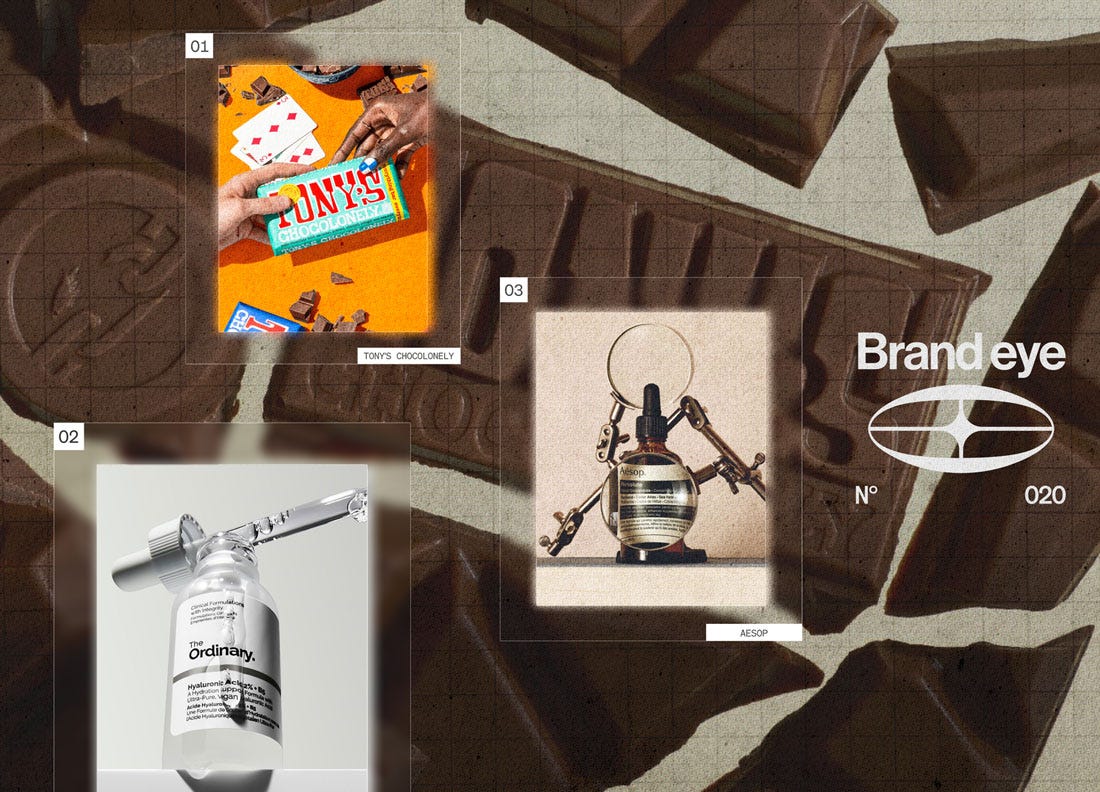
We often refer to Blue Ocean Branding, a concept derived from the business management principle of Blue Ocean Strategy; It’s a concept that underpins more or less all of the branding work that Brand Eye takes on for clients, because we think it’s the easiest, most sustainable and most effective way for a company, product or person to compete in a crowded category. But while Blue Ocean Branding is fundamental, it’s not necessarily self-evident. So in order to solidify the theory of Blue Ocean Branding we’re going to discuss one straightforward way in which brands embrace this approach. These are brands with an exclusive truth.
What do we mean by that? Exactly what it sounds like - these brands have entered a blue ocean by figuring out something that is essentially true about their brand, not a message they’d like to deliver, not a slogan or an ideal, a true fact about the brand or company or individual, which only they can lay claim to.
By leveraging this truth as a moat, brands differentiate in a way that carving out a marketing niche can’t. A niche is just a gap you spotted first. Once it’s named, nothing stops a competitor following you into it. A truth is different. Only you can own it, so following you in means rebuilding a business, not a marketing plan.
So below, three brands who built their difference on a truth nobody could copy.
1. Tony’s Chocolonely - Supply Chain
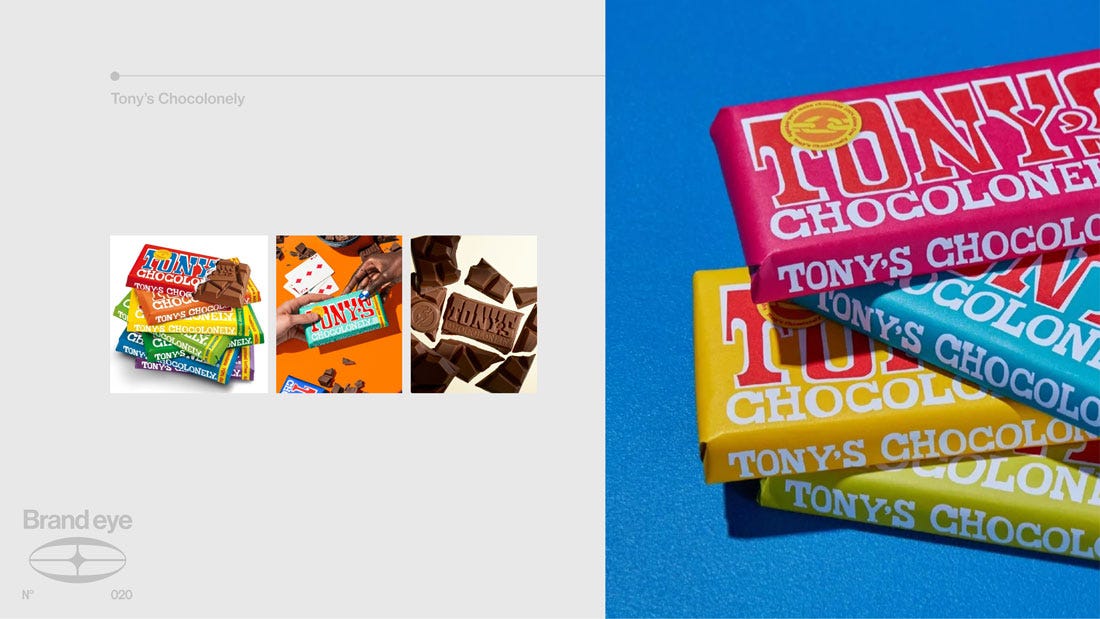
Tony’s Chocolonely famously divides their chocolate bars into uneven pieces to represent the inequality persistent in the cocoa supply chain. The effect isn’t purely educational though. By shedding light on the nature of cocoa farming it presents a challenge to all other chocolate brands. Tony’s Chocolonely can speak up about modern slavery because their hands are clean, can the others say the same.
They know they’re doing things the right way because the essence of their business is a meticulously designed supply chain which distributes profit better than the competitors. So either competitors chose to keep walking and whistling as though they’re not complicit in the exploitationist practices of cocoa farming, looking even more unethical in the process - or they have to fundamentally redesign their entire business model, rebuild the product.
2. The Ordinary - Their Science over Marketing Approach

Be honest, when you read about a new ingredient that suddenly all over the lotion bottles, serum flasks and hair-care tubs in the aisles of your local pharmacy or supermarket do you have any idea about the actual chemistry that makes it work? For the vast, vast majority of customers the answer if probably, no. These brands may push scientific names to the forefront, but it’s not really to inform, it’s to obfuscate behind terminology that the layman isn’t versed in. You hear the name of a chemical you don’t recognise and assume that the good people at Maybelline must have some real boffins cooking up this stuff, sounds complex! The ordinary, however commits itself to using scientific labelling not as a marketing tool or to obfuscate or make their products seem complex, they use it to educate and inform making it abundantly clear to customers exactly what’s in their products, why, and what it does, and how.
The net effect is that other brands either have to abandon their tried and true marketing tactic of throwing around scientific terms purely for the sake of marketing, or follow suit and explain the functioning behind those chemicals. And once they do, it may be harder to justify their markup.
The clean approach of the Ordinary isn’t confined to the marketing, but rather makes the entire brand and industry transparent. Meaning that their advantage, the integrity of their products, becomes more visible.
3. Aesop - Sense of Place Over a ‘Templated Store’

Aesop is a skincare brand, so why is their exclusive truth about place? Because Aesop does its branding through its stores, and every store is built to be in dialogue with the ground it stands on.
Their first store opened in 2003, down the ramp of a former car park beneath the Prince Hotel in St Kilda. Hardly the most glamorous location. Three metres wide, twenty-five long, and by any normal retail logic a hopeless spot. But that constraint set the philosophy for everything that came after. Work with what the site gives you, rather than flatten it and print a logo on top, Aesop would take that principle and apply it no matter where they opened up from then on.
Every Aesop store since has followed the same rule. Local architects design each one for its own location, using local materials. Oslo trades in Norwegian slate. Kyoto uses timber salvaged from old townhouses. The store inside Melbourne’s Chadstone shopping centre is lined with basalt cut from the region’s own volcanic rock. None of it is a literal copy of the neighbourhood, they’re not blending in or assimilating, but interpreting. That’s how they show that they respect the areas they operate in, and their varied approaches are still held together by the same elevated minimalism wherever they are. The packaging never changes, but the place always does.
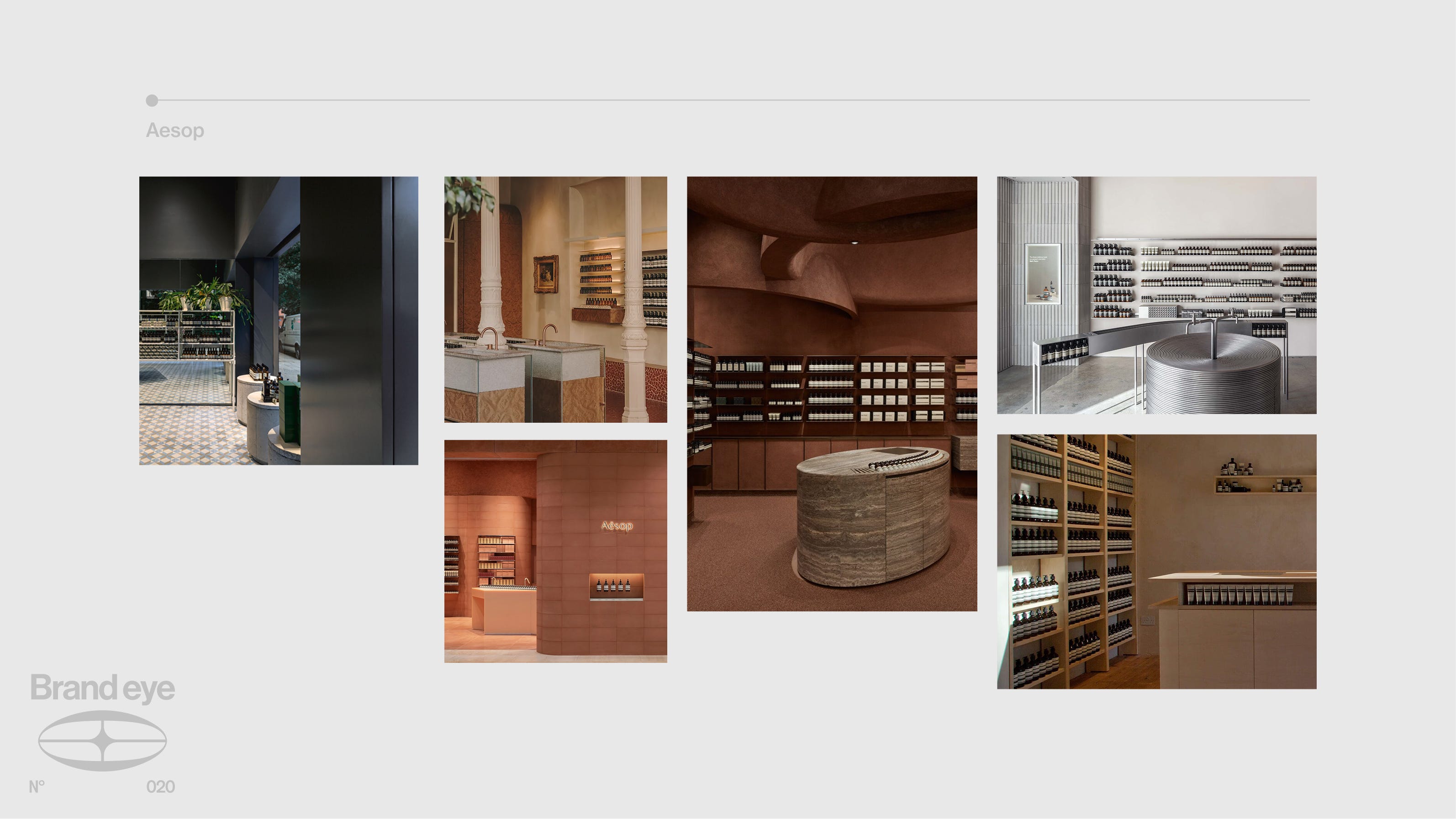
This is a truth a competitor can’t imitate, at least not cheaply and without the risk of coming off as a copycat. Most retailers scale by repetition, one store design rolled out across every city because it’s cheap and quick. But blandness isn’t just an absence of creative choice, it’s a choice in and of itself, chain stores signal a brand that lacks intention and Aesop’s identity is all about intention, about making personal hygiene something more akin to a ritual. To match Aesop, a rival would have to throw that efficiency away and rebuild their whole estate location by location. So they’re left with a choice. Keep stamping out identical boxes and look like a chain next to a brand that belongs where it stands, or tear up the model that makes their business affordable in the first place. Either way, the ground stays Aesop’s.
These brands all run counter to the approach that seeks to gain territory by stacking arbitrary signifiers of uniqueness on top of a fundamentally replicable business practice. Instead these businesses have all looked at what parts of what they actually do are unique, and would be costly or impossible for other brands to copy and then they lean into it.